

One year after ICE's summer of terror
Trump's mass detention and deportation strategy is a many-headed monster
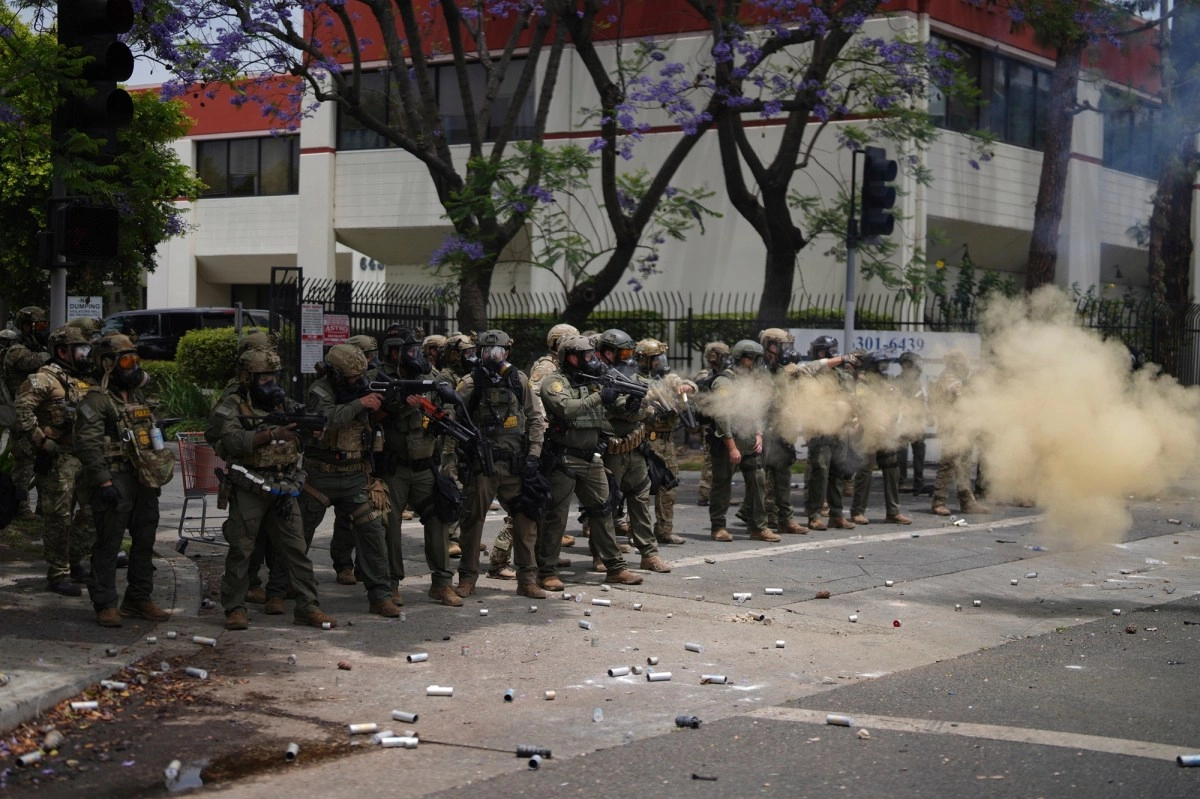

Not surprisingly, in the week that marks the one-year anniversary of ICE's deployment of violence in Los Angeles on June 6, 2025, with raids that gave way to protests, hunger strikes are reported in detention centers in at least four states, including Delaney Hall in Newark, New Jersey, where detainees report mistreatment, unsanitary conditions, and lack of adequate medical care.
And Trump's strategy of mass detentions and deportations is a many-headed monster that manifests itself in various ways and constantly.
What happened in Los Angeles on June 6 was the starting signal for ICE's reign of terror not only in that city, but throughout the country.
Human Rights Watch said it well in a November 2025 report, stating that “the violent campaign of raids and arrests carried out by the US federal government during the summer of 2025 in Los Angeles laid the groundwork for similar and subsequent abuses in cities across the country.”
It is estimated that in 2025, ICE arrested more than 14,000 people in the Los Angeles County area, although the figure also includes arrests in other counties such as Orange, Ventura, Riverside, San Bernardino, San Luis Obispo and Santa Barbara.
It was Trump and his advisor Stephen Miller's attempt to conduct aggressive raids with masked agents, violating all kinds of rights and legal protections, using racial profiling and doing so in cities led by Democrats with total impunity.
Following protests over ICE's actions, Trump deployed 2,000 National Guard and 700 Marines to Los Angeles without being asked for any assistance, only to create a crisis where there was none. These actions terrorized communities, separated families, affected the economy. Immigrants died fleeing ICE agents.
In this context, ICE and CBP agents descend on Minneapolis, Minnesota, where the new year 2026 brought with it some of the most violent operations with indiscriminate arrests of citizens and authorized residents that culminated in the deaths of two American citizens, Renee Good and Alex Pretti, at the hands of immigration agents.
Violence and impunity have been rejected by the American public and Trump's approval ratings on immigration dropped drastically, and this is when cosmetic changes are made in the leadership of DHS and its immigration agencies, but violence continues to manifest itself in many forms.
Now hunger strikes are taking place and the administration is using development to continue dehumanizing immigrants, attacking those who defend them, and continuing to violate the right of federal legislators to supervise what happens in private prisons paid for with public funds and which are inundated with complaints of physical, sexual and psychological abuse, unsanitary conditions, spoiled food and for denying medical care to detainees, many of whom have died or committed suicide in numbers never seen before.
The administration's campaign to detain and deport immigrants who are NOT “the worst of the worst” continues in various ways, whether traditional raids, delegalizing immigrants, delaying the renewal of permits and the latest, according to media reports, are the deportation ‘mega hearings’. “More than 100 immigrants are summoned simultaneously to answer for their processes, an unprecedented tactic that seeks to increase the number of deportations,” wrote the EFE Agency.
Obviously this government cares little about the humanitarian crisis generated by its immigration policy. He also doesn't care about the effect it has had on the economy at a time when Americans are already facing high costs for food, housing and health care, among others.
An analysis by the Brookings Institution concluded that the escalation of immigration control measures “cost 668,000 jobs and it is estimated that between 51,000 and 297,000 would have been occupied by workers born in the United States.”
“The losses were concentrated in sectors with a high presence of immigrants, but they extended far beyond them,” the report adds.
But Congress is set to approve another $70 billion for ICE and CBP, in addition to the $170 billion authorized last year.
And all this occurs one month after this nation commemorates the 250 years of its founding, on July 4, and as on previous occasions, that anniversary occurs in the midst of complicated situations that remind us of the fragility of the democracy that is celebrated and that we have a long way to go when it comes to civil and human rights.
The texts published in this section are the sole responsibility of the authors, so La Opinión does not assume responsibility for them.