

India’s Bullet Train Journey Accelerates: Mumbai’s BKC Terminal Set to Redefine World-Class Travel
Mumbai’s BKC bullet train terminal is rising fast with a multi-level design and state-of-the-art amenities, marking a milestone in India’s high-speed rail revolution.
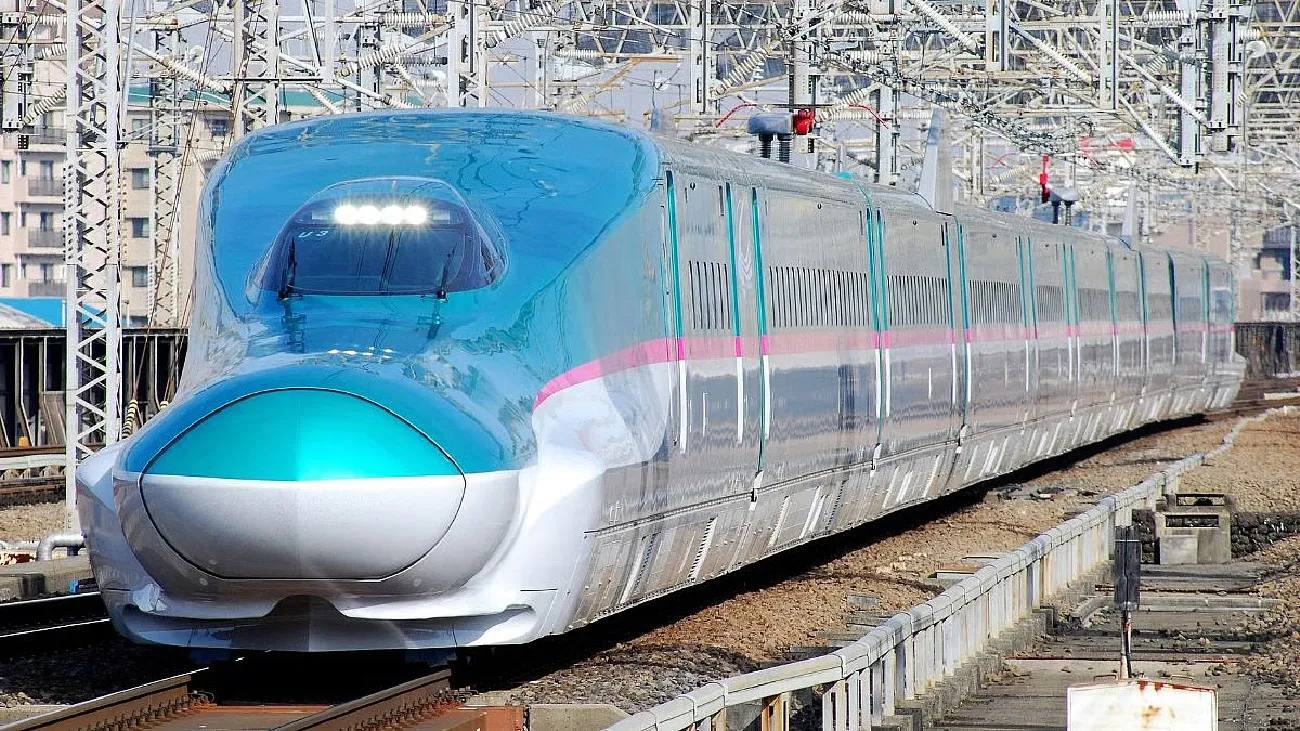

India’s high-speed rail ambitions are gaining extraordinary momentum as the construction of the country’s first bullet train terminal at Mumbai’s Bandra-Kurla Complex (BKC) gathers pace. As per the latest update shared by the Hon’ble Railway Minister, the BKC station is not only progressing swiftly but is also emerging as a modern engineering marvel that promises to redefine urban rail travel in India.
A Multi-Level Marvel in the Making
The BKC terminal will serve as the origin point for India’s bullet train network and is being constructed atop a multi-storey structure. This means that the station will not be at ground level but strategically elevated above a sprawling infrastructure. The project includes three expansive basement levels, offering a sophisticated layout that allows optimal space utilization in one of Mumbai’s busiest commercial zones.
The design, inspired by world-class railway stations in Japan and Europe, blends architectural finesse with cutting-edge engineering. It reflects India’s intent to embrace futuristic transport infrastructure while adapting to urban constraints like limited land availability in metropolitan hubs.
High-Speed Rail Dreams Coming Alive
The bullet train project, officially known as the Mumbai-Ahmedabad High-Speed Rail Corridor (MAHSR), is India’s maiden venture into the realm of high-speed rail. Once operational, this corridor will cut down travel time between the two major cities to just about two hours, compared to the current journey of over six hours by conventional trains.
With BKC as the starting point, passengers will embark on a seamless journey inside ultra-modern, aerodynamic bullet trains capable of running at speeds of up to 320 km/h. The technology, largely developed in collaboration with Japan under the Shinkansen model, is set to redefine how India travels.
Tunnel Works Advancing Rapidly
In parallel with the terminal construction, tunneling work beneath the congested city landscape is progressing at an impressive pace. Engineers are employing advanced Tunnel Boring Machines (TBMs) to dig deep into the earth, creating a secure and stable path for the bullet train’s initial route.
These tunnels are being built with a keen focus on minimizing disruption to Mumbai’s surface infrastructure. Special care is being taken to avoid interference with existing utilities, underground pipelines, and traffic movement on the ground. The tunneling, just like the terminal, symbolizes precision and speed a fitting metaphor for the bullet train itself.
What Makes the BKC Terminal ‘World-Class’?
The BKC bullet train terminal will feature a host of international-standard amenities to enhance the passenger experience. From digital display boards and smart ticketing systems to wide concourses, waiting lounges, food courts, and retail spaces, it is being designed with every detail that defines global travel hubs.
Accessibility will also be a priority, with escalators, elevators, tactile flooring, and signage for differently-abled passengers. The terminal’s capacity will allow for large volumes of passengers without congestion, and safety measures will be integrated using AI-enabled monitoring systems and automated crowd control technologies.
Economic and Strategic Significance
The bullet train project is more than just a transport upgrade it is a statement of progress. Economically, it is expected to boost regional development, generate employment, and improve connectivity between industrial and financial hubs. The BKC terminal itself will elevate real estate value and catalyze business activity in the surrounding area.
Strategically, India’s venture into bullet train technology sends a strong message about the nation’s infrastructure vision and technological aspirations. It symbolizes a transition from legacy systems to smarter, cleaner, and faster alternatives, positioning India as a forward-looking economy.
Minister’s Vision and Public Response
Railway Minister Ashwini Vaishnaw, while sharing updates on social media, expressed confidence in the project’s pace and quality. He highlighted how the BKC terminal is a reflection of India’s capability to match world-class benchmarks while addressing local challenges. The public response to the updates has been overwhelmingly positive, with citizens expressing both pride and eagerness to witness the new era of travel unfold.
“It is not just a station; it’s a symbol of how far India has come,” one user commented on the update. The sentiment echoes the national mood—an anticipation that this high-speed connectivity will spark broader transformation in mobility and logistics across the country.
Challenges and the Road Ahead
Like any ambitious project, the bullet train venture faces its share of challenges, including land acquisition, environmental clearances, and inter-agency coordination. However, with consistent momentum and government backing, these hurdles are being addressed with proactive strategies. The recent progress at BKC is proof that India is on track to deliver a transport marvel against all odds.
As construction continues, the focus will remain on meeting timelines, ensuring safety, and maintaining international standards throughout execution. The target is to see the first segment operational within the next few years, ushering in a new chapter in India’s infrastructure journey.
A Leap Toward the Future
The bullet train terminal at Mumbai’s BKC is not just a station it is a glimpse into the future of India’s mobility. With rapid construction, world-class design, and cutting-edge technology, it stands as a beacon of innovation and progress. As the country gears up for this transformative project, the BKC terminal becomes a symbol of what is possible when vision, policy, and engineering come together. India’s bullet train story is no longer just a dream it is becoming a powerful reality.