

Navy chief Hung Cao contradicts Trump on arms sales to Taiwan and war against Iran
Cao's words not only dismantled Trump's political speech, but also categorically denied the Secretary of Defense, Pete Hegseth.
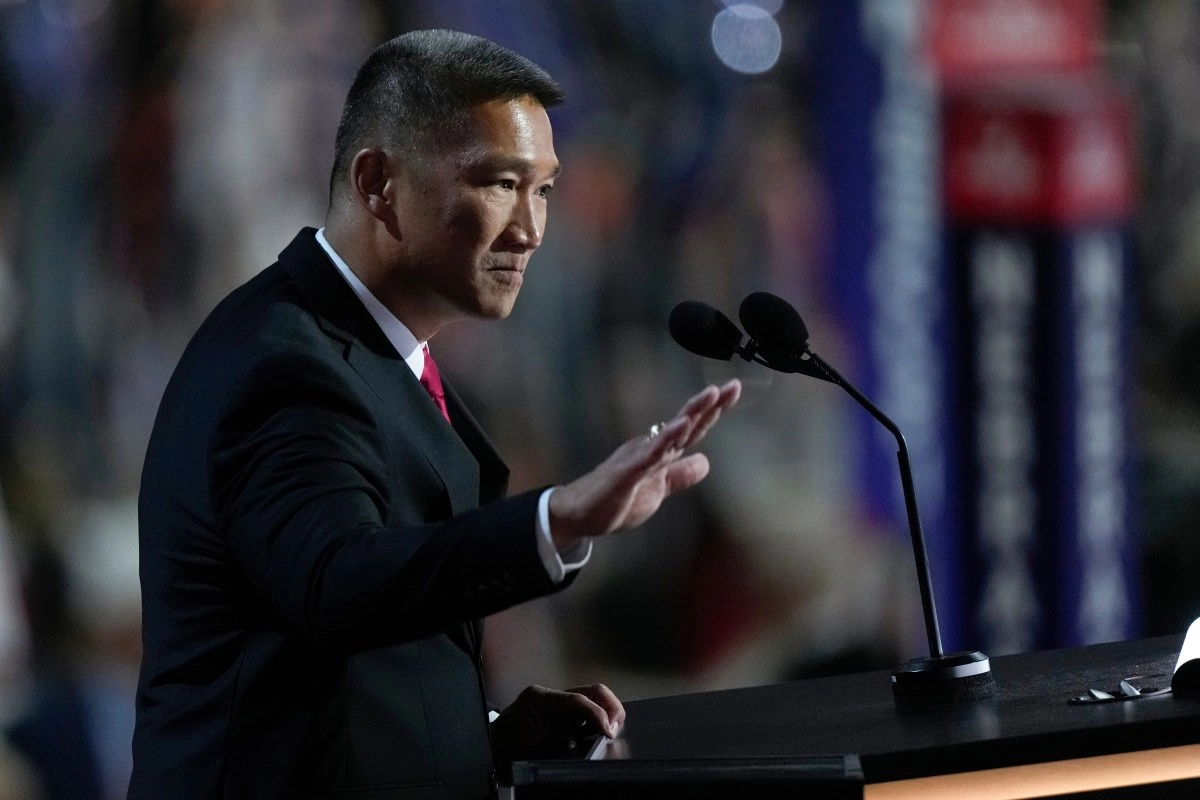

Acting Secretary of the Navy Hung Cao's statements raised new doubts about the military strategy of President Donald Trump's administration after confirming to the Senate that Washington temporarily suspended an arms sale to Taiwan valued at $14 billion due to the war with Iran.
During a Senate Defense Subcommittee hearing, Cao explained that the Pentagon decided to delay some foreign military sales to ensure that the United States retains enough ammunition for "Epic Fury," the official name of the US military operation against Iran.
“Right now we are pausing to make sure we have the necessary ammunition for Epic Fury,” Cao said in front of Republican and Democratic lawmakers.
The official's words contrasted with recent statements by Defense Secretary Pete Hegseth, who assured Congress that US military arsenals have sufficient reserves and that concerns about ammunition depletion have been exaggerated.
"We know exactly what we have. We have more than what we need," Hegseth said days ago.
However, Cao's revelation strengthened reports of significant attrition in US military reserves after months of operations linked to the conflict with Iran.
Arms sales to Taiwan become an issue of tension with China
The pause also exposed differences within the Trump administration over the relationship with China and future military support for Taiwan.
Trump had previously hinted that the military package could be used as a negotiating tool with Beijing. After recently meeting with Chinese President Xi Jinping, the US president avoided publicly committing to final approval of the sale.
"I haven't approved it yet. We'll see what happens. I may do it; I may not," Trump said in an interview with Fox News.
The president even described the possible sale of weapons as “an excellent negotiating asset” in diplomatic talks with China, a position that generated concern among Republican legislators traditionally favorable to the military strengthening of Taiwan.
Senator Mitch McConnell directly questioned Cao during the hearing and called the delay of the military agreement “concerning.”
The sale includes advanced air defense systems, Patriot PAC-3 missiles and other weapons designed to strengthen Taiwanese defensive capabilities in the face of growing Chinese military power.
Although the United States maintains formal diplomatic relations with China, Washington continues to provide weapons to Taiwan under defensive assistance agreements.
Beijing considers Taiwan part of its territory and has increased its military exercises around the island in recent years, while insisting that it does not rule out the use of force to achieve eventual reunification.
Concern over US military stockpiles
Cao's remarks also reignited debate in Washington over the real state of the US military's ammunition reserves.
According to reports cited by lawmakers and defense analysts, the United States reportedly used thousands of missiles in operations related to Iran, including Tomahawk missiles, Patriot interceptors, ATACMS systems and long-range precision weapons.
Some reports maintain that an important part of the US strategic inventory has decreased considerably since the beginning of the conflict.
During the hearing, Senator John Kennedy pressed Admiral Daryl Caudle on whether Washington should accelerate the shipment of weapons to Taiwan in the face of Chinese military pressure.
Caudle responded that the United States wants Taiwan “to be as strong as possible,” although he avoided commenting on specific policy decisions related to the sale.
Meanwhile, Taiwanese officials said they have not received formal notification about the suspension of the military package.
Taiwanese Defense Minister Wellington Koo recently said he maintains “cautious optimism” about the continuation of US military sales.
Hung Cao's remarks, however, laid bare internal tensions within the Trump administration over how to balance the war with Iran, the relationship with China and strategic support for Taiwan amid growing global military challenges.