

Bonita Law: millions will be left without a doctor and without hope
Legislators dont understand, or understand but dont care, that it is in the national interest for people with health problems to receive medical help.

A woman enters Valley Presbyterian Hospital in Van Nuys, a mile from my house, pushing her father in a wheelchair. He is 80; he doesn't speak English. She speaks it very well, with almost no foreign accent. Something hurts, she explains, and a few minutes later a nurse with a cart of syringes, vials, and forms finds her in the waiting room. Right there, she performs five or six blood tests on the man. In a little while, the doctor will call her with the results. The old man will get the care he deserves.
But in a few months, when the new One, Big, Beautiful law signed on July 4 by Donald Trump is being implemented, the situation will change.
Millions will be left outside the protective circle of health. How many?
In an environment dominated by the power group's lack of respect for the truth, the numbers fluctuate. The regime's most staunch supporters say the number is tending toward zero. Anyone who says otherwise is... (insults). For others, the fluctuation is from 7 million to 17 million. In the middle are the official numbers from the nonpartisan Congressional Budget Office.
I therefore adopt this opening line:
“Approximately 11.8 million adults and children will be at risk of losing health insurance.”
Millions more will lose the food stamp benefits called SNAP (Supplemental Nutrition Assistance Program, Cal Fresh in California), which the federal government uses to help 42 million Americans earning less than $15,000 a year buy food.
In addition, a high percentage of those who use the health care marketplaces created by the Affordable Care Act (Obamacare) will see their options degraded.
And little is said about the fact that the subsidies paid to beneficiaries during the COVID-19 years will expire at the end of the year. Their premiums will rise by 75%, according to an analysis by the Kaiser Family Foundation.
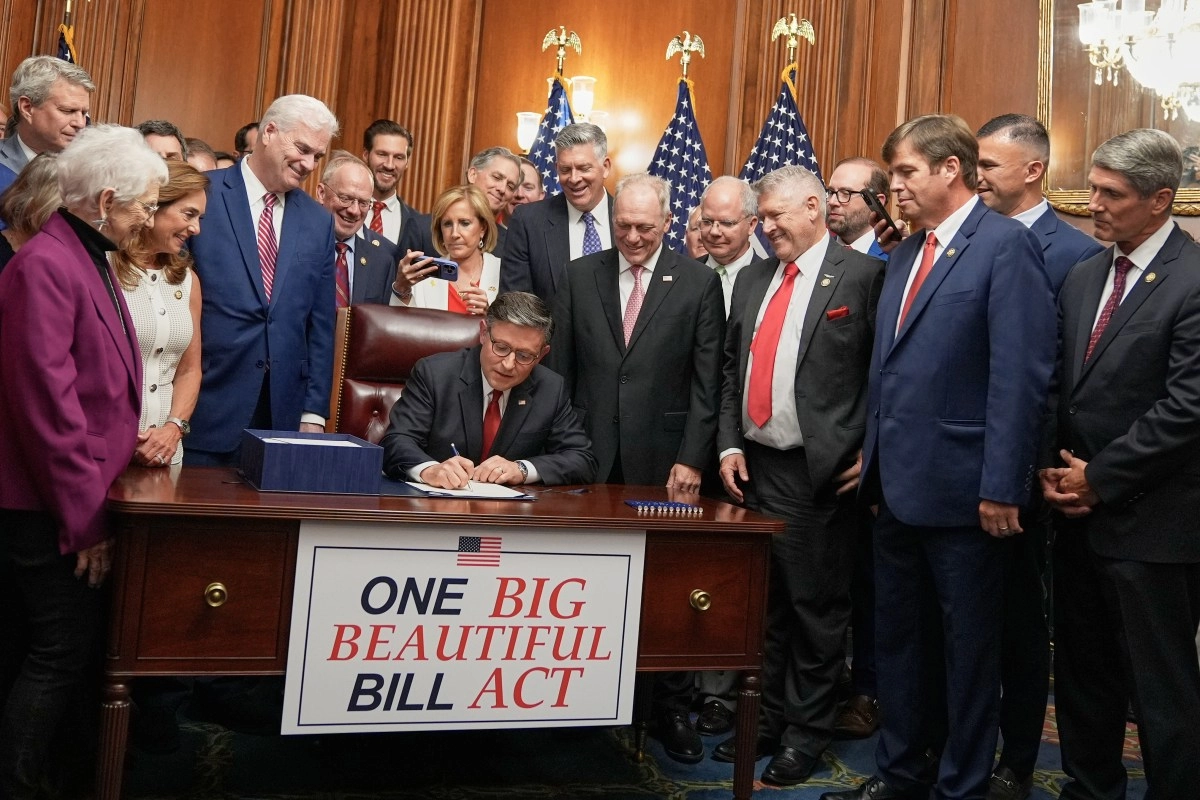
But on the 249th anniversary of America's independence, Trump signed it with his signature with a parade of B-2 stealth bombers like those that attacked Iran.
It radiates joy, celebration, victory. He baptized the law with a propaganda name: One Big Beautiful Bill Act. And the congressmen agreed, and the name went down in history: One Big Beautiful Bill Act 119th Congress (2025-2026).
It's a victory for them, but for the American people it's a defeat.
With the money saved from cuts to the Medicaid program (Medical in California), they, and their donors, cronies, and their socioeconomic circle, will become much richer, by extending the tax cuts that Trump himself had enacted in 2017.
And the poor, let them eat cake. Let them choke.
Thanks to the new law, the national debt, already at $36.2 trillion, will grow by another $3 trillion. This, despite the fact that the law “reduces federal health care spending by approximately $1 trillion over a decade in ways that will jeopardize the physical and financial health of tens of millions of Americans.”
The disastrous consequences of this disaster, the administration declared, will be faced by hospitals, nursing homes, and community health centers. The debt will be paid for by generations to come.
It's hard to know how many of the legislators who voted for this bill understand what they've done. It's impossible to know how many do, but couldn't care less.
In April, the House version of the bill would lead to the closure of 190 rural hospitals serving 62 million Americans. The version finally approved in July will close 300, according to researchers at the Sheps Center at UNC (University of North Carolina at Chapel Hill). These will generally happen in Republican-majority states like Kentucky, Louisiana, and Oklahoma.
Lawmakers don't understand, or they understand but don't care, that it's in the national interest for people with health problems to receive medical help. Their absence from offices will inevitably lead to an explosion of illness and the disappearance of millions from the ranks of the productive workforce.
That's why generations of lawmakers have worked hard to lower per-visit payment for the poorest.
But as a consolation prize, the new law allows states to increase cost-sharing (for non-emergencies). The result will be to once again saddle hospitals with the crisis, which will have to bear the cost. Or close.
In a few months, the stories of those who were left out of the cycle of early detection controls will begin to emerge, after which will come the ailments due to heart problems, diabetes, Depression, complications, and predictable and preventable disorders.
These will be seemingly simple problems that have quick, low-cost solutions under normal conditions but could be tragedies if left untreated. An ingrown toenail in a diabetic can thus become a serious problem, a possible infection and amputation.
Patients will flood community clinics, which rely on donations and are already overwhelmed. This way, they'll get primary care, but not access to specialists.
All of these are unimportant details for those who celebrated like madmen the passage of the beautiful law. After all, they can always say it's fake news and blame journalists, Democrats, and undocumented immigrants. Meanwhile, they laugh contentedly.