

Trump leaves the G7 with support to reopen the Strait of Hormuz, but warns that the agreement with Iran “is not final”
Before leaving France, the president left open the possibility of personally attending the official signing of the agreement in Switzerland
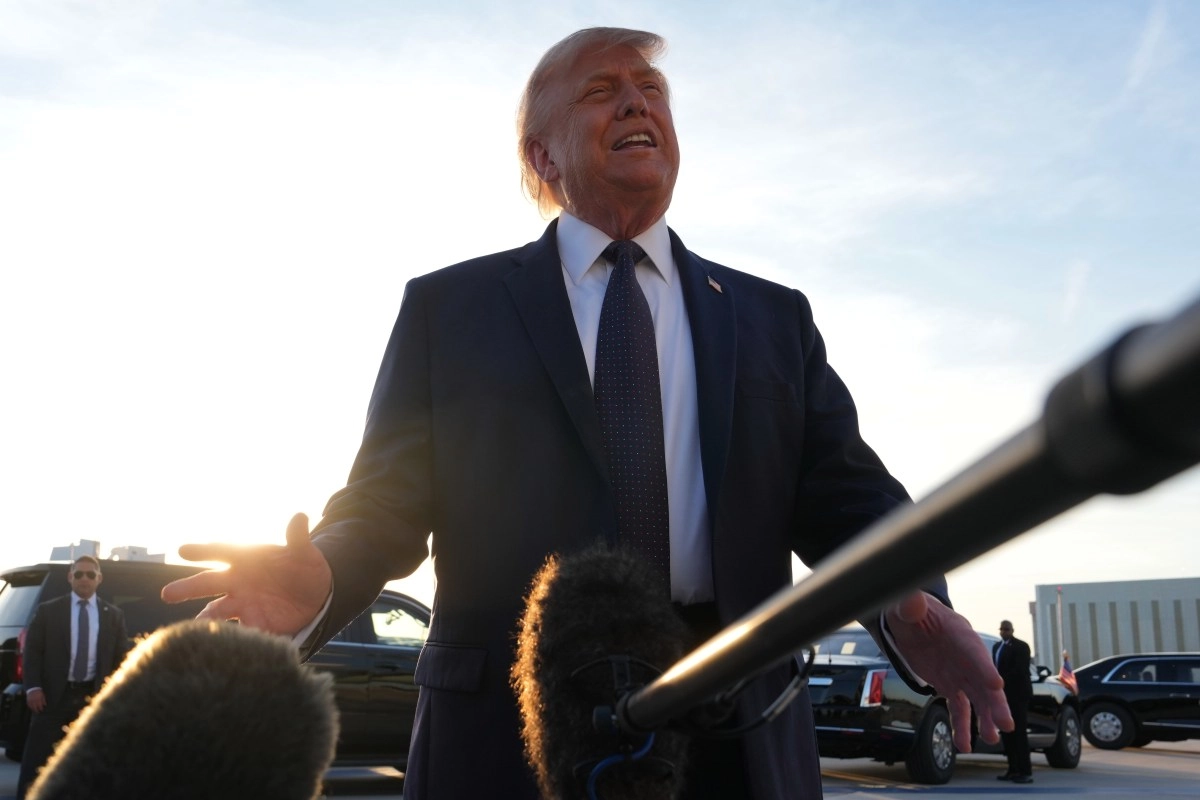

Donald Trump concluded his participation in the G7 summit held in Évian-les-Bains, France, with the explicit support of the main industrialized economies for his initiative to reopen the Strait of Hormuz, one of the most important energy routes in the world. However, the president insisted that the memorandum of understanding reached with Iran remains provisional and warned that Washington could resume military actions if Tehran fails to comply with the commitments made.
"It's a memorandum of understanding. And if I don't like it, we will shoot them again, drop bombs on their heads. If they don't behave, we will bomb them again," Trump declared during his appearance at the G7, stressing that the pact does not yet constitute a definitive agreement.
The statement comes just two days after Washington and Tehran electronically signed a 14-point memorandum aimed at halting hostilities and facilitating the reopening of the Strait of Hormuz, whose disruption in recent months has led to tensions in energy markets and disruptions to global supply chains. The document will be formalized in a ceremony scheduled for this Friday in Switzerland and contemplates a negotiation period of 60 days to reach a permanent agreement.
As the US administration explained to journalists, the understanding provides for the issuance of licenses to reactivate Iranian oil trade, the creation of mechanisms to unblock Iran's frozen assets and the development of an international reconstruction program valued at up to $300 billion. Trump insisted that these resources will only be available if Tehran meets the agreed terms.
"The money is not ours, it is yours. We have frozen it and, at some point, I suppose we will have to return it," said the US president, differentiating between the release of Iranian assets and direct financial aid. According to the preliminary text released by various international media, the United States would also commit to relaxing certain economic sanctions linked to the reconstruction process.
International support came through a joint statement from the G7, whose leaders welcomed the understanding reached between Washington and Tehran and backed an initiative led by France and the United Kingdom to ensure maritime security in Hormuz. The group considered that a multinational defensive mission could contribute to restoring commercial navigation and protecting merchant ships transiting through the area.
The European proposal includes demining operations, aerial surveillance and possible naval escorts to regain the confidence of shipping companies and insurers after months of conflict. French President Emmanuel Macron indicated that several allied nations already have military means in the region capable of quickly participating in these tasks.