

Measles resurges amid declining vaccination rates
The CDC has identified 625 people over age 20 with the disease this year; In 2025, 11% of those infected required hospitalization
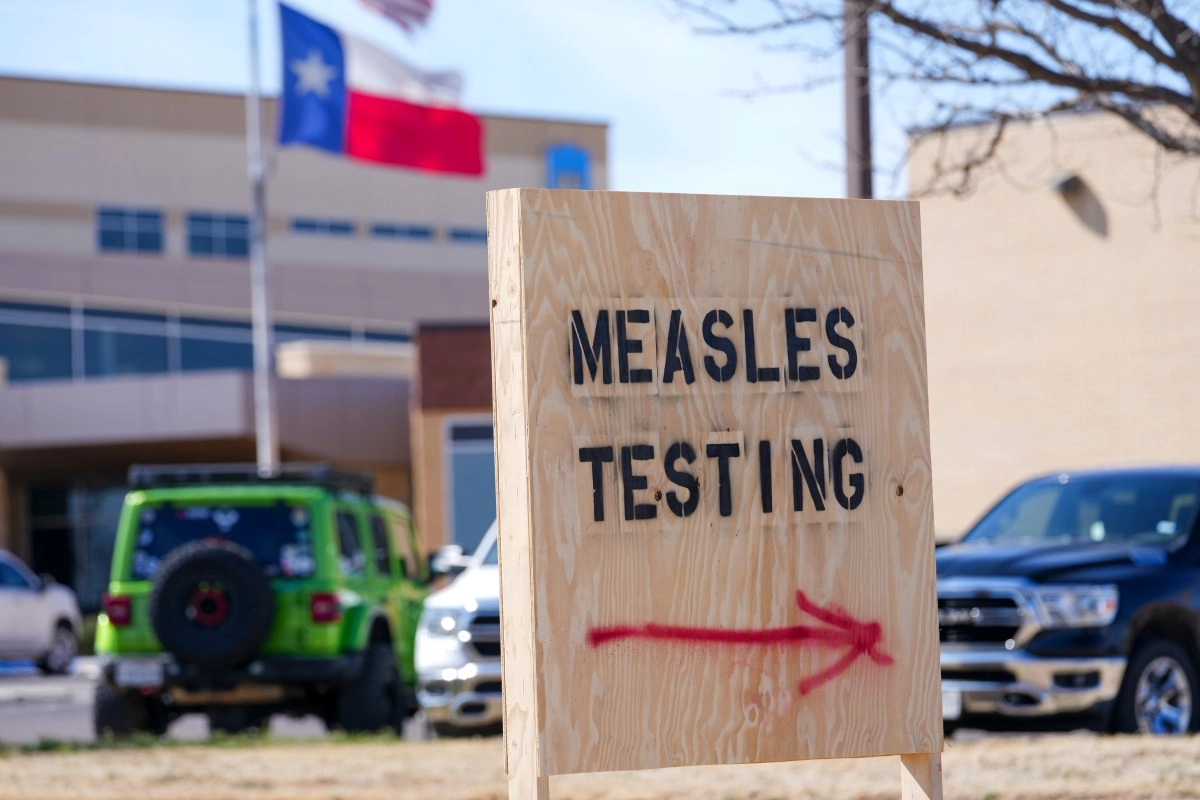

So far this year, as of July 2, the Centers for Disease Control and Prevention (CDC) had reported 2,170 cases of measles, a dangerous infection that can be fatal, representing the highest number recorded in 35 years, while the Los Angeles County Health Department reported seven confirmed cases as of July 9, many of them related to foreign travel.
During the videoconference: “Measles outbreaks spread amid falling vaccination rates,” organized by American Community Media, several experts analyzed the increase in measles cases, the difficulties in controlling outbreaks, vaccine hesitancy, and misinformation about the disease.
Why is measles a threat after it was eradicated from the United States 26 years ago?
"Measles has returned not because the virus has gotten stronger but because we have let our guard down. Vaccination rates have been gradually declining, and measles has taken advantage of that gap," said Patsy Stinchfield, a pediatric nurse practitioner and executive director of the Measles Collaborative.
"Measles aims to reproduce, and it does so in unimmunized people. It is one of the most contagious pathogens ever identified," he noted.
“In 2000 we declared measles eliminated in the United States, which means that there were no longer indigenous cases in circulation, but as long as measles circulates anywhere in the world, there is a risk that it will spread everywhere.”
He said that what we must do is vaccinate, since measles circulates globally and the importation of cases represents a constant risk.
"The reproduction capacity of the virus ranges between 12 and 18; which means that a single case can infect up to 18 people."
He summarized by saying that it is essential to keep vaccination rates high to prevent imported cases from spreading; that threshold is around 95% vaccination.
The UTAH case
Utah has been hit by a year-long measles outbreak; In the last 12 months, 704 cases have been registered. What are some of the cultural and sociological factors that explain this alarming increase?
"This is not unique to Utah. While the state maintained a fairly high overall measles, mumps, and rubella (MMR) vaccination rate, there is one community straddling the Utah-Arizona border where it dropped dramatically, reaching levels of between 30% and 40% in some schools," said Dr. Andrew Pavia, professor and chief of the Division of Pediatric Infectious Diseases at the University of Utah.
He stated that the causes are quite complex, since this community is home to members of a splinter religious sect known as FLDS (Fundamentalist Church of Jesus Christ of Latter-day Saints), whose leader is firmly opposed to vaccination.
“The result was a community with low immunization rates and little trust in both the government and public health authorities.”
He explained that when measles arrived in Utah, they initially managed to control it, but then it began to spread rapidly through the community and spread from there to the entire state.
“Due to federal health cuts, the task of detecting, tracking and controlling cases was much more difficult than in previous occasions when measles was introduced.”
On the other hand, he said that not everyone comes to get tested; Among the reasons may be the fact that a family already knows that the first child had measles and that it has spread to the entire family; and they don't need a test to know it.
The contagions
How does measles spread and how does its speed of transmission compare to other viral diseases, such as COVID or the flu?
In general, he specified that after one year of internal transmission in a country, the status of a measles-free country is lost.
"The vaccine used in the United States uses the Moratín strain, which is a live version of the virus but with some key differences. Normally, the measles virus attacks the cells of the immune system; as with HIV, the cells responsible for fighting the infection become infected and lose their ability to help."
He said that this entails a side effect: the loss of immunological memory, meaning that if cells that had developed immunity against previously encountered pathogens are infected, said immunity can be effectively erased.
What is the risk for adult immigrants who were vaccinated against measles as children in their countries?
"There are several studies on this, but none establishes a definitive time frame for when vaccine protection expires. What we observe is a gradual decline: protection seems to be maintained for eight years according to one study, and between 10 and 15 years according to another; at the end of these periods, signs of weakening begin to appear," said Dr. Neuman
What are the possible consequences for immigrant and underserved communities if vaccine confidence continues to decline?
Dr. Romero said that the consequences could be potentially dire because we would begin to see more cases of measles in these populations, as well as diseases such as meningitis, caused by bacteria.
Therefore, she said misinformation and the CDC's lack of resources to reach these populations could have devastating consequences for children's health in the future.
Dr. Pavia added that if they received the first dose of vaccine after 12 months of age and then a second dose, whether in Latin America or the United States, they have a very high probability of being protected for life, but it is not 100% protection.
So, he said the practical advice is that if they know for sure that they received two doses at the appropriate intervals, they don't really need to get a blood test, unless they are very worried, work in a high-risk area or have a compromised immune system.
"There's no harm in getting another vaccine. My advice to all my colleagues, patients and their parents who don't have their vaccination records is not to get a blood test. Just get another dose of the vaccine if you have concerns. There are two reasons for that: one is why pay for a blood test, which costs more than the vaccine, which is usually free?"