

Deployment of the National Guard in Democratic cities did not reduce violence: CAP
The Center for American Progress study categorically denies that Trump's troop deployments have managed to reduce violent crime
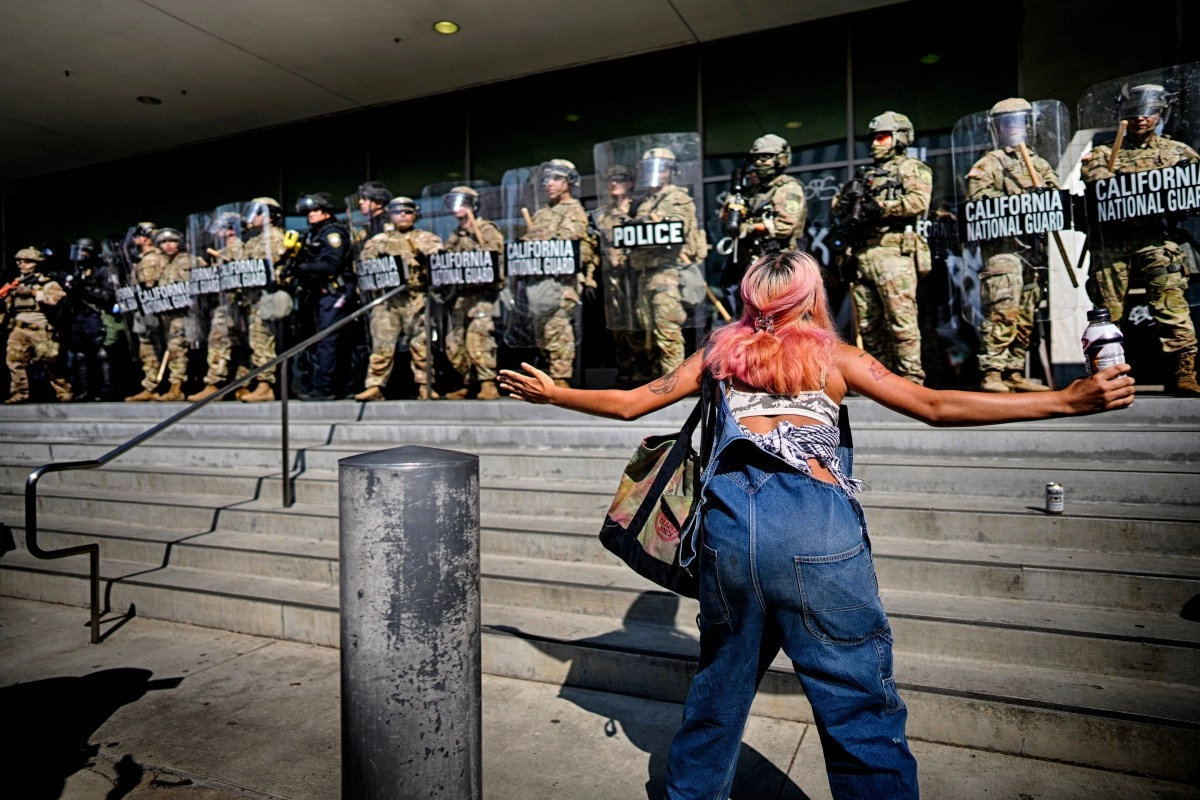

National Guard deployments ordered by President Donald Trump in several Democratic-run cities did not produce a measurable reduction in violent crime, according to an analysis published by the Center for American Progress (CAP), which questions the effectiveness of one of the main security strategies promoted by the White House.
The report maintains that, despite the Republican administration's arguments to justify sending troops to cities such as Los Angeles, Washington, D.C., Memphis and New Orleans, crime indicators show that the downward trend already existed before federal intervention and, in some cases, there were even increases in certain crimes after the deployment.
The investigation indicates that the government has attributed a decrease in violence to the military operation that, in reality, began during 2023 and 2024, before Trump's return to the presidency. For researchers, the available data does not support the claim that the presence of the National Guard has had a statistically significant impact on public safety.
Data questions federal strategy
The case of Los Angeles is one of the examples cited by the study. In June 2025, Trump federalized the California National Guard without the consent of Governor Gavin Newsom, a decision unprecedented in six decades. The White House argued that the measure was necessary to contain unrest resulting from protests against immigration raids and protect federal agents.
However, CAP analysis indicates that the monthly rate of violent crimes per 100,000 inhabitants went from 56.86 at the time of deployment to 58 during the months that the soldiers remained in the city. In Washington, D.C., the situation was similar. When the federal operations began, the capital was registering one of its lowest crime levels in three decades. Even so, subsequent figures did not reflect a reduction attributable to the military presence.
The study also recalls that the Trump administration attempted to extend this strategy to cities such as Chicago and Portland, although federal courts limited the active participation of troops due to questions about the legal authority of the federal government to intervene in local security matters.
Millionaire costs and call to invest in prevention
The Center for American Progress estimates that National Guard deployments and other related federal operations will cost about $1.7 billion, a figure that could approach $2 billion by the end of the year. To draw their conclusions, the researchers used an interrupted time series analysis of information on homicides, violent crimes, and gun violence in different cities.
The methodology compared trends before and after deployments, controlling for seasonal factors and using comparison groups to determine whether there was a change attributable to the federal intervention.
The results show that the cities where troops were finally deployed, or that were threatened with receiving them, already accumulated an average decrease of 14% in violent crimes and 22% in homicides during the twelve months prior to the start of operations. Chandler Hall, associate director of Public Safety at CAP, said the evidence “disproves the government's narrative” and argued that the strategy represents a high cost to taxpayers without offering measurable safety benefits.
Given this scenario, the think tank recommended that federal resources be allocated to strengthening local police forces, expanding access to technology to combat crime and promoting community prevention programs, instead of resorting to military deployments whose effectiveness, according to the report, has not been demonstrated.