

Ken Salazar reveals that AMLO never responded after the capture of “El Mayo” Zambada
Ken Salazar assured that he tried to contact Andrés Manuel López Obrador four times after the arrest of Ismael "El Mayo" Zambada, but never received a response
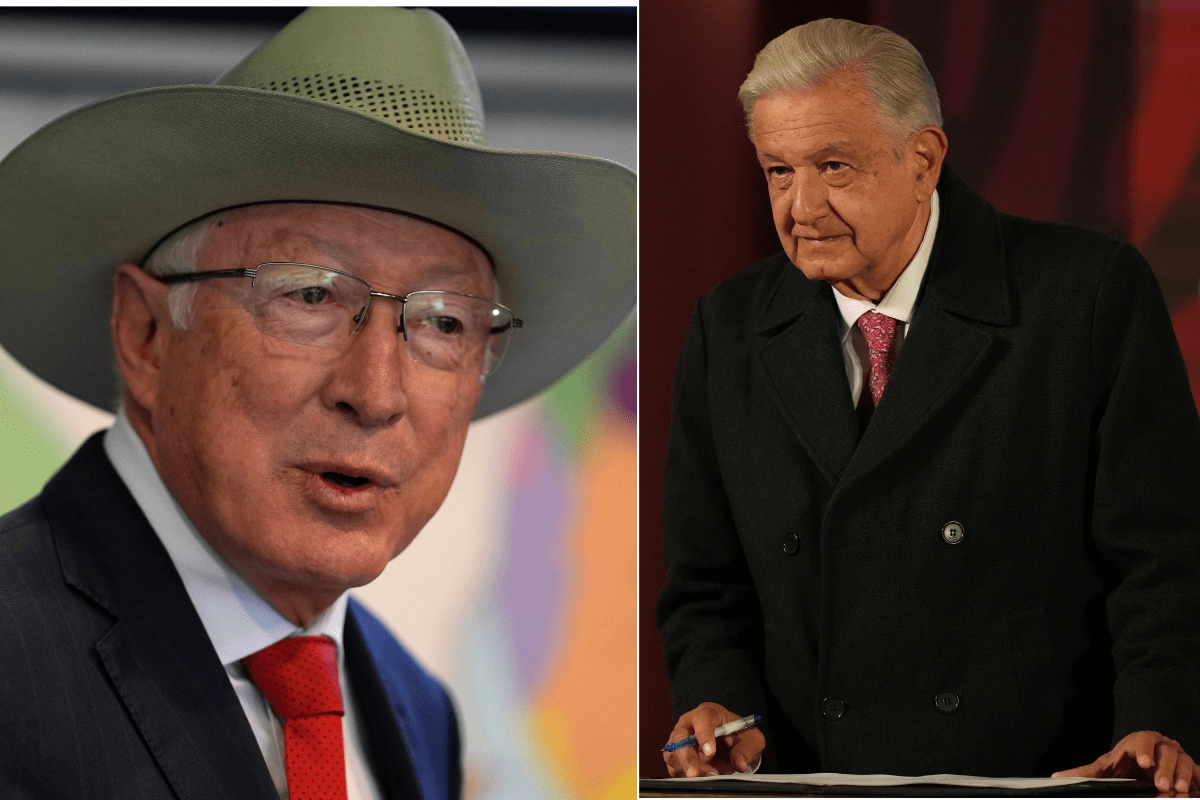

The former United States ambassador to Mexico, Ken Salazar, revealed that he tried to communicate on at least four occasions with the then president Andrés Manuel López Obrador after the capture of Ismael “El Mayo” Zambada, which occurred on July 25, 2024. However, he assured that he never received a response from the Mexican president.
The statements are part of the book "Borderlands. My Fight for an Inclusive America", written by the former diplomat and whose publication is scheduled for July 28 in the United States, while the Spanish edition will arrive in September. Salazar advanced some passages during an interview with journalist Ilia Calderón on the program “Esta Semana”, on N Univision.
I wanted to clarify that the United States did not participate in an operation in Mexico
During the interview, Salazar explained that one of his main concerns was to personally inform López Obrador that the United States government had no prior knowledge of Ismael Zambada's transfer and that no US authority had carried out an unauthorized operation in Mexican territory.
According to him, shortly after speaking with US officials, he wrote a message addressed to the then Mexican president.
“He had to understand that the United States had no prior knowledge of this kidnapping and that under no circumstances had we carried out an unauthorized operation in Mexican territory,” Salazar said.
The former ambassador stated that he sent the message immediately, but never received a response.
There were four attempts to communicate with López Obrador
Salazar reported that that same night, together with the then attorney general of the United States, Merrick Garland, he prepared an official communication to explain to the Mexican government what happened.
In addition to the document, he assured that he offered to meet personally with López Obrador to answer any questions about the case.
“I waited for hours for his response, and nothing,” he recalled.
The former ambassador indicated that the next day he tried again to establish contact. He even took into account that the then president used to travel to his ranch on weekends, but, he said, he did not respond either.
With these new attempts, Salazar assured that he sought to communicate with López Obrador on at least four occasions without success.
He also offered access to the plane used to transport “El Mayo”
As part of the efforts to make what happened transparent, the former ambassador indicated that he made the aircraft in which Ismael “El Mayo” Zambada was transferred from Sinaloa to the United States available to the Mexican government.
According to his story, both López Obrador and the then Attorney General of the Republic, Alejandro Gertz Manero, were invited to send specialists to inspect the plane.
Salazar assured that authorities from both countries inspected the aircraft and that he personally notified López Obrador and the head of the Attorney General's Office of the Republic about that diligence.
"I informed AMLO and Gertz of the diligence. But, even so, there was only silence from AMLO. By Monday, it was clear that something was very wrong," he wrote in his book.
The plane ended up in an FBI museum
The former ambassador's statements come days after the media outlet Pie de Nota revealed that the aircraft used to transport Ismael “El Mayo” Zambada to the United States is currently in a museum located in Santa Teresa, New Mexico.
According to that publication, the plane was donated by the Federal Bureau of Investigation (FBI), a fact that once again placed the case at the center of public debate almost a year after the capture of the historic leader of the Sinaloa Cartel.
Salazar's revelations add a new chapter to the controversy about the circumstances in which Zambada arrived in the United States and about the communication that existed between both governments after one of the most relevant events in the fight against drug trafficking in recent years.