

3 keys that explain the dismissal of Dina Boluarte and the new political crisis in Peru
Insecurity addressed the final blow to a government weakened by the ousted president's decision to complete her constitutional term.
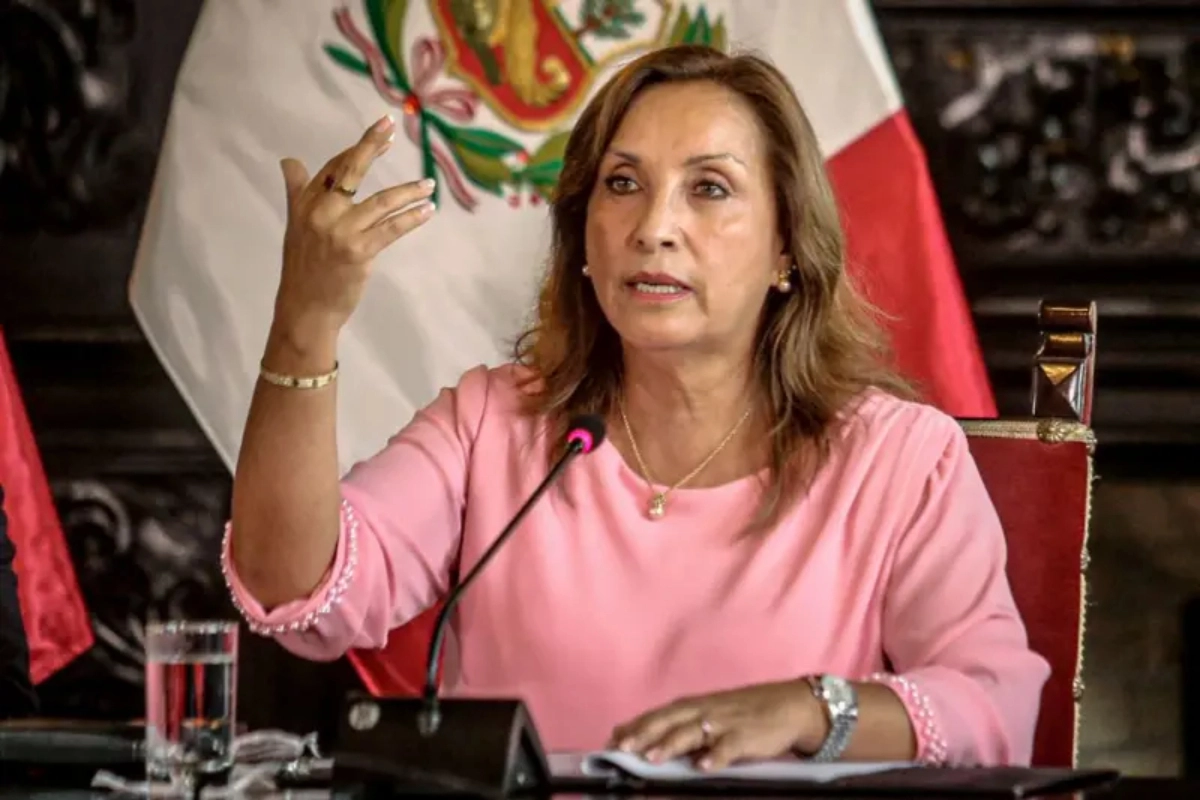

Dina Boluarte, the first woman to hold the presidency of Peru, suffered the same fate as all her predecessors since 2018 and lost power prematurely.
The president was removed from office by her country's Congress in an express process, then that the unicameral parliament, with 118 votes in favor, approved the vacancy due to "permanent moral incapacity" in the early hours of this Friday.
Boluarte's departure has caused surprise, since, despite the fact that his administration faced overwhelming popular rejection and was marked by multiple scandals, he had managed to remain in power.
Since his arrival at the Head of State - after Pedro Castillo's failed self-coup in December 2022 - Boluarte forged an alliance with Fujimorism and other political forces, which allowed him to maintain control of the legislature.
However, that union fell apart. Why?
Below, we present three reasons.
1. The plague of insecurity
Boluarte's administration was full of errors. However, the rise in crime and violent crime was what gave it the final blow.
The shooting of the cumbia band Agua Marina at a concert at a military club in Lima sparked the crisis that ousted Boluarte from the House of Pizarro, as the presidential palace is also known.
The data shows that Peru is increasingly dangerous and violent. In the first half of 2025, 161 more homicides were recorded than in the same period in 2024, according to the Death Information System (Sinadef). There were 209 homicides last August alone.
And a Human Rights Watch report warned that Peru is one of the countries in the region where violent deaths have increased the most.
Surveys show that crime is one of the main concerns for citizens, while extortion of businesses and companies is one of the most common topics of conversation.
And it could not be otherwise,Since between January and September 2025, 20,705 complaints were registered, which means one every 19 minutes,according to the Peruvian National Police's own statistics.
Transportation companies and workers have been one of the favorite targets of criminal groups dedicated to extortion.
Some 180 drivers have been murdered so far this year for refusing to pay what the mafias demand, according to the Crime and Violence Observatory.
In recent years, stoppages and strikes by transport workers to demand security have been common in Lima, with the government having no way to appease the prevailing discontent in the sector.
The executive branch has declared a state of emergency and deployed the armed forces in different parts of the country, but so far the strategy has not served to reduce crime levels.
The recent attack on Agua Marina has been seen as an escalation in the violence and impunity with which criminal groups operate.
The incident occurred at the Circulo Militar in Chorrillos, a recreational center whose members are mostly military personnel, where unknown armed assailants entered and opened fire on the concertgoers.
Furthermore, it has emerged that the musical group had previously received threats from a group led by Erick Luis Moreno Hernandez, a criminal nicknamed "El Monstruo" (The Monster). According to the newspaper El Comercio, the criminal had warned the artists not to perform any concerts in the area without first paying "un quota" (extortion).
2. The Shadow of Corruption
The rise in crime has further sunk Boluarte in the polls.
By last September, only 3% of Peruvians approved of the now former president's management, revealed the polling firm Ipsos. However, other studies even gave her 0% popularity among young people aged 18 to 24, an unprecedented figure for any ruler in modern times.
It was the successive corruption scandals that irreparably damaged the former president's image.
In more than two years in power, Boluarte has been implicated in at least seven different cases, some of which have led her to testify before the prosecutor's office and to have her residence searched by the police.
The former president is accused of improper bribery for allegedly accepting gifts of Rolex watches and high-value jewelry, the origin of which she could not explain.
In December 2024, The Attorney General's Office opened an investigation for the alleged crimes of failure to perform official acts and abandoning office after journalistic revelations that she had left office to undergo cosmetic surgery without informing Congress, as required by law.
The former president has denied any wrongdoing and last March denounced that the investigations the Attorney General's Office has against her were part of "a white coup d'etat."
"Now, coups d'etat no longer come from the army, but from the Public Ministry," she stated.
The statements by the former president occurred after the home of his former Interior Minister, Juan Jose Santivanez, was raided by the police. Santivanez is accused of attempting to dismantle a police unit that has collaborated in the investigations against Boluarte and his associates.
With Boluarte's departure from the Government Palace, the judicial proceedings against him will accelerate. This was made clear by the Attorney General, Tomas Galvez, who recalled that "the Constitutional Court somewhat paralyzed the investigations."
And to prevent the former president from applying the same strategy as some of his predecessors, the official announced that he will ask the courts to prohibit her from leaving the country.
"As soon as dawn breaks, we will be presenting the request for an exit ban both from the provincial prosecutor's office, because we have some investigations there, and also from the Attorney General's Office," Galvez declared early Friday morning on RPP radio.
3. Authoritarianism and its meetings
Although in 2023 she claimed to be “a woman of peace, dialogue, and a commitment who believes in democracy,” the president's actions in recent months revealed something different.
The harsh repression she ordered against the protests that followed the removal and subsequent imprisonment of former President Castillo in December 2022 alienated her from the indigenous, peasant, and leftist sectors that brought her and Castillo to power.
“How many more deaths do they want?” she once said.
“I am not going to resign,” she asserted in 2022, while accusing the protesters of being “terrorists” and of receiving funding from foreign forces, without presenting any evidence.
The break with her allies was definitively consummated when Boluarte decided not to call early presidential elections after taking power and instead attempted to complete the constitutional term for which he had been elected. elected her ousted ally, of whom she was vice president.
And to achieve this objective, Boluarte made a pact with Fujimorism and other right-wing forces, which allowed her to sustain herself politically, despite her lack of popular support.
The agreement with her former adversaries included ignoring orders from the Inter-American Court of Human Rights (IACHR) regarding the release of the late President Alberto Fujimori and the approval of a series of laws that allow the statute of limitations for crimes against humanity to expire and grant amnesty to police and military personnel convicted of human rights violations.
Many analysts claim that congressmen avoided pushing for Boluarte's impeachment earlier because it would have involved calling early general elections and, Consequently, they would also shorten their time as parliamentarians.
But now that the presidential term is approaching its end, scheduled for July 2026, the political forces that have supported Boluarte have found incentives to let her fall and avoid the cost of being seen as the only support for a ruler with a historically popular rejection.
“I have not thought about myself, but about the most of 34 million Peruvians,” the former president said in a recorded speech, which was rebroadcast as soon as her removal was announced, and in which she warned of the consequences that her departure will have for “the stability of democracy.”
Boluarte did not make any kind of mea culpa, but instead dedicated his last appearance from the presidential palace to listing the achievements of his administration.
However, Peruvians were unable to fully hear the speech because it was interrupted to broadcast the inauguration of the new president, Jose Jeri, abruptly ending a government that began in the same way.
Click here to read more stories from BBC News Mundo.
Subscribe here to our new newsletter to receive a selection of our best content of the week every Friday.
You can also follow us on YouTube, Instagram, TikTok, X, Facebook and on our WhatsApp channel.
And remember that you can receive notifications on our app. Download the latest version and activate it.