

Republicans accelerate their strategy to eliminate African-American majority districts in the South
Legislators are advancing rapidly on a strategy to redesign electoral maps before the legislative elections on November 3
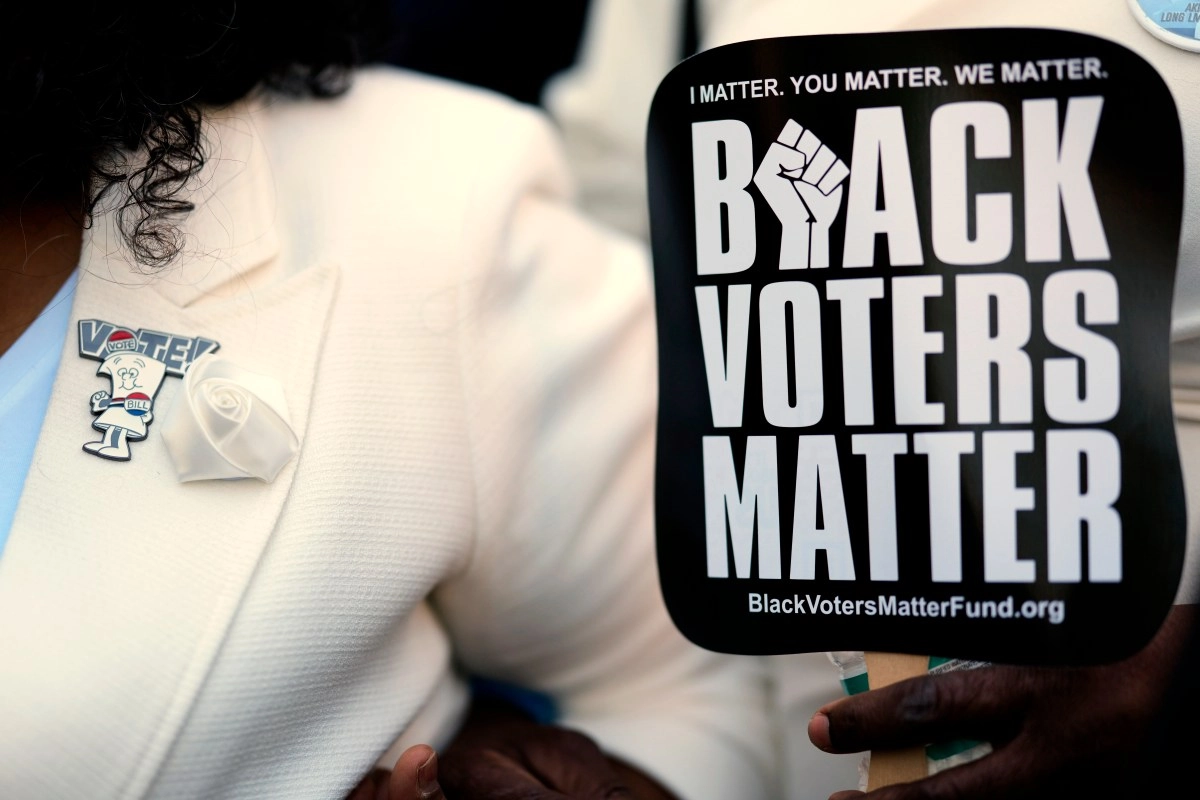

In a maneuver that threatens to dismantle decades of advances in civil rights, the Republican Party has launched an aggressive strategy to redraw electoral maps in states os from the south. The objective is clear: dilute the power of the African-American vote just in time for the midterm elections of next 3 November , where control of Congress hangs by a thread.
This offensive gained strength after the recent decision of the Supreme Court, which deactivated a key piece of the Law of Law. ho to the Vote of 1965. By annulling the electoral map of Louisiana, under the argument that it was based excessively on criteria of racial equality, the highest judicial instance not only changed the rules of the game, but it delivered a “balloon of oxygen” to the aspirations of Donald Trump and his allies, who seek to ensure a favorable majority in the House of Representatives.
The controversial "racial gerrymandering" gains strength in Louisiana and Tennessee
The Republican urgency has been manifested with particular strength in Louisiana. Despite the state with a 33% African-American population, the new design will reduce representation to a single majority African-American district, of the six existing ones.
Republican Governor Jeff Landry has already signed an executive order to postpone the May primary until July, thus granting the time needed for lawmakers to seal a map that openly favors his partisan interests.
Meanwhile, in Tennessee, the state Capitol has become a powder keg. Between protests and slogans from civilian groups, legislators are voting this Thursday on a new district layout stritos. The protesters denounce that these modifications are, in practice, “racial gerrymandering” designed to silence the minorities at the polls within barely six months.
Alabama and Mississippi are not left behind, preparing extraordinary sessions to follow the steps of their neighbors, while in South Carolina the legislative procedures for territorial modification have already been started.
A historical setback after 60 years of struggle for the vote
The impact of this redrawing is not only electoral, but deeply symbolic and social. Other key states such as Texas, Florida, Missouri and North Carolina have already adjusted their district borders at request exp Trump. The only momentary respite seems to come from Georgia, where Governor Brian Kemp has ruled out immediate changes for November, although he left the door open for a reconfiguration in 2028.
Experts and activists warn that we are facing a rewriting of the contemporary history of the United States. The Voting Rights Act of 1965, signed by Lyndon B. Johnson after the tireless fight. Figures such as Martin Luther King Jr. were designed precisely to break down legal barriers, such as literacy tests, that prevented African Americans from exercising their constitutional rights.
Today, six decades later, that conquest seems to be faltering. By eliminating districts where minorities have their own voice, the risk is that Congress will stop being a faithful mirror of the diversity of the country, becoming a reflection of mathematical strategies designed in political offices to perpetuate power at the cost of democratic equity.