

Trump attacks NATO again, and again insinuates that he could abandon it; Demands full support in the war against Iran
The frustration of the New York tycoon stems from the lack of support from European partners in Operation
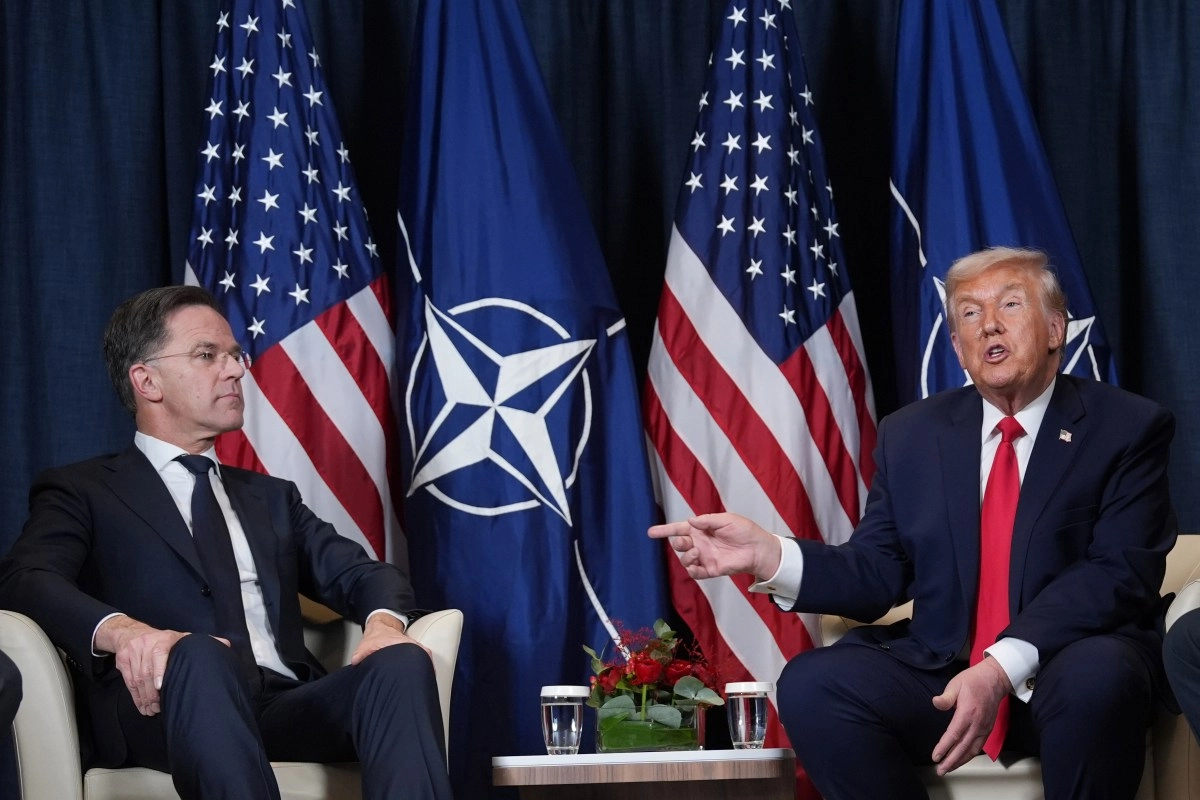

US President Donald Trump intensified his criticism of the North Atlantic Treaty Organization (NATO), asserting that the military alliance “should be ashamed of itself” and reiterating that his country could reconsider its membership in the bloc.
During an event at the White House, the Republican president responded to questions about a possible US withdrawal with a direct message: “You’ll see it very soon. NATO has not lived up to expectations.” His remarks come amid growing tensions with European allies over their refusal to support military operations against Iran.
Trump has repeatedly indicated that several member countries have restricted the use of their airspace and military bases for actions related to the offensive dubbed “Epic Fury,” launched in late February by Washington and Israel.
According to the president, this lack of support demonstrates weakness within the alliance.
International Pressure and Tensions with Allies
The hardening of the rhetoric has generated concern in both Europe and the United States. Officials and analysts warn that, beyond a formal withdrawal, the constant threats could weaken trust among allies.
NATO Secretary General Mark Rutte is scheduled to travel to Washington in the coming days in an attempt to contain the diplomatic crisis. Meanwhile, Secretary of State Marco Rubio confirmed that the administration will review the relationship with the alliance once the conflict in the Middle East concludes.
Experts emphasize that the impact of the presidential rhetoric is already being felt on the other side of the Atlantic.
“The question is not whether the United States will leave, but whether its allies will continue to trust its leadership,” international security analysts have warned. Although a formal withdrawal would require congressional approval, due to legislation passed in 2023,Trump could significantly reduce US involvement through troop cuts, less military cooperation, or by limiting its commitment to the principle of collective defense established in Article 5.
Hormuz and the Energy Factor
The conflict has also brought the Strait of Hormuz, a strategic waterway through which much of the world's oil and gas passes, to the forefront. Iran has partially restricted passage in response to the military offensive, increasing international pressure.
Trump issued an ultimatum to Tehran to reopen the maritime route, warning that if it did not, the United States could attack key Iranian infrastructure. However, the president has offered contradictory versions in recent days, at times indicating that trade would be restored “naturally.”
At the same time, the president has urged European and Asian allies to take a more active role in resolving the energy crisis, even suggesting they seek alternative supply sources outside the Persian Gulf.
The current tensions add to a long list of disagreements between Washington and NATO, including disputes over defense spending, trade, support for Ukraine, and strategic differences with powers such as Xi Jinping.
Despite the climate of uncertainty, lawmakers from both parties in the United States have defended the importance of the alliance, recalling its historic role in global security since its founding in 1949.
However, Trump's stance continues to raise doubts about the future of the bloc and Washington's role in the international order.
From Warsaw, the Polish Foreign Ministry warned that a US withdrawal is already a This “possible scenario” must be taken very seriously. In the diplomatic corridors of Brussels, the message is becoming clear: Europe must strengthen its own operational capacity in the face of the growing unpredictability of its most powerful ally.sometimes indicating that trade would be restored “naturally.”
In parallel, the president has urged European and Asian allies to take a more active role in resolving the energy crisis, even suggesting they seek alternative supply sources outside the Persian Gulf.
The current tensions add to a long list of disagreements between Washington and NATO, including disputes over defense spending, trade, support for Ukraine, and strategic differences with powers such as Xi Jinping.
Despite the climate of uncertainty, lawmakers from both parties in the United States have defended the importance of the alliance, recalling its historic role in global security since its founding in 1949.
However, Trump's stance continues to raise doubts about the future of the bloc and Washington's role in the international order.
From Warsaw, the Polish Foreign Ministry warned that a US withdrawal is now a “possible scenario” that must be taken very seriously.
In the diplomatic corridors of Brussels, the message is becoming clear: Europe must strengthen its own operational capacity in the face of the growing unpredictability of its most powerful ally.sometimes indicating that trade would be restored “naturally.”
In parallel, the president has urged European and Asian allies to take a more active role in resolving the energy crisis, even suggesting they seek alternative supply sources outside the Persian Gulf.
The current tensions add to a long list of disagreements between Washington and NATO, including disputes over defense spending, trade, support for Ukraine, and strategic differences with powers such as Xi Jinping.
Despite the climate of uncertainty, lawmakers from both parties in the United States have defended the importance of the alliance, recalling its historic role in global security since its founding in 1949.
However, Trump's stance continues to raise doubts about the future of the bloc and Washington's role in the international order.
From Warsaw, the Polish Foreign Ministry warned that a US withdrawal is now a “possible scenario” that must be taken very seriously.
In the diplomatic corridors of Brussels, the message is becoming clear: Europe must strengthen its own operational capacity in the face of the growing unpredictability of its most powerful ally.