

Judge appointed by Trump refuses to stop changes to voting by mail
Court decision allows Trump's order to reform the electoral system to temporarily advance
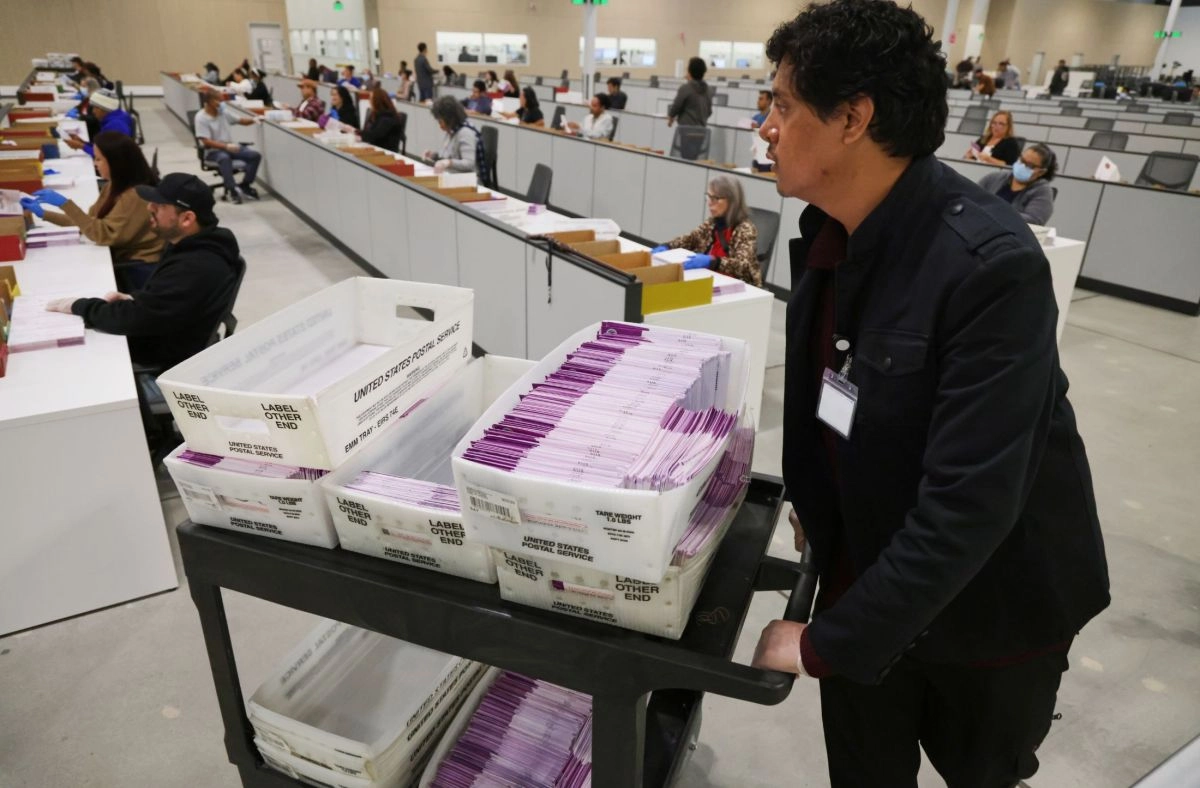

A federal judge appointed by President Donald Trump refused to block a controversial executive order that seeks to reform the electoral system, including changes related to voting by mail and the creation of a federal census of eligible voters.
The decision represents a new legal triumph for Trump in the midst of the political and judicial battle over electoral rules leading up to the midterm elections.
Court considers it “premature” to stop the order
According to information published by AP, federal judge Carl Nichols, based in Washington D.C. and appointed by Trump, determined that it is still too early to suspend the measure, since several provisions of the executive order have not yet been implemented.
“The Court recognizes that the Postal Service could issue a final rule that directly affects plaintiffs,” Nichols wrote in his ruling. However, he noted that the plaintiffs have not yet demonstrated immediate harm that would justify an injunction.
The lawsuit was pushed by Democratic groups and civil rights organizations, which argued that the Constitution gives the states and Congress — and not the president — the authority to set election rules.
Trump insists on tightening electoral controls
The executive order was issued by Trump in March, after a Trump-backed initiative to reform the federal electoral system failed in Congress.
The plan contemplates the creation of a federal list of eligible voters and poses restrictions on sending ballots by mail, a modality that Trump has repeatedly questioned since the 2020 presidential election.
After his defeat against Joe Biden, Trump maintained without evidence that voting by mail facilitated massive electoral fraud. However, state audits, federal investigations and reviews pushed even by Republicans concluded that there was no widespread fraud.
Election officials and civil organizations warned that the measure could generate administrative confusion and affect access to voting, especially in states where voting by mail is widely used.
New legal battle moves to Boston
The dispute will now continue in federal court in Boston, where voting rights organizations maintain another lawsuit against the executive order.
This is the second time Trump has attempted to change election rules through executive orders. A previous initiative, which required documentary proof of citizenship to register as a voter, was previously blocked by federal judges.