

Electric: Mercedes is betting everything on a future without emissions
The German brand reinforces its commitment to total electrification, although it warns that the energy transition must be balanced and flexible
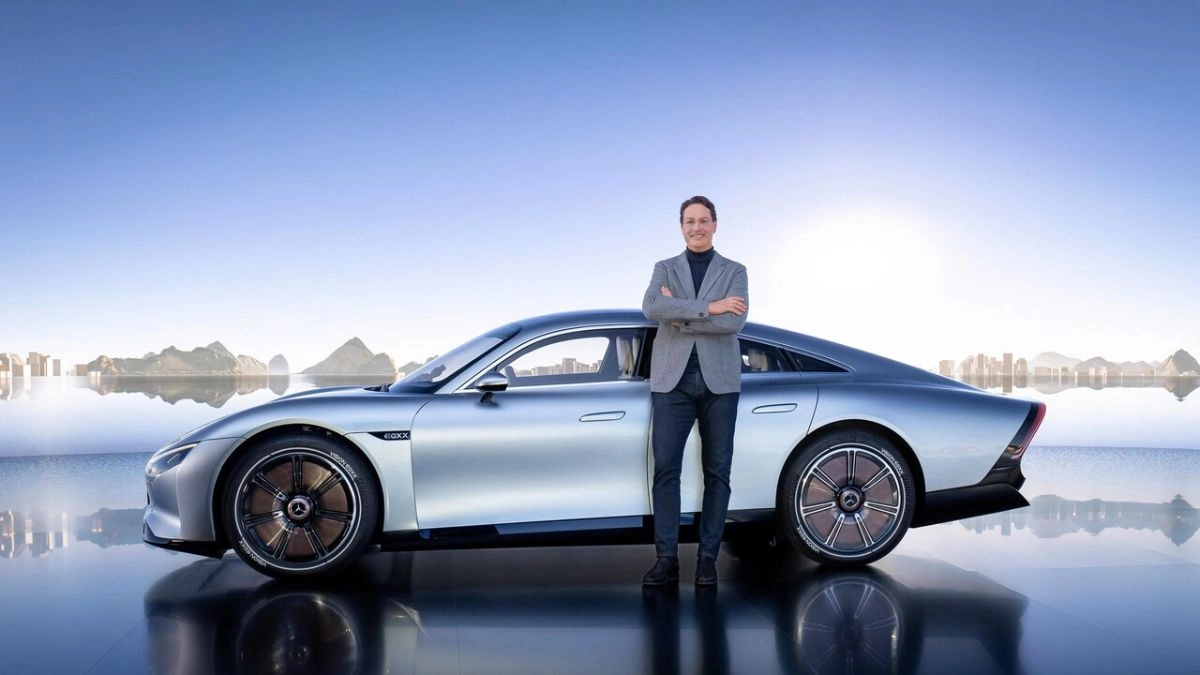

Mercedes-Benz is very clear about this and reaffirmed its roadmap towards a completely electric future. Ola Kallenius, its CEO, has been clear: the direction has been set and there is no turning back.
Read also: Audi and tolls: contactless payment via C-V2X arrives in the US.
During a recent interview with the German media outlet Frankfurter Allgemeine Sonntagszeitung, the executive left a phrase that sums up the brand's vision: “There is no turning back in the world of automobiles. Zero emissions: that is the future of car transportation.”
What years ago was a wish for the future today becomes a strategic priority. Although the company had initially set 2030 as the deadline to abandon combustion engines, the global context has led to a review of that calendar.
Mercedes-Benz and a long-term commitment
Now, the new goal points to 2035, in line with the deadlines set by the European Union, which will prohibit the sale of thermal vehicles starting that year.
Kallenius, in addition to leading Mercedes-Benz, serves as president of the European Automobile Manufacturers Association (ACEA), and from that position he warns about the risks of a poorly calibrated transition. While he strongly supports decarbonization, he believes that Brussels' current plans could be too simplistic.
“The EU's current plans are one-dimensional; we need a smart and flexible approach,” he stressed, drawing attention to the importance of harmonizing sustainability with economic development and job protection.
The executive not only offered constructive criticism, but also contrasted the European model with the approach taken by China, the country currently leading the automotive electrification. In his opinion, Beijing has managed to incentivize the transformation without imposing abrupt sanctions.
“The Chinese do not rely on drastic sanctions, but on flexibility and smart market-based incentives,” he commented, demonstrating their admiration for a transition guided by incentives rather than prohibitions.
Far from limiting themselves to rhetoric, Mercedes-Benz has implemented a robust action plan. In recent years, the brand has multiplied its portfolio of electric models and currently leads the luxury electric vehicle segment.
“Most of our electric vehicles are currently in the luxury segment, and no competitor sells as many electric vehicles in this segment as we do,” Kallenius emphasized, making it clear that electrification does not mean abandoning the brand's premium DNA.
A firm and decisive commitment
Models such as the new electric CLA or the upcoming zero-emission GLC are key pieces for conquering new market segments. Added to this is the development of platforms dedicated exclusively to electric vehicles, such as the EVA (Electric Vehicle Architecture), on which future high-end SUVs and sedans will be built.
But the strategy is not limited to battery-powered vehicles. Mercedes-Benz also continues to invest in complementary technologies, such as hydrogen fuel cells and next-generation plug-in hybrids.
This multi-pronged approach responds to the goal of ensuring complete decarbonization by 2050, the date by which Europe hopes to achieve climate neutrality.
The social and economic dimensions of this transition are not lost on Mercedes. Kallenius has expressed his concern on several occasions about the potential effects of this transformation on the European industrial fabric, especially in countries like Germany, where the automotive industry is a pillar of the economy.
In the same interview, when asked about this matter, he responded clearly: “It is essential that the energy transition does not jeopardize the European economy,” adding that Mercedes is committed to sustainable business models, both environmentally and socially.
Part of the company's commitment is to ensure that its supply chains, suppliers, and workers can adapt to this new reality without being left behind.
To this end, it plans to invest in staff retraining, factory conversion, and the creation of new jobs linked to electric mobility.