

Why would opening a CD after inflation soar give you more money?
High inflation, bad news for many, could benefit you if you have a CD. We explain how it's possible and why it would be a good time to open one
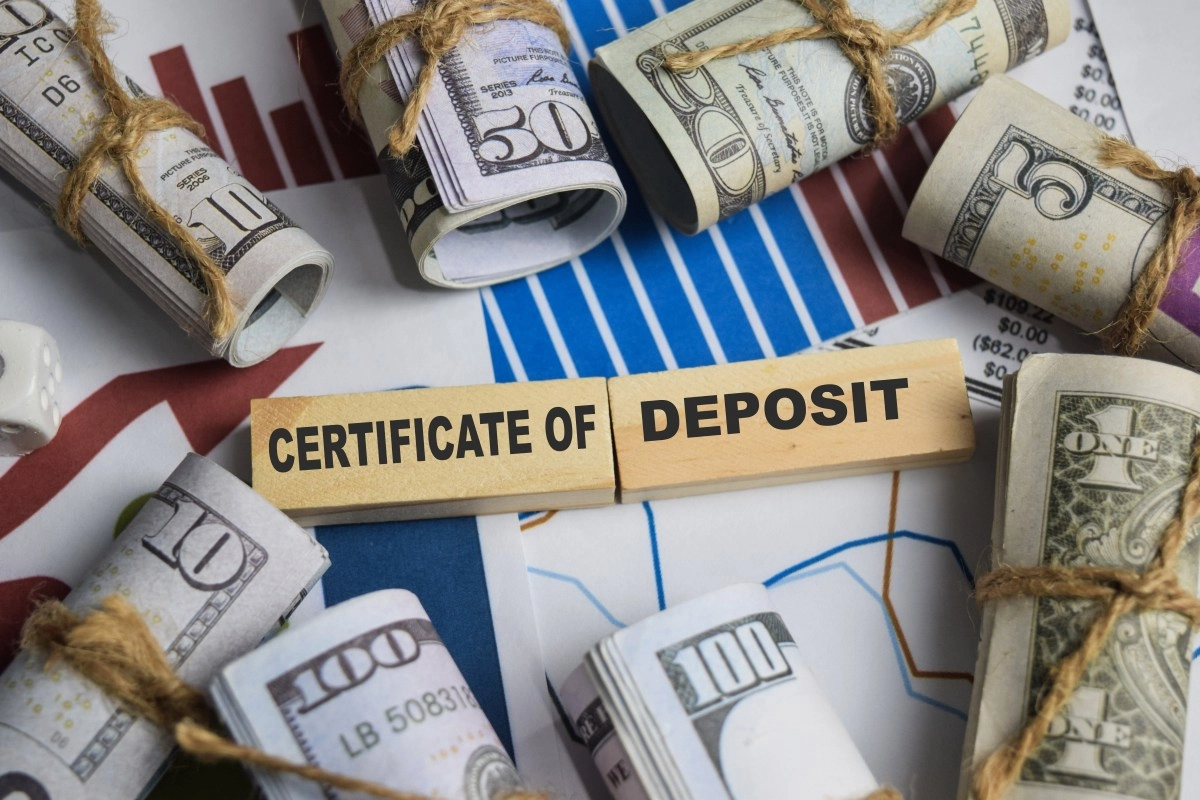

When inflation rises, the first thing many people think is that their money loses value. And yes, that's largely true. But here's an interesting twist that no one tells you: that same scenario can become an opportunity to grow your savings if you know where to put them. In this case, opening a certificate of deposit (CD) right after an inflationary spike can be one of the smartest moves you could make. To better understand this, imagine you have money saved in a traditional account that barely generates interest or, definitely, doesn't give you any at all—a checking account. While prices rise, your money stays practically the same; that is, it loses purchasing power (what used to buy you $100 now buys $90, just to give a simple example). In contrast, a CD allows you to secure a fixed rate, currently close to or above 4%, for a specific period, which can help offset some of the impact of inflation. Here we'll explain how, when inflation rises, you could benefit by putting your money into a CD. 1. Rates That Could Rise Even Further
One of the key reasons this moment is strategic has to do with how interest rates react. When inflation rises, the Federal Reserve (Fed) typically responds by raising rates or keeping them elevated for longer. This directly impacts products like CDs.
In recent years, CD rates have risen precisely for this reason. And while the Fed hasn't made any recent adjustments, a further increase in inflation could change the outlook.
Today, it's possible to find short-term CDs (such as six months) with rates around 4.15%. However, if the inflationary environment persists or worsens, it wouldn't be surprising to see even more attractive returns in the short term.
2.Secure your earnings from the start
Here's an advantage many overlook: unlike other accounts such as high-yield savings accounts or money market accounts, CDs offer a fixed rate. That means you know exactly how much you'll earn from day one.
Think of it this way: if you open a CD today, it doesn't matter if rates drop in a few months, your return is already secured. In contrast, with other accounts, the bank can adjust the rate at any time, and it usually lowers it when the market changes.
For someone seeking stability, this is key, because you don't have to constantly check if your money is earning less interest than expected.
3. Security in uncertain times
The current economic climate isn't exactly the most tranquil. In fact, the recent increase in inflation in March is largely due to international tensions, which in turn have impacted the job market and increased stock market volatility. As is normal in situations like this, all of this generates uncertainty, especially for those who don't want to risk their savings. In this scenario, a CD acts as a "safe haven." It not only protects your money from impulsive decisions but also gives you a clear growth structure. For example, if you know you won't need that money for six months or a year, you can "freeze" it in a CD and let it work for you without worrying about market fluctuations. Is it a good idea to open one now? Although a CD is a smart bank account that grows your money effortlessly, it's not something to be opened without thinking. This type of account requires commitment, as you won't be able to access the money easily without paying a penalty. Therefore, it's crucial to carefully calculate how much you can afford to leave locked up. In other words, you should put money in that you won't need in the short or medium term, not even for emergencies.
If you're not sure you might need the money, but you also don't want to leave it sitting idle without earning returns, there's a tiered CD strategy that could work for you. The goal is to put different amounts of money into different CDs with varying maturities to avoid locking up all your savings for a long time. By doing this, you have a better chance of withdrawing cash from the CD with the shortest maturity without penalties (of course, that will also depend on how urgently you need the money).