

Google wants to win the AI ??battle with the cheapest subscription
The new price of AI Plus seeks to attract students and curious people who want to try advanced AI without paying what the competition's premium plans cost
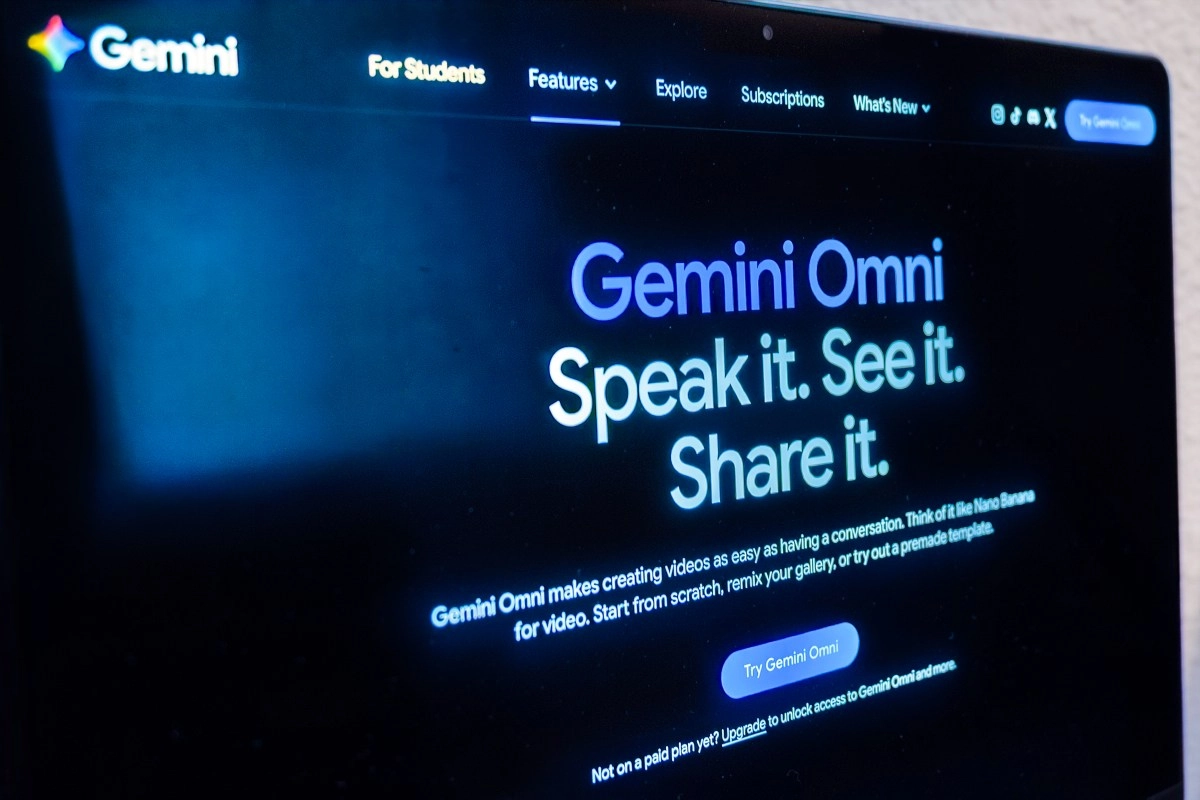

Google has just made it clear that it wants to win the price war on AI and that its strategy involves something very simple, lowering the entry barrier for the average user. The movement revolves around Google AI Plus its consumer subscription plan that now becomes much cheaper without cutting features.
Google lowers the price of AI Plus and tightens the competition
Until now Google AI Plus cost $7.99 per month in the United States and was already one of the most affordable AI plans on the market for individual users and students. Since the announcement on June 9, 2026, the price has been reduced to $4.99 per month, which puts Google in a very aggressive position compared to other players focused on premium subscriptions.
The reduction comes with an extra that is not minor. Google doubles the storage included in the plan, going from 200 gigabytes to 400 gigabytes while maintaining the same level of functions. It's not just about paying less to access advanced AI models, you also gain space in the cloud for files, creative projects and backups, which is key if you use the AI integrated into the Google ecosystem.
The new prices begin to be applied from June 9, 2026 for the AI Plus plan while the storage improvements will be progressively rolled out to all users over the following days according to the Gemini AI product team.
What Google AI Plus includes and why it is a masterstroke
Google AI Plus is not a cut-down plan designed just to test the technology but rather an offer that mixes several pieces of the Google ecosystem. Featured features include video generation with Omni Flash, Google Flow creative studio, and NotebookLM, the AI-powered research assistant that helps organize information and sources.
The company reserves higher plans such as AI Pro and AI Ultra for those who need more limits of use or advanced capabilities, but the focus of this movement is clearly on the mainstream user, the student, the freelancer or the creator who wants powerful AI without paying high subscription figures. By cutting the price and improving storage, Google is sending a clear message that it wants user volume and is willing to sacrifice short-term margin to capture that base.
This shift fits with an increasingly shared reading in the sector, many investors see a stage coming in which AI infrastructure and base models are going to become commoditized. The differentiation will not be so much in whether your model is slightly better in a benchmark but in how you package it, how much you charge and how integrated it is into the user's digital life.
The price war in AI is no longer just a matter of emerging markets
Until recently, the price war discourse in AI sounded mainly in markets like India where it was being tested how much the mass user was willing to pay. OpenAI launched ChatGPT Go in that country for about $4.60 a month well below its standard $20 plan while Google responded with an AI Plus for less than $5 for Indian users.
The interesting thing is that now this logic lands squarely in the United States, a market where large technology companies usually start at the top with premium plans. Google is transferring the undercut bundle strategy and conquering the user before your rival to a much broader audience that uses Android Gmail YouTube and the rest of its ecosystem on a daily basis.
Meanwhile, other actors are not moving at the same pace, Anthropic, for example, has not yet launched a budget plan or localized prices for India, which leaves it momentarily out of this game of volume and accessibility. That does not mean that there is a black or white vision between players; the landscape is more like a board where each company tests a different combination of prices, capabilities and product focus.
What it means for the user and for the future of consumer AI
For the user, the reading is quite direct, generative AI begins to look like any other digital subscription service where price becomes as important a battlefield as functions. For $4.99 a month, Google offers access to a suite of creative and productivity tools supported by its Gemini models with more storage to support daily workflow.
For the industry, the message is deeper, investors like Chi Hua Chien point out that in every major technological transition from the PC to the mobile, infrastructure companies end up with pressured margins because the user only wants to move their data as cheaply as possible. What differentiates the winners is not the chip or the server rack but the scope, distribution and ability to package AI into products that people already use.
Google plays precisely that card, it has vertical integration, infrastructure control, massive distribution and the ability to package AI within services that are already part of the user's routine, from email to the search engine through cloud storage. With the reduction of AI Plus, the company is not proposing a war of choosing A or B but is pushing the market to a stage where there will be multiple options and the user will lean towards the one that gives the most value for each dollar paid.
If this movement makes anything clear, it is that the future of consumer AI will be increasingly pocket-friendly and more competitive for platforms that make a living solely by selling access to models. For student and professional creators who want to experiment with AI without destroying their monthly budget, this is especially good news because it puts pressure on the entire ecosystem to continue lowering prices and increasing features.