

Spacecraft or comet? A Harvard scientist's theory about 3I/ATLAS challenges NASA
Astronomer claims 3I/ATLAS is a spacecraft that could deploy probes during its passage through Jupiter
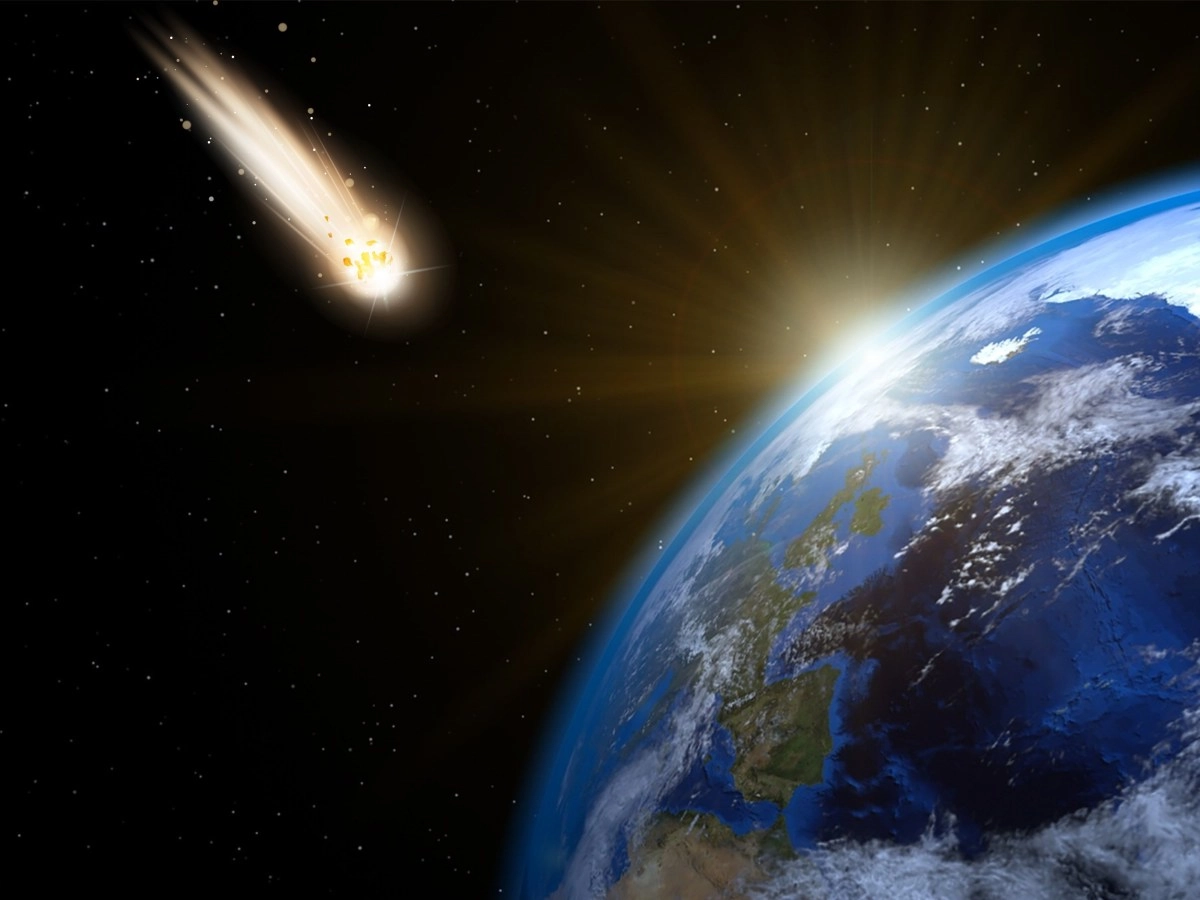

Modern astrophysics is once again faced with a debate that challenges the limits of the conventional. Avi Loeb, former head of the Astronomy Department at Harvard University, has presented a new theory about the interstellar object 3I/ATLAS that goes beyond the traditional classification of celestial bodies. According to his recent analyses, this cosmic visitor might not be a simple comet, but an artificial structure designed to deploy probes during its next close approach to Jupiter in the spring of 2026. The scientific community is watching with skepticism and fascination as Loeb argues that the anomalies detected in the trajectory and composition of 3I/ATLAS require an explanation that standard astrophysics, in his view, fails to fully satisfy. Orbital Anomalies: Clues Beyond Gravity. The central point of Loeb's argument lies in the dynamic behavior of the object. Discovered by the ATLAS early warning system, 3I/ATLAS has exhibited a hyperbolic trajectory that confirms its extrasolar origin. However, what has captured the astrophysicist's attention is not its origin, but its movement.
The object exhibits a “non-gravitational acceleration” which, according to conventional models, is attributed to outgassing (the rocket effect produced by the evaporation of ices).
However, Loeb disagrees with this standard interpretation. According to his observations, the detected gas jets are “extremely collimated” and project perpendicularly to the direction of the Sun, atypical behavior for a natural comet. of a chaotic dispersion of material, Loeb suggests that this configuration could indicate a controlled propulsion system or a stabilization mechanism instead.
Furthermore, spectral analysis has revealed the presence of nickel without the expected amounts of iron, a ratio that on Earth is frequently associated with industrial alloys and not with natural geological formations.
Jupiter's maneuver: A Strategic Deployment Point
Perhaps the boldest aspect of the theory is the prediction about the object's immediate future. Orbital calculations indicate that 3I/ATLAS will pass close to Jupiter on March 16, 2026.Loeb points out that the trajectory precisely crosses the gas giant's Hill radius boundary, the region where the planet's gravity dominates over that of the Sun.
From an aerospace engineering perspective, this would be an ideal location for releasing payloads with minimal energy expenditure. Loeb hypothesizes that the object could act as a mothership, releasing small probes or "dandelions" that would become gravitationally trapped in the Jovian system.
These hypothetical probes could be aimed at data collection or long-term monitoring of the solar system.
The astrophysicist has even interpreted certain visual irregularities in recent telescopic images as possible physical indications of this component separation.
The Scientific Debate: Prudence vs. Speculation
The response from the institutional scientific community, led by NASA, maintains a conservative stance based on available empirical evidence. The space agency classifies 3I/ATLAS as a comet, noting that its tail and outgassing, while unusual, are consistent with a volatile-rich body that is fragmenting. For most experts, invoking alien technology is unnecessary when natural phenomena, however complex, can explain the observations.
However, Loeb's insistence brings to the forefront a recurring criticism of contemporary science: the risk of dismissing anomalies due to excessive conservatism.
The astronomer advocates for the use of high-precision instruments, such as the James Webb Space Telescope and the Juno probe, to monitor the object's passage through Jupiter. Regardless of whether Loeb's theory is validated or refuted, the passage of 3I/ATLAS is shaping up to be one of the most closely watched astronomical events of the decade, a unique opportunity to study materials from other parts of the galaxy. Loeb hypothesizes that the object could act as a mothership, releasing small probes or "dandelions" that would become gravitationally trapped in the Jovian system. These hypothetical probes could be aimed at data collection or long-term monitoring of the solar system. The astrophysicist has even interpreted certain visual irregularities in recent telescopic images as possible physical indications of this separation of components. The scientific debate: Caution versus speculation. The response from the institutional scientific community, led by NASA, maintains a conservative stance based on the available empirical evidence. The space agency classifies 3I/ATLAS as a comet, noting that its tail and outgassing, while unusual, are consistent with a volatile-rich body that is fragmenting. For most experts, invoking alien technology is unnecessary when natural phenomena, however complex, can explain the observations. However, Loeb's insistence brings to the forefront a recurring criticism of contemporary science:the risk of dismissing anomalies due to excessive conservatism. The astronomer advocates for the use of high-precision instruments, such as the James Webb Space Telescope and the Juno probe, to monitor the object's passage through Jupiter. Regardless of whether Loeb's theory is validated or refuted, the passage of 3I/ATLAS is shaping up to be one of the most closely watched astronomical events of the decade, a unique opportunity to study materials originating from other parts of the galaxy. Loeb hypothesizes that the object could act as a mothership, releasing small probes or "dandelions" that would become gravitationally trapped in the Jovian system. These hypothetical probes could be aimed at data collection or long-term monitoring of the solar system. The astrophysicist has even interpreted certain visual irregularities in recent telescopic images as possible physical indications of this separation of components. The scientific debate: Caution versus speculation. The response from the institutional scientific community, led by NASA, maintains a conservative stance based on the available empirical evidence. The space agency classifies 3I/ATLAS as a comet, noting that its tail and outgassing, while unusual, are consistent with a volatile-rich body that is fragmenting. For most experts, invoking alien technology is unnecessary when natural phenomena, however complex, can explain the observations. However, Loeb's insistence brings to the forefront a recurring criticism of contemporary science: the risk of dismissing anomalies due to excessive conservatism. The astronomer advocates for the use of high-precision instruments, such as the James Webb Space Telescope and the Juno probe, to monitor the object's passage through Jupiter. Regardless of whether Loeb's theory is validated or refuted, the passage of 3I/ATLAS is shaping up to be one of the most closely watched astronomical events of the decade, a unique opportunity to study materials originating from other parts of the galaxy. Loeb's insistence brings to the forefront a recurring criticism of contemporary science: the risk of dismissing anomalies due to excessive conservatism. The astronomer advocates for the use of high-precision instruments, such as the James Webb Space Telescope and the Juno probe, to monitor the object's passage through Jupiter. Regardless of whether Loeb's theory is validated or refuted, the passage of 3I/ATLAS is shaping up to be one of the most closely watched astronomical events of the decade, a unique opportunity to study materials originating from other parts of the galaxy. Loeb's insistence brings to the forefront a recurring criticism of contemporary science: the risk of dismissing anomalies due to excessive conservatism. The astronomer advocates for the use of high-precision instruments, such as the James Webb Space Telescope and the Juno probe, to monitor the object's passage through Jupiter.Regardless of whether Loeb's theory is validated or refuted, the passage of 3I/ATLAS is shaping up to be one of the most closely watched astronomical events of the decade, a unique opportunity to study materials originating from other parts of the galaxy.