

Accessible natural ingredients that take care of your skin
Six Science-Proven Beauty Pantry Essentials That Transform At-Home Skincare
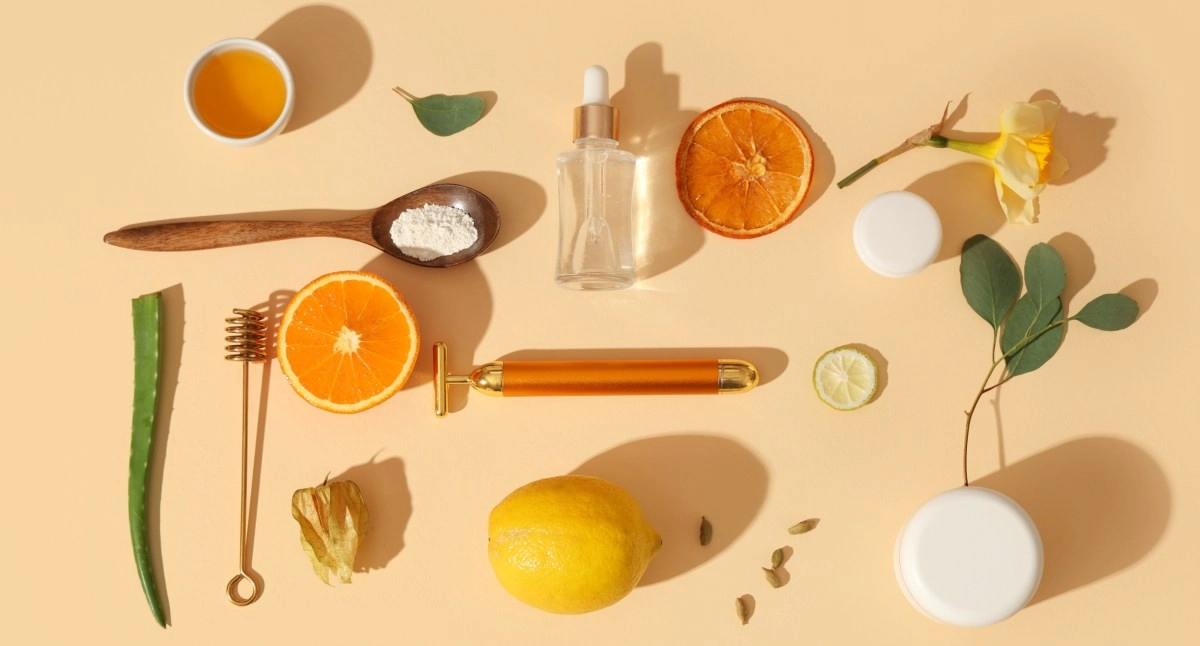

In a global context in which the cosmetics industry moves more than $380 billion dollars annually, consumers are turning their gaze toward simpler, more economical and sustainable alternatives.
The rise of the “conscious skincare” movement has revitalized interest in traditional remedies: ingredients that our grandmothers used without labels or algorithms, and that modern dermatology is reclaiming with clinical studies.
This trend is not nostalgia: it is a response to excess information, greenwashing and the rising cost of high-end cosmetics.
Essential skin care ingredients
In this context, certain low-cost natural ingredients offer benefits comparable to—and sometimes superior to—those of many luxury products. The key is to know what they are, how to use them and for what type of skin they are most beneficial.
The trend towards skin care with natural ingredients is not new, but it has gained a scientific dimension that it did not have before. Publications in journals such as the Journal of Dermatology and the International Journal of Cosmetic Science have in recent years validated the properties of components present in kitchens around the world. The result: a new generation of beauty routines that are, at the same time, more affordable, more transparent and more environmentally friendly.
Raw honey: the sweet antibiotic. Thanks to its high content of hydrogen peroxide, flavonoids and organic acids, raw honey has proven antibacterial, anti-inflammatory and moisturizing properties. Its acidic pH makes it a hostile environment for bacteria such as Staphylococcus aureus, one of the main causes of acne.
APPLICATION: Used as a mask for 15 to 20 minutes, honey acts as a natural humectant: it retains moisture in the superficial layers of the skin without clogging pores. It is especially recommended for dry, irritated or reddened skin. To enhance its effect, it can be combined with a few drops of extra virgin olive oil, creating a low-cost and highly effective nutritious mixture.
Aloe vera (aloe): the one that does it all. Few plants have generated as much scientific research as Aloe barbadensis miller. Its translucent gel contains more than 200 bioactive compounds: vitamins A, C, E and B12, proteolytic enzymes, salicylic acid, polysaccharides and minerals such as zinc and magnesium. This combination makes it one of the most versatile ingredients in natural dermatology.
APPLICATION: Its topical use is supported for the treatment of mild sunburn, eczema, psoriasis and superficial wounds. It also acts as a natural hair fixative gel. The most notable thing about this plant is its accessibility: a pot of aloe at home can become an inexhaustible source of treatment. Simply cut a leaf and extract the gel directly to apply it to clean skin.
Extra virgin olive oil. Extra virgin olive oil (EVOO) is rich in squalene, oleic acid and polyphenols—among them oleocanthal and oleuropein—compounds that protect cell membranes from oxidative stress. Recent studies published in the European Journal of Dermatology confirm that its regular application as a night serum significantly improves skin elasticity in women over 45 years of age.
APPLICATION: It is advisable to qualify its use, EVOO is more suitable for normal to dry skin. In acne-prone skin it can be comedogenic for some people, so it is recommended to always perform a test on a small area before extending it to the entire face. As a body oil and for eye contour care, its results are outstanding.
Colloidal oatmeal: shield for sensitive skin. It is perhaps the natural ingredient with the greatest dermatological support for the treatment of sensitive and irritated skin. Its beta-glucans form a protective film on the epidermis that retains moisture, reduces itching and calms inflammation. The United States FDA has recognized it as a protective dermatological active since 2003.
APPLICATION: An oatmeal bath or a mask made by dissolving two tablespoons of oats in warm water is one of the simplest and most effective interventions for skin with atopic dermatitis, rosacea or mild allergic reactions. Its neutral pH guarantees that it does not alter the skin barrier, which makes it a valid option even for babies and people with very delicate skin.
Lemon, natural vitamin C. Lemon juice is one of the most popular remedies to treat blemishes and even out skin tone, and with good reason: its high concentration of vitamin C acts by inhibiting the enzyme tyrosinase, responsible for the production of melanin. However, it is also one of the ingredients that generates the most confusion, because its improper use can cause irritation, photosensitivity, and the opposite of the desired effect.
APPLICATION: Specialists warn that lemon should never be applied pure to the skin or used before sun exposure. The correct practice is to dilute it 50% with water, apply it at night on specific spots and always follow it with sunscreen the next day.
Avocado, the superfood that is also cosmetic. Ripe avocado is one of the foods richest in monounsaturated fats and vitamin E, two fundamental components for cell regeneration and protection against free radicals. Its content of folic acid and biotin makes it especially suitable for mature skin with loss of firmness.
APPLICATION: Spread directly on the skin in the form of a mask—or mixed with honey and a few drops of argan oil—it provides deep nutrition that luxury cosmetics try to replicate with their own formulations based on avocado extract. To care for the scalp and dry or damaged hair, an avocado mask with coconut oil acts as an intensive conditioner that competes with high-end hair salon treatments.
natural pharmacy
Nature offers a low-cost pharmacy that, used with judgment and knowledge, can transform the health of our skin without the need to resort to complex formulas or synthetic ingredients.
The key is consistency, proper dosage and knowledge of your own skin type.
As modern dermatology warns: there is no miracle ingredient, but there is a smart routine. And many times, that routine begins in the kitchen.
You may also be interested in:
· Food as a key to helping you sleep: essential nutrients to fall asleep · How beneficial is Greek yogurt for the human body? · They reveal the role of grapes in protecting the skin against the sun's UV rays