

Use of ivermectin increases among cancer patients, without scientific evidence of its effectiveness
The FDA has not approved ivermectin for cancer, although it remains an approved drug for the treatment of parasitic diseases.
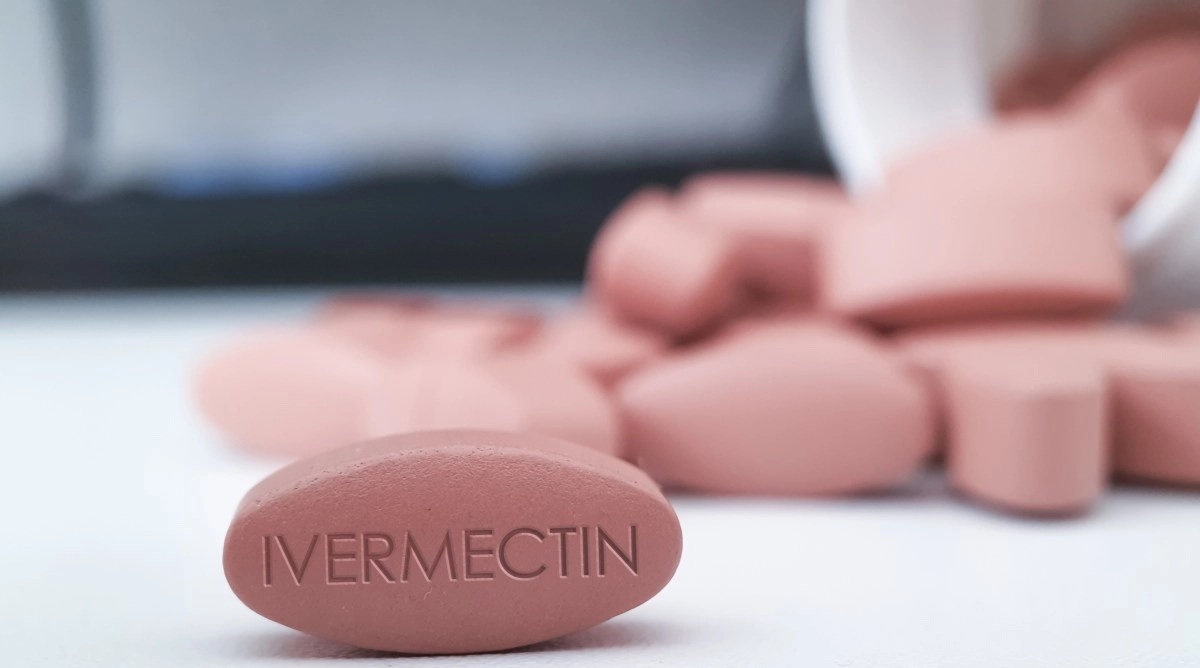

During the first half of 2025, a significant increase in ivermectin prescriptions was observed among cancer patients, tripling after the broadcast of a popular podcast episode where the drug was promoted, according to a study published in JAMA.
Ivermectin had also dramatically risen in popularity during the coronavirus pandemic, amid unproven claims that it could help fight COVID-19 infections, ABC News recalls.
"I have three friends. All three of them had stage 4 cancer... and now none of the three of them have cancer," Mel Gibson told Joe Rogan on his JRE podcast. Rogan then asked if Gibson's friends had taken ivermectin, to which Gibson agreed, picking up the media on his portal.
Experts emphasize that there is insufficient scientific evidence to support the use of ivermectin as a cancer treatment. The Food and Drug Administration (FDA) has not approved ivermectin for this condition, although it remains an approved medication for the treatment of parasitic diseases.
“It hasn't been shown in any type of confirmatory clinical trial, which is the gold standard of evidence that we need to know if the treatment works,” Dr. John Mafi, associate professor of medicine at the David Geffen School of Medicine at UCLA, told ABC News.
The medical professor warned of the risks faced by patients who choose this unproven treatment, such as delay in finding effective therapies. It even went further: "In very high doses, it can cause seizures or coma. In extremely high doses, even death, although that is rare," he said.
Specialists point out that patients who take the drug without a prescription or medical supervision run the risk of suffering an overdose.
Individual cases and testimonies
The story of Ron Duguay, a former National Hockey League (NHL) player diagnosed with stage 4 colon cancer, illustrates the desperation of some patients. Duguay has decided to combine ivermectin with his conventional treatment, driven by a fighting mentality.
“In certain circumstances, I will fight until I drop,” Duguay, 68, told ABC News. “And when I fall, I will rise.”
Duguay's approach to his treatment has generated a sense of hope among his loved ones. Her daughter shares emotional moments that reaffirm the importance of each day together, emphasizing perseverance in the face of diagnosis.
Opposition from the medical union
Dr. Antonia Agustí, president of the Spanish Society of Clinical Pharmacology, explains that ivermectin is an antiparasitic approved only for parasite infections, lice and rosacea, and that it should not be used outside of its approved indications, especially without scientific evidence supporting its use in other pathologies such as cancer. According to the specialist, although there may be limited interest in investigating ivermectin in diseases such as cancer because it is off-patent, before stating that it is used to treat some type of cancer, it must be demonstrated in clinical trials in humans, and laboratory studies are not enough.
Oncologists emphasize that the problem is not only the lack of evidence, but the risk of patients abandoning proven treatments. Dr. Eleonora Teplinsky, an oncologist, points out that “we are not mice” and that anecdotal data from one or two patients is not sufficient proof, although some preclinical studies in animals have suggested a possible anti-cancer effect. Dr. Skyler Johnson, also an oncologist, recalls that more than 90% of promising drugs in the preclinical phase do not demonstrate benefits in humans and warns that high doses of ivermectin could be toxic and interfere with conventional therapies.
The Spanish Association Against Cancer (AECC) states that this antiparasitic drug is used more in veterinary medicine than in human medicine and that neither ivermectin nor fenbendazole can treat any type of cancer at any stage, since their action focuses on parasites, not tumor cells. Oncologist Elías López Jiménez from the AECC emphasizes that there is no scientific evidence that it is effective against any type of tumor.
The FDA has reiterated that ivermectin is not approved for the treatment of cancer. Unsupervised use can carry significant risks such as nausea, vomiting, hypotension, seizures and liver damage, and self-medication can delay the start of effective and proven oncology treatments, which could worsen the patient's prognosis.
You may also be interested in:
· FDA endorses first flu vaccine that uses mRNA, technology that was key to ending the COVID-19 pandemic · New therapy gives hope for survival to patients with bladder cancer · An experimental vaccine against fentanyl shows promising results