

Amnesty International accuses global inaction in the face of repression in Iran and demands that the case be taken to th
The human rights organization denounced that the lack of an independent accountability mechanism perpetuates a cycle of impunity
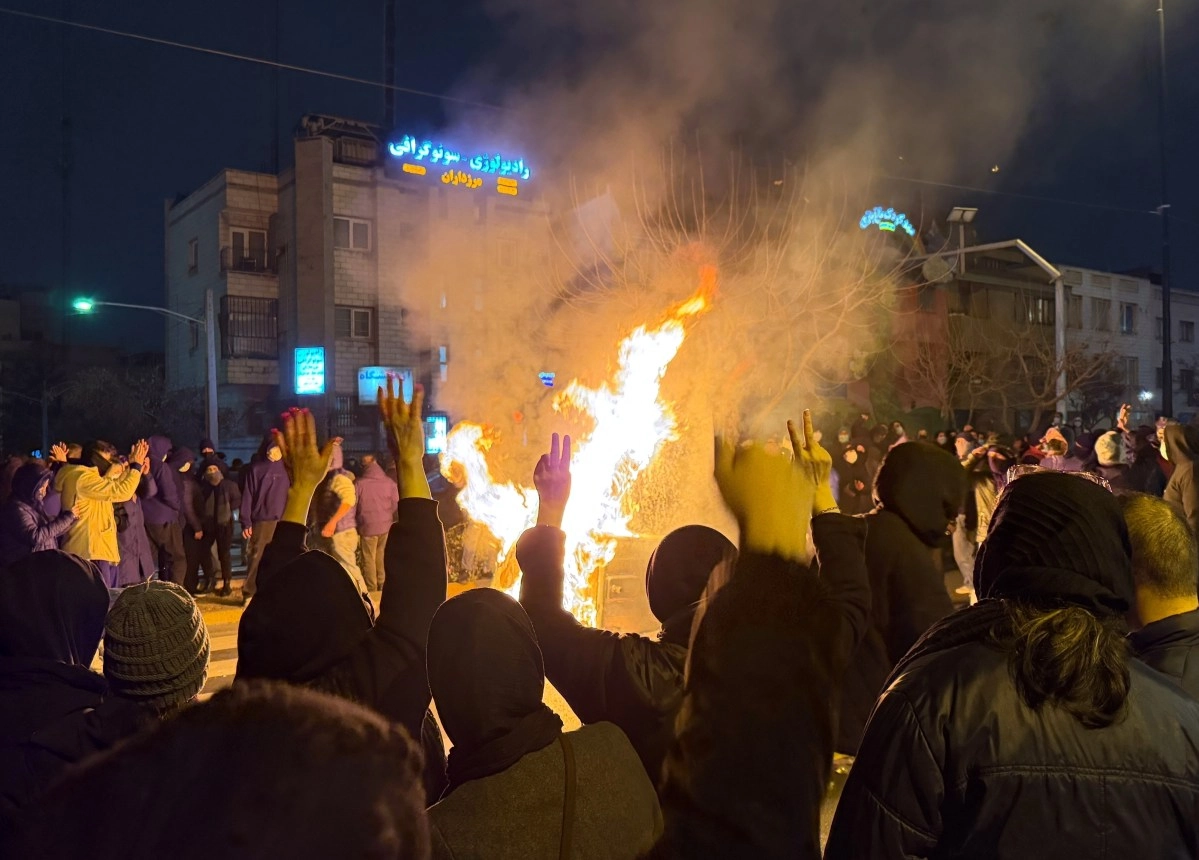

Six months after the violent repression of protests that shook Iran in early 2026, Amnesty International (AI) said that the lack of a strong response from the international community has strengthened the impunity of the Iranian authorities and increases the risk of further massive human rights violations.
The human rights organization called on the member states of the United Nations (UN) to promote an international and independent accountability mechanism and request that the Security Council refer the situation in Iran to the International Criminal Court (ICC) to investigate the alleged crimes committed during the repression.
The demonstrations began on December 28, 2025 in Tehran after the collapse of the rial, amid a deep economic crisis, high inflation and deteriorating living conditions. Within days, the protests transformed into a national movement demanding greater freedoms, respect for human rights and the end of the Islamic Republic system.
However, between January 8 and 9, 2026, security forces responded with a large-scale offensive that, according to independent organizations, left thousands dead.
Amnesty denounces a “culture of impunity”
In a statement, the deputy regional director of Amnesty International for the Middle East and North Africa, Diana Eltahawy, described it as “indefensible” that, half a year after the events, there are no concrete actions to demand accountability. The organization maintained that the lack of consequences for those responsible fuels a cycle of state violence and leaves both survivors and victims' families without justice.
According to the Iranian government, 3,117 people died during the protests. However, the opposition organization HRANA, based in the United States, assures that the number of deaths exceeds 7,000, while the UN special rapporteur for Iran, Mai Sato, previously indicated that the victims could exceed 5,000.
Amnesty International noted that Iranian authorities repeatedly used lethal force against protesters and bystanders, and subsequently launched a campaign of mass arrests, enforced disappearances, restrictions on the right to assembly and actions to intimidate victims' families.
They ask that human rights be part of the negotiations
The organization also expressed concern that diplomatic efforts to consolidate an agreement between the United States and Iran, after the military conflict recorded this year, have left complaints of human rights violations in the background.
The memorandum of understanding signed by Washington and Tehran on June 18 to move towards a definitive agreement did not include specific commitments related to justice, reparation for victims or accountability mechanisms, AI warned. Likewise, the organization stated that, after the attacks launched by the United States and Israel against Iranian territory on February 28, the Iranian government intensified the persecution of opponents under the argument of "war conditions", which led to an increase in executions for political reasons and new restrictions against dissent.
Against this background, Amnesty International insisted that the international community must prioritize the human rights crisis in Iran and prevent diplomatic efforts from overshadowing the search for justice. The organization reiterated that the creation of an independent international mechanism and the eventual intervention of the International Criminal Court are necessary measures to investigate the alleged crimes committed during the repression and offer a path to justice for the thousands of victims and their families.