

Community charter schools are like 'a family' for parents and students
These institutions offer comprehensive and personalized education for students
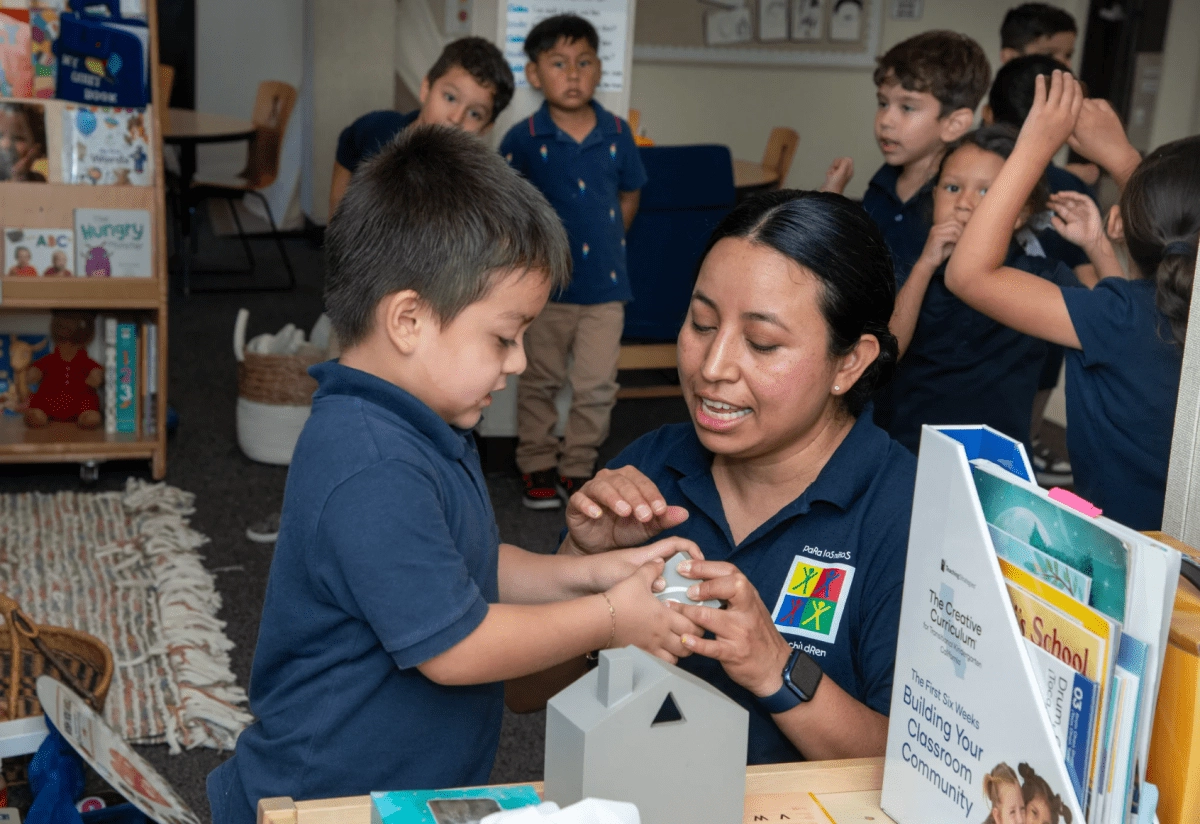

Every morning, Elvia Rodríguez wakes up at 5:00 a.m. m., she prepares breakfast and gets her son Alexis ready for school before heading to her job at a denim factory near her home.
From food distribution to large-scale community events like an annual holiday celebration where families receive meals, clothing and essential items, PLN ensures the student community has access to meaningful, tangible support.
Like many parents, she wants the best for her child. But for a long time, speaking out at school wasn't easy for him. That changed at the Para Los Niño charter school, located in downtown Los Angeles.
When Elvia is asked to describe the school, she does not hesitate to say that it is like a family.
At Para Los Niños (PLN), a nonprofit public charter school network rooted in the community school model, families are not only welcomed, but empowered.
For this Latina mother, that meant discovering her voice and raising it without fear.
PLN serves students and families in one of the most historically underserved areas of Los Angeles. Founded on Skid Row, the organization currently supports more than 10,000 children, youth and families each year through a network of schools and integrated services designed to break the cycle of poverty.
“Public charter schools have been pioneers as community schools for decades,” said Myrna Castrejón, president and CEO of the California Charter Schools Association (CCSA). "These schools demonstrate that it is not necessary to choose between equity and excellence: when a solid academic training is combined with significant support for students and families, both can be achieved. At a time when the State is betting even more on this model, it is essential that we promote what works and facilitate its replication."
At PLN's elementary school and charter high school, that support is evident daily.
Almost all staff members speak Spanish, which reflects the diversity of the families they serve. School meetings, workshops and communications are accessible and inclusive, ensuring that parents can be fully involved in their children's education, as is the case with Elvia.
School staff say parents often begin by advocating for their own children's interests and, over time, become leaders and influential voices in their communities. This transformation became a reality for Elvia when her son Alexis began having social and emotional difficulties in high school.
Before, she probably would have stayed silent, not knowing how to ask for help or who to turn to. But at PLN Charter High School, she felt supported enough to speak out.
With guidance from school staff, Elvia contacted teachers and identified the resources her son needed. Today, Alexis receives individualized support from a therapist, helping her succeed both in and out of school.
Long before the term “community schools” came into widespread use, California public charter schools already offered comprehensive services to students and their families, combining academic rigor with ongoing support.
In fact, nearly 80% of public charter schools receiving state funding, such as community schools, have been in operation for 10 or more years, and nearly 60% have been in operation for 15 or more years, demonstrating sustained success across multiple charter renewal cycles.
Research shows that community schools can reduce absenteeism by an average of 30% and decrease suspension rates by 15% according to the Learning Policy Institute, which conducts independent studies to improve educational policy and practice.
Now, as part of a federal grant from the U.S. Department of Education, CCSA will analyze long-standing, high-performing community public charter schools.
In the first year of “Community Schools in Action,” CCSA highlights five public charter schools that are leading this effort; Among them are Para Los Niños, the KIPP academy and Stella Middle Academy, located in Los Angeles.
Para Los Niño is the only provider of children's mental health services on Skid Row, combining education with wellness services, workforce development and family support, addressing issues such as homelessness and food insecurity.
In California, 189 public charter schools have received funding through the California Community School Partnership Program between the 2022-23 and 2025-26 school years, supporting their planning.
Together, these schools serve more than 69,000 students, including a disproportionately high number of low-income students and English learners.
Unlike traditional public schools, public charter schools must periodically demonstrate strong academic results to remain in operation. In return, they are granted flexibility to design programs that respond to the specific needs of their students and their communities.
The community school model has become an effective strategy in this framework, as it combines academic objectives with integrated support measures and deep family involvement.
Across California, public charter schools like Para Los Niños demonstrate what is possible when schools invest not only in students, but also in families. They recognize that language should never be a barrier to opportunity. That parents are essential partners in education.
And that when families are given the tools, confidence and space to lead, entire communities become stronger.
“Flexible-schedule public charter schools offer personalized learning programs with innovative schedules designed to fit students' needs, such as hybrid learning — where students attend in-person classes two to four days per week — as well as independent study and homeschooling options,” Castrejón said. "They offer a vital second chance to many young people, including pregnant teenagers, school dropouts, incarcerated youth, homeless and foster students, and students with health problems. These schools should not be excluded."
For more information visit https://info.ccsa.org/es/charterpublicschools2024