

Latino leaders in Washington demand to stop deportations and protect access to health and economy
Hispanic organizations and congressmen asked for limits on ICE and greater protection for migrant communities
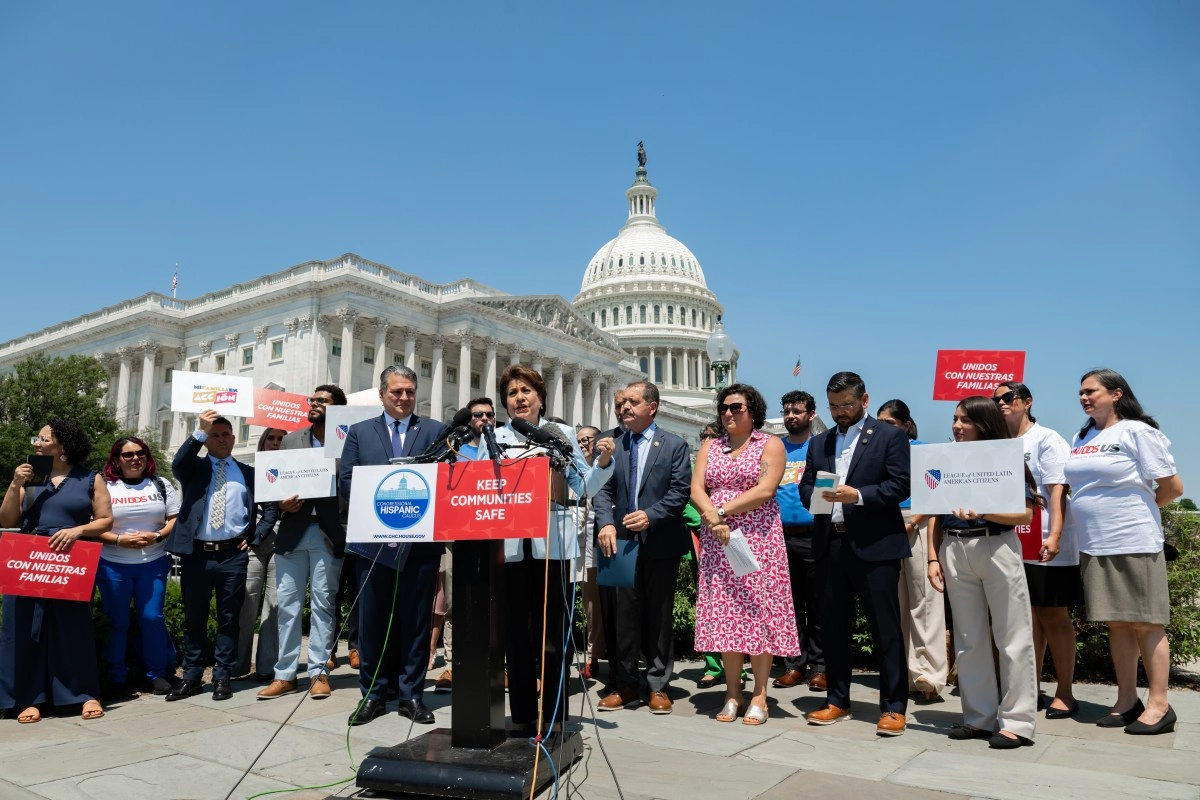

Latino organizations and members of the Congressional Hispanic Caucus met in Washington, D.C., to discuss immigration policies, the economy and civil rights amid the tightening of immigration control measures in the United States.
The organizations UnidosUS, LULAC and Mi Familia en Acción convened nearly 50 community leaders from different states of the country to participate in the Latino Unity Summit, a meeting focused on the main concerns facing Latino communities, including the economy, immigration and access to health and nutrition services.
Participants, from Arizona, Colorado, Florida, Iowa, New Jersey, New York, North Carolina, Pennsylvania and Texas, heard from public policy experts about some of the most relevant debates currently being discussed in the US Congress.
During the meeting, community leaders and legislators warned about the economic and social consequences of the mass deportation policies promoted by Republican sectors, as well as the increase in immigration operations by the Immigration and Customs Enforcement Service (ICE) and the Customs and Border Protection Office (CBP).
Democratic Representatives Raul Ruiz, Juan Vargas, Jesús “Chuy” García and Emily Randall participated in a press conference organized by the Congressional Hispanic Caucus (CHC), along with leaders of national Latino organizations.
Participants demanded clear limits for immigration agencies, including an end to arrests without legal cause, the protection of schools, hospitals, churches and voting centers from immigration operations, in addition to prohibiting the use of masks by federal agents and requiring body cameras during arrests.
“Republicans are taking money from American taxpayers to pay for Donald Trump's personal priorities and then telling people that there are no resources for health, education or food assistance,” said Adriano Espaillat, president of the Congressional Hispanic Caucus.
Espaillat added that “working families deserve a government that improves their lives, not a mass deportation machine designed to benefit the president's friends and family.”
For her part, the president and executive director of UnidosUS, Janet Murguía, criticized the reconciliation budget proposal promoted in Congress, pointing out that it would grant excessive resources to immigration agencies.
“This reconciliation project would be a blank check for ICE and CBP, reinforcing a failed and illegal campaign of mass deportations that has sown chaos and terror in communities across the country,” Murguía said. “We will not stop demanding that political leaders prioritize the safety and well-being of our families.”
The executive director of LULAC, Juan Proaño, assured that mass deportations represent a direct threat to the US economy.
"Mass deportation is not a security policy. It is an economic wrecking ball directed against workers, taxpayers and small businesses that keep this country running," said Proaño. “The communities that built our economy must be supported.”
Meanwhile, Angelica Razo pointed out that many Latino families currently live under constant fear due to the tightening of immigration policies.
“Our communities deserve investment in opportunity and security, not more fear and chaos,” he said.
In addition to the immigration debate, organizers highlighted the impact of rising housing costs, low wages and growing medical debt on Latino families. The leaders also called for electoral participation and voter registration leading up to the next elections.
According to data from the Pew Research Center, Latinos currently represent about 15% of the eligible electorate in the United States, becoming one of the most influential demographic groups in key states for presidential and legislative elections.