Democratic senators demand the DOJ open a civil rights investigation into the death of Renee Good
Legislative pressure arises after Deputy Attorney General Harmeet Dhillon refuses to investigate the actions of the immigration agent who killed Renee
A group of Democratic senators, led by Alex Padilla and Adam Schiff, both representatives of California, along with Senator Peter Welch (of Vermont) They joined together to demand, as career prosecutors have requested, that the Department of Justice (DOJ) open a civil rights investigation into the death of Renee Nicole Good, who was shot and killed by an Immigration and Customs Enforcement (ICE) agent earlier this month in Minneapolis. The lawmakers accuse the federal government of refusing to enforce civil rights laws in order to prioritize President Donald Trump's immigration agenda. In a letter to Assistant Attorney General Harmeet Dhillon, the senators—all members of the Senate Judiciary Committee—noted that the DOJ's decision not to investigate the case contradicts historical practices of both Democratic and Republican administrations, which typically opened civil rights investigations after fatal encounters with law enforcement officers, even when criminal charges were unlikely. The legislative pressure comes after Assistant Attorney General Harmeet Dhillon's firm refusal to investigate the immigration agent's actions. In a letter sent to the DOJ, the senators called this omission a “radical shift” and dangerous move that prioritizes the president’s mass deportation agenda over compliance with civil rights laws. The letter was also signed by key figures in the Democratic Party, including Dick Durbin, Richard Blumenthal, Cory Booker, Amy Klobuchar, and Mazie Hirono. Resignations, Internal Pressure, and Questioning of the DOJ: According to public reports cited in the letter, several career federal prosecutors within the Justice Department’s Civil Rights Division offered to lead the investigation into the shooting of Good. However, Dhillon made it clear that the Division would not open the case.This stance was publicly supported by Assistant Attorney General Todd Blanche, who stated that there was no “basis” for a civil rights investigation. That statement, the senators emphasize, contradicts the preliminary assessment of an FBI agent, who determined that there were sufficient grounds to initiate a federal investigation into possible violations of the law. Pressure from Washington reportedly led to the resignation of a senior FBI official in Minneapolis, as well as the accelerated departure of several career prosecutors, including the head of the Criminal Section of the Civil Rights Division. The senators called this decision “highly unusual,” as they alleged that federal agents were ordered to exclude local authorities from the investigation and not share relevant material. What most outrages civil rights advocates is the turn the official investigation has taken. Instead of scrutinizing the ICE agent's use of lethal force, the Justice Department has ordered an investigation into the victim herself. to his widow and to activist groups that monitor immigration activity in Minnesota.
In their letter, the lawmakers warn that these actions undermine public trust and the credibility of institutions, after six prosecutors in Minnesota resigned in protest over what they considered a politically motivated investigation.
Justice or political persecution?
“The apparent political interference in investigative and prosecution decisions undermines the rule of law,” they wrote, while urging the DOJ to listen to career prosecutors and open an independent investigation.
Meanwhile, Senator Padilla continues to push the “Federal Law Enforcement Accountability Act,” an initiative that seeks to give people the right to sue federal agents in civil courts for constitutional abuses, regardless of their immigration status.
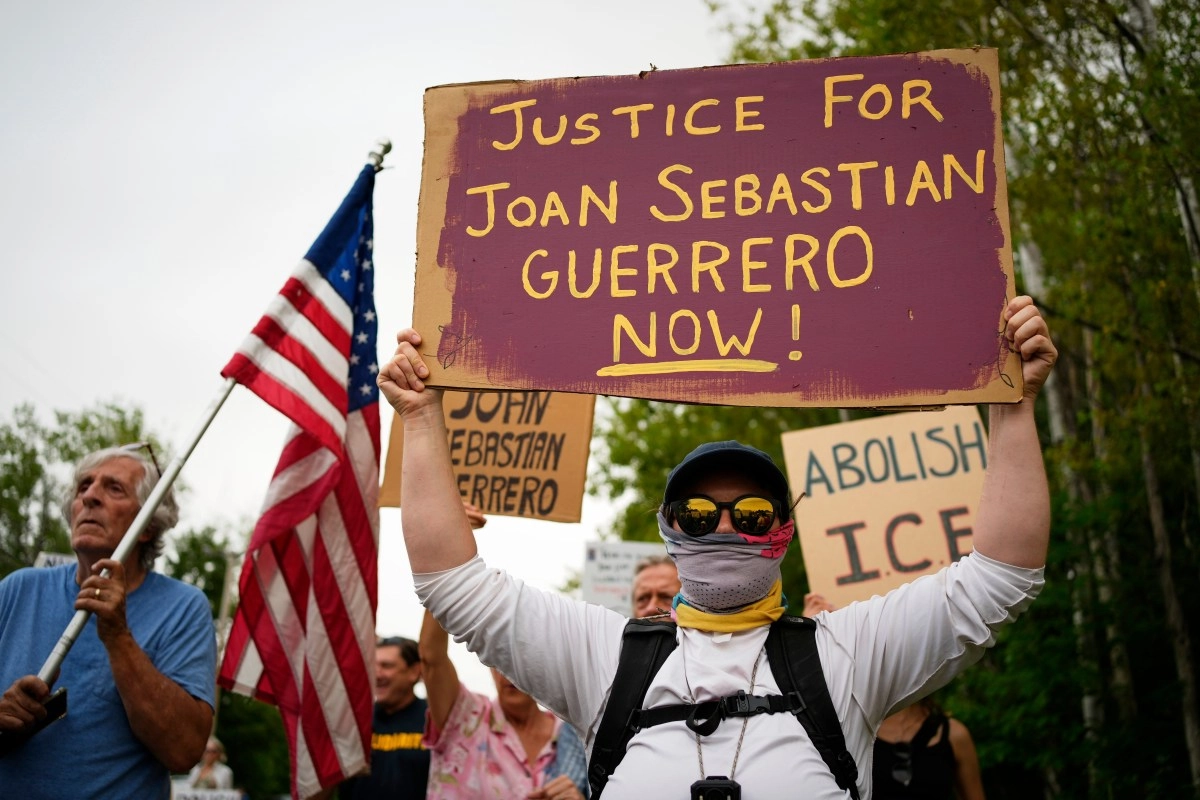
Renee Good’s death comes on the heels of that of Alex Pretti, another civilian recently killed by Border Patrol agents (CBP) under similar conditions, which has made Minneapolis the epicenter of protests against what activists call the “illegal militarization” of American cities.