The Nigerian judge was dressed formally, the lawyers maintained legal decorum and protocol was followed. However, this hearing did not take place in the comfortable confines of a court in Lagos, but inside a suspected illicit drug laboratory in the middle of a dense forest.
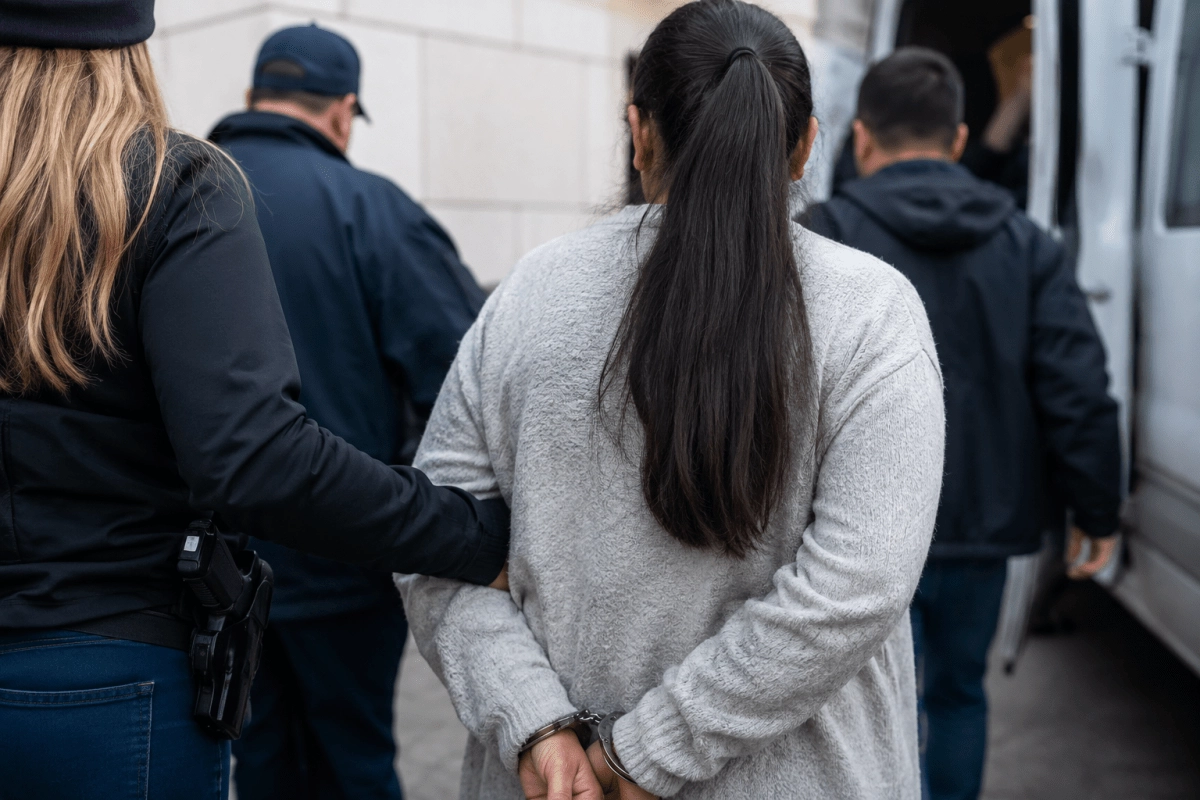
Three Mexicans and seven Nigerians were paraded in handcuffs while Judge Musa Kakaki inspected the chemicals and equipment they were accused of using to produce the harmful illegal synthetic drug methamphetamine, commonly known as met, crystal or, locally, ice.
A bitter and penetrating smell permeated the air of the improvised laboratory, due to a large drum containing the liquid drug in the process of crystallization. Another strong odor came from open tubs of a dark, viscous liquid, described as “raw” or unprocessed methamphetamine.
In the unfinished building there were other products scattered around the place, such as propane gas cylinders and bags of caustic soda.
This temporary move of the federal court to a location two hours' drive from Lagos was an unusual move for Nigeria's judicial system, but the National Drug Law Enforcement Agency (NDLEA) said it was necessary to understand the scale of the operation.
When the suspects were arrested in May, the agency described it as the largest methamphetamine seizure in the country's history. He claimed to have discovered more than two tons of the drug, valued at about $360 million.
At that time, the NDLEA announced that it had “striked another devastating blow” and dismantled “a sophisticated multi-billion dollar Nigerian-Mexican methamphetamine production network.”
The following month, agents found another methamphetamine lab hidden in a forest in neighboring Oyo State.
On that occasion, they arrested five suspects, including a Mexican who called himself a “methamphetamine expert.”
These raids highlight a broader trend: the growing role of Africa, and in particular West Africa, in the global trade in synthetic drugs, as well as the changing operations of criminal cartels, which now use the continent not only as a trafficking hub, but also as a production base.
According to law enforcement agencies, it is increasingly common to find Mexican methamphetamine manufacturing specialists, often described as “cooks,” working alongside local people in laboratories in Europe and Africa.
Methamphetamine production has become increasingly sophisticated in recent decades.
“They have perfected it to the point that it is now the purest and most potent version of methamphetamine,” James Griego, who directs anti-drug operations for the United States Africa Command (Africom), told the BBC.
Africom, which oversees US military operations on the continent, has provided intelligence information to several national anti-drug organizations to assist them in their raids.
“Anyone who wants to use methamphetamine knows that Mexican methamphetamine is the best in the world for that purpose,” Griego added.
The NDLEA first announced the discovery of a meth lab linked to Mexico in 2016, when it described it as a “super lab.”
Narcos and “terrorist” groups
These laboratories, where Mexicans worked, were later discovered in Kenya, Mozambique and South Africa.
Since 2023, "we have seen... a total of 14 Mexican-operated laboratories [that have been raided]. We saw one in 2023 [in Mozambique], we saw six more in 2024, we saw two in 2025 and we have seen five this year," Griego said.
“Last year, when I talked about the five laboratories, four of them were in Nigeria,” he added.
Intelligence information provided by Africom and the United States Drug Enforcement Administration (DEA) has linked some of the laboratories to the two largest drug cartels in Mexico: the Sinaloa Cartel and the Jalisco New Generation Cartel.
Appearing before the US Congress in May, Africom commander General Dagvin Anderson alleged that militant groups and drug traffickers have been working together.
“Terrorist groups based in Africa are increasingly being funded by drug cartels, expanding the reach and lethality of those terrorist groups,” he told lawmakers.
Unlike plant-based drugs like cocaine or heroin, which can only be grown and processed in certain locations, a synthetic drug like methamphetamine can be produced anywhere with the right chemicals and expertise, making it easier for organized crime groups to rapidly ramp up production.
Known for its fast and long-lasting effects, methamphetamine produces intense euphoria, but also very unpleasant side effects. There is a serious risk of cardiovascular problems, malnutrition from poor diet and, if injected, blood-borne diseases.
Withdrawal from the drug is also very difficult, often including feelings of anxiety, severe depression, fatigue, and intense cravings.
As methamphetamine traffickers establish new distribution networks, beyond their historical routes, more and more people are exposed to the drug.
The advantages of Africa
West Africa offers many attractive advantages for Mexican consortia, starting with extensive forested areas that are ideal for isolated production sites.
“The population is also attractive to them, especially the huge young population, because it provides cheap labor and a market for local consumption,” NDLEA spokesperson Femi Babafemi told the BBC.
Authorities fear methamphetamine use will increase in Nigeria, where a 2018 survey found that 14.4% of the adult population had used an illicit drug, more than double the global average estimated by the United Nations Office on Drugs and Crime (UNODC).
According to the Global Initiative against Transnational Organized Crime, the use of this drug has spread throughout the continent.
In East Africa, it is widely available in countries such as Kenya and Tanzania, and also in Southern Africa, such as South Africa, where it is known as “tik”.
Drug cartels are as interested in international drug markets as they are in the growing local market, and Africa's location facilitates access to Asia and Europe.
Drug production in West Africa gives traffickers access to Atlantic shipping routes. This, added to the region's porous borders and less regulation of chemical imports, allows them to reduce costs to access lucrative consumer markets.
In Europe, UNODC reported a 47% increase in methamphetamine use between 2014 and 2024. In East and Southeast Asia, seizures of the drug by authorities reached an all-time high in 2024.
“This means that the distance of the supply chains to Asia and the route to Europe is shortened,” said Griego.
Since returning to office in 2025, US President Donald Trump has intensified his efforts against Latin American drug cartels and their operations.
“These cartels are feeling pressure from other parts of the world,” Babafemi said, “and that's why they see West Africa as a business production center.”
Some experts believe that greater control of traditional trafficking routes from Latin America may be one of the factors driving cartels to diversify their operations.
"That has been, at least in part, one of the factors explaining why Mexican cartels have intensified their operations in Africa. That said, it is only part of the story," Griego said.
"Sinaloa and Nuevo Jalisco have always been global organizations. They have operated [in Africa] since the 1990s."
However, the recent increase in the number of raids against clandestine methamphetamine laboratories in Africa could indicate that cartels are becoming more entrenched on the continent.
What is clear is that trade is no longer limited to transiting the continent, but is finding new production centers and markets.
With measures such as holding court hearings in laboratories, increasing surveillance and using intelligence, Nigerian authorities insist they can rise to the challenge.
"It is certainly a cause for concern, but it helps us stay alert and be proactive. That is why we can stop them before they manage to enter our communities and the international market," said NDLEA spokesperson Babafemi.
“We have been able to demonstrate that Nigeria will not be a safe haven for them.”
This article was originally written in English and we used an artificial intelligence tool to translate it. A BBC journalist reviewed the text before publication. Learn more about how we use AI.
You may also be interested in:
Download the new BBC World Service app. Choose BBC News Mundo and receive news alerts, documentaries and analysis, all in one place. Important: The new app is not available in the United Kingdom or the United States.