

How to cope with anxiety in children before ICE operations: a manual offers answers
The National Union of Parents and other organizations detected anxiety among children of migrant families and decided to develop a way to help them
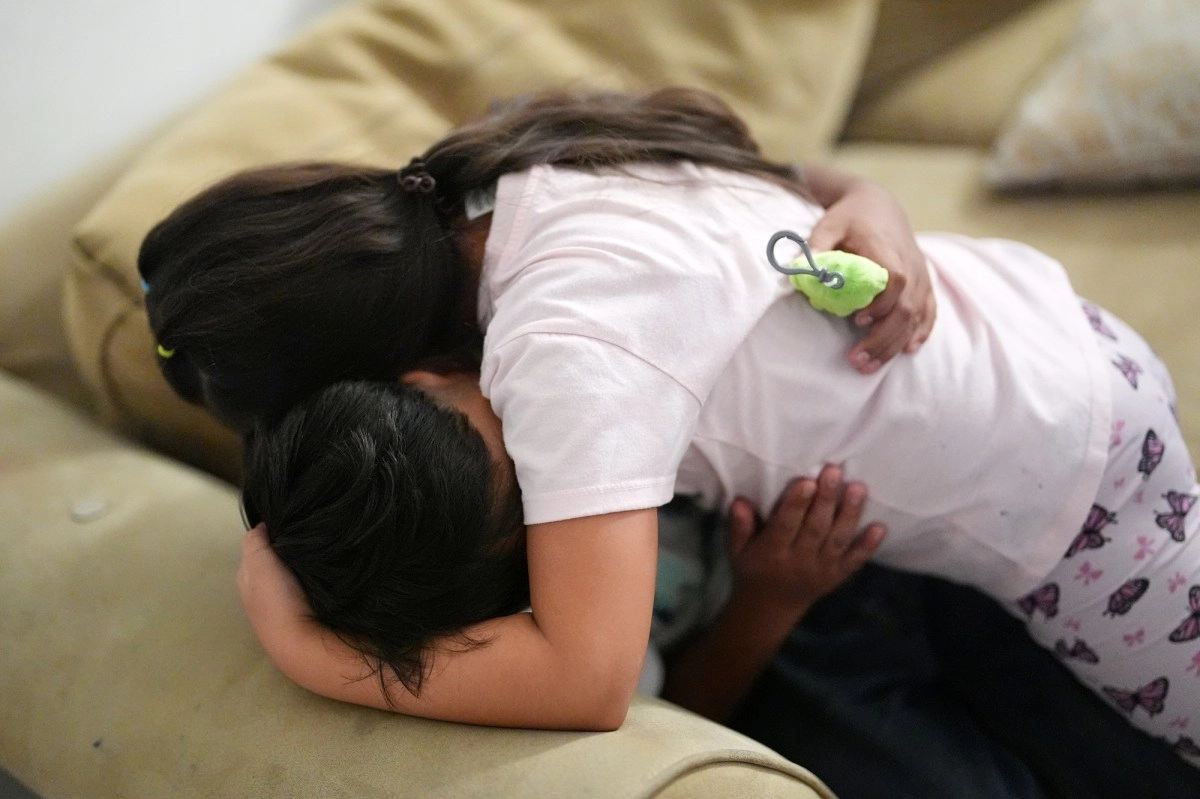

Immigration and Customs Enforcement (ICE) operations against undocumented immigrants affect mixed-race families in the United States, causing emotional harm and stress among children and teenagers.
Christy Moreno, National Organizing Director of the National Union of Parents (NPU), was leading projects for supporting families with immigration resources, but she shares that she and her team soon encountered an underserved problem: the emotional impact on children. “This project stems from a very genuine need shared by all our coalitions. We have more than 1,800 affiliates across the country—community organizations, some university or school institutions, or academic research institutions—and it arose from this need to provide tangible support to immigrant families,” she explained. Moreno established a team to consult with parents about their needs in light of President Donald Trump’s new immigration policies, which include deportations and the cancellation of provisional protections, such as Temporary Protected Status (TPS) or humanitarian parole for those from Cuba, Haiti, Nicaragua, and Venezuela, among others. Dr. Xigrid Soto-Boykin, a professor specializing in bilingual projects, joined the educational strategy. She had collaborated with various organizations, but decided to join this effort on her own. “In January, the first thing we did, as people dedicated to understanding and supporting bilingual immigrant families […] was to ask the people who work in the community with these families and children […] we wanted to identify the need, because we knew that many people were talking about knowing their rights,” Moreno said in an interview. It was during these consultations that a problem arose that required a solution: how to guide and provide emotional support to the children.“There was another issue that [the families] identified for us, which was an area of ??need. Based on that data, we first began internally to use what we know about child development, science, and the impact of the trauma of being separated from their families or being confronted by immigration agencies,” she added. “And we wanted to create a resource for families.”
That's how the idea to plan and develop the interactive manual “Staying Whole and United” came about.
Soon other organizations joined the effort, such as Children Thrive Action Network and Little Justice Leaders.
“We began to expand our collaboration with other organizations that also had that same mission of serving immigrant families,” says Soto Boykin.
The Trauma of Deportations
Last May, a video went viral on social media capturing the moment immigration agents detained a mother from Honduras after she left immigration court. The woman had a nervous breakdown and was crying as her seven-year-old son tried to comfort her while federal agents put her in a vehicle in San Antonio, Texas. “I miss my mom,” a little girl said in a Telemundo report from Florida in early November, after the detention of at least 30 farmworkers—some with U.S. work permits—who were stopped by immigration agents on their way to work. Relatives of those detained even revealed that they didn't know where the workers had been taken. This fear among children is occurring in several cities, from Los Angeles, California, to New York, New York. The negative impacts are felt at various levels, including school absenteeism, as Dr. Keenan King, executive director of the Kent School Services Network, stated regarding immigration operations in Michigan. “Immigration policies that create fear that children will be expelled from schools lead to reluctance to attend classes,” he said in a virtual conference. “This domino effect creates conditions where the more children miss school, the greater the likelihood of truancy and, consequently, the greater the need for us to rely on more systems that the state or county cannot afford. Children not attending school harms the economy, our community, and our society.”
According to a report by the Migration Policy Institute, published in October 2025, there are 6.3 million children under 18 in the U.S. living with at least one undocumented immigrant parent—someone who could face deportation proceedings.
The majority of these children, 5.3 million, are U.S. citizens, while one million are undocumented.
Why is a manual so useful?
The manual, published in English and Spanish, serves families with children from under five years old up to young people under 18 years old. For each group, there are suggested play activities with explanations that could help reduce anxiety.
“We recognize that for children starting from infancy and up, they may not be able to verbalize the trauma or fear they are experiencing, but we know that having that balance of acknowledging the situation that families are going through is important,” said Soto Boykin.
One of the tools is a virtual book about deportation for children who can read, where the message focuses on the emotions triggered by not knowing what is happening.
“Sometimes families have to say goodbye. Someone in my family might have to leave the country. This is called deportation… This can make us feel scared or confused,” says part of the book, accompanied by colorful illustrations.
“If someone in my family is deported, it’s not my fault. I’m not in trouble. My family loves me very much,” it adds, as an element that helps children reduce stress.
Soto Boykin indicated that the Tools that encourage reading, drawing, music, and play aim to help children experience joy.
“There is a need, in every way possible, to maintain this joy and happiness, even if only for small moments, which are achieved through music, reading—these kinds of things help calm children's nervous systems and allow them to be better controlled,” explained the expert. “We know that music has the power to create, but so do children's books that address migration issues in a way they can understand based on their developmental level.”
Soto Boykin has extensive experience in bilingual early childhood education. Her work encompasses three main areas: 1) eliminating systemic barriers that hinder access to high-quality bilingual education; 2) address the sociopolitical ideologies that affect the linguistic equity of young children of color, and 3) the development and evaluation of culturally relevant approaches to provide services to Latino, African American, and other children of color, as well as children with disabilities.
“When children are very young, they face any separation between their parents, even if it is, for example, a separation due to divorce, which is not exactly the same as a migration separation. Children of that age cannot understand that this happens to adults and has nothing to do with them because they absorb and internalize the message that they caused the problem,” the expert warns. “Something that is very important to talk about with young children in kindergarten, at that age,It's about giving them the information that this has nothing to do with them, that it's not their fault, that they are loved, that there are people who love them and will take care of them.”
The expert indicated that if young children experiencing trauma from family separation are not addressed, this problem will persist into adulthood, internalized as a constant source of guilt.
How does it serve diverse communities?
Moreno said the manual is distributed among her network of partners, but acknowledged the importance of all communities with migrant families being able to use it, to amplify the effort on behalf of children.
“We have been sharing this guide, not only with those of us sponsoring and co-creating it, but with all our networks,” Moreno said.
She added that school districts, community organizations, and religious and faith-based organizations are already involved in this effort.
“This is a free public resource that can be downloaded […] it can be printed, it is in PDF format, it can be printed, it can be saved in your computer or your device. You can send it by text message. We want it to reach every home, every hand, every school, every therapy office, every hospital,” she insisted.
How to get the manual—Download or print the PDF: at childrenthriveaction.org.—The manual contains codes and links to videos and the children's book about deportations.