

Immigrants could be forced to pay a fine of $18,000 for a deportation order
The Trump administration seeks to triple fines against immigrants with deportation orders "in abstentia"
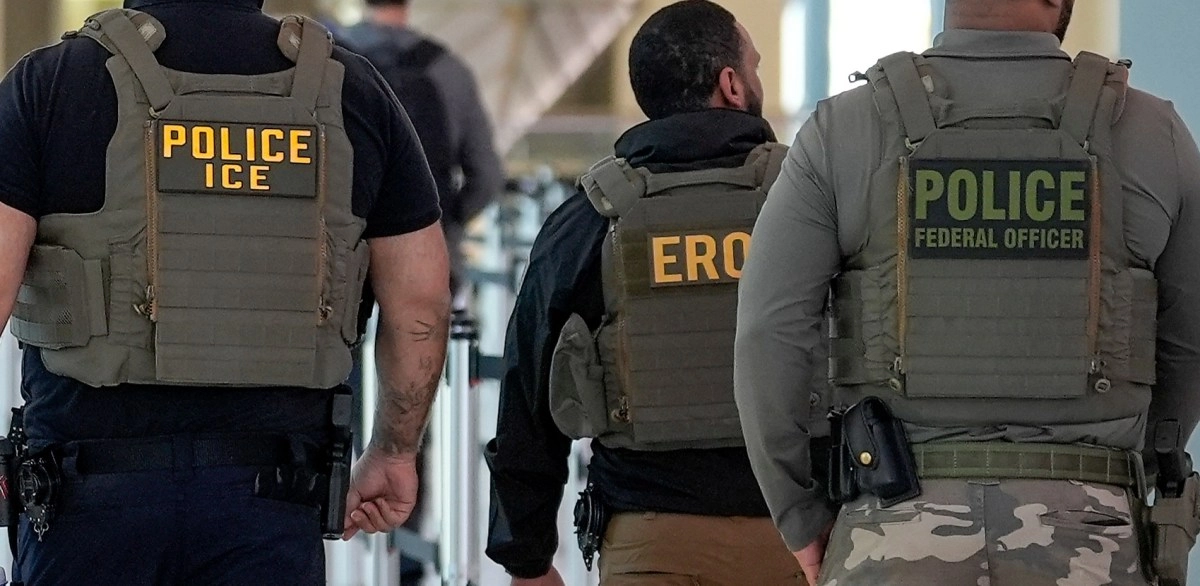

The Department of Homeland Security (DHS) presented a proposal to drastically increase the fines imposed on immigrants with deportation orders “in absentia”, that is, issued by an immigration judge when the person does not appear at their hearing.
The penalty would go from $5,130 to $18,000, amid a broader immigration toughening strategy promoted by President Donald Trump's government.
The figure of deportation “in absentia” is contemplated in the Immigration and Nationality Law (INA). Under that provision, a judge can order the removal of an immigrant if the government shows that the person received adequate notice of the hearing and still did not appear. However, the law also recognizes exceptions, including emergency situations, lack of effective notification or extraordinary circumstances that may justify reopening the case.
The official document also exposes the growth of this type of processes within the immigration system. According to DHS figures, during 2025 more than 309,700 “in absentia” deportation orders were issued, while 23,670 people with this type of ruling were subsequently arrested.
Immigration attorney Héctor Quiroga, of Quiroga Law Office, PLLC., noted that the projected increase could become one of the most severe economic penalties within the US civil immigration system.
"Immigration fines have always existed, but we are seeing a significant expansion in both the amounts and the way in which the Government seeks to apply them. The impact can be particularly strong for low-income families that already face complex and expensive processes," said the expert.
Hardening does not occur in isolation. Since 2025, DHS and the Department of Justice have pushed regulations to expedite the imposition and collection of immigration sanctions, including changes that reduce response times and transfer certain appeals directly to DHS, limiting the participation of the Board of Immigration Appeals (BIA).
One of the most sensitive points of the debate revolves around judicial notifications. In recent years, federal courts and advocacy organizations have warned that many immigrants fail to appear for their hearings because they changed addresses, never received the summons correctly, or faced language and legal representation barriers. In such cases, “in absentia” orders can later be reopened, although the process is often complex and requires solid evidence.
"The law allows you to request the reopening of certain orders issued in absentia, especially when there were problems with notification or exceptional circumstances. That is why it is important to analyze each case individually before assuming that an order is final or that there are no legal alternatives," said lawyer Quiroga.
The economic aspect also raises questions, since it is considered unlikely that many of these fines can be collected in full, especially among immigrants with limited resources or without employment authorization. “These types of measures could increase pressure on immigrants with pending orders, especially in cases of absence from court,” warned immigration attorney Héctor Quiroga.
Although the proposal is not yet final and will remain open to public comments until June 2026, possible legal challenges related to due process, proportionality and access to defense are already anticipated.
“The recommendation for immigrants with pending processes is that they keep their address updated before the court and constantly review the status of their cases to avoid involuntary absences that could lead to deportation orders and high financial penalties,” said immigration lawyer Héctor Quiroga.
(*) Héctor Quiroga is an immigration attorney at Quiroga Law Office, PLLC, a law firm located in Washington, Nevada and Mexico.