

Latinas advance in California amid a huge wage gap
HOPE's report on the economic status of Latinas shows progress despite the barriers they face

With 7.98 million Latinas representing more than 20% of California's population, the state stands out as a hub for Latino entrepreneurship but at the same time as home to the largest wage gap in the country.
“California Latinas are innovative and business leaders, but they continue to face the greatest wage inequality in the country,” said Helen Iris Torres, executive director of the organization Hispanas Organizada for Political Equality (HOPE).
“Closing this wage gap means unleashing the full economic potential of California. The success of Latinas is fundamental to the future of our state,” she said.
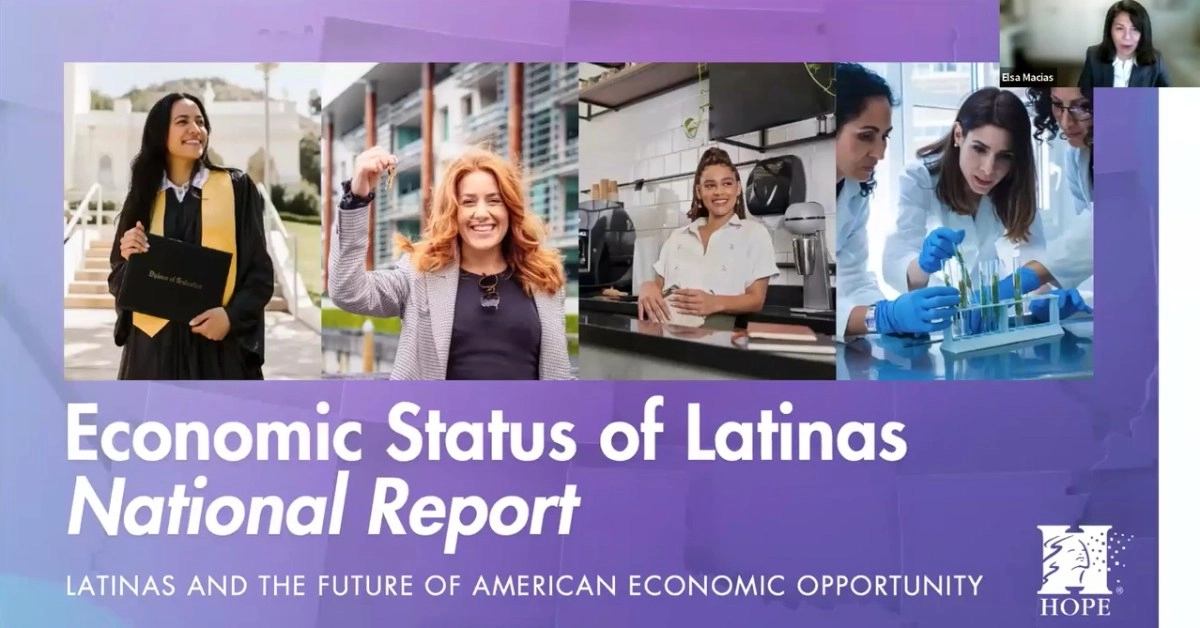
HOPE published its first National Report on the Economic Situation of Latinas, which offers a comprehensive analysis of the economic, educational, and leadership progress of Latinas in the United States.
The report combines rigorous national data with focus groups in California, Texas, Florida, New York, and Illinois, the five states with the largest Latino populations.
In an interview with La Opinion, Torres said that the report shows that when we advance, especially in our education, and integrate into different fields, there are more opportunities to close that wage gap.
However, she said that this is not the only thing we need to do.
“We need to address systemic changes that will allow us to eliminate any occupational and segregation that prevents Latinos from truly closing the gap.”
She indicated that the good news is that we are closing that gap, and we see it with a large number of Latinas pursuing their bachelor's degrees and earning their professional titles.
Most of the research for this report was done. in 2024, and the focus groups were conducted in early 2025.
“What we wanted to do with our first national report is to tell the story of how Latinas across the country are making progress, especially in education; and to say that many good things are still ahead of us, and one of the things we learned from the focus groups was that,Regardless of whether you're a Latina from Florida, Texas, Illinois, New York, or California,“There's still some optimism about economic well-being, but they were beginning to have real concerns about whether there would be room for them to improve their economic situation in the future.” She said that among the women they interviewed, some had to work two or three jobs to open their businesses, not only to make ends meet but also to provide for their families. “So even among the young Latinos we interviewed, their concern isn't limited to just their future and whether they can afford housing; “They want to make sure their families and parents are doing well.” One of the keys to closing the wage gap is the work they, as an organization, have been doing with the California legislature to ensure clear salary transparency, the leader said. “I would tell our friends in Sacramento and our elected officials that we must ensure there is no discrimination or barriers to accessing higher education.” We must ensure that our universities are open and have the necessary resources to support and recruit young Latina women.”
But she also said that they must ensure that technical schools keep their doors open so that we have the education to move forward.
Key Findings for California
• Education: 18.6% of Latinas hold a college degree or higher.
• Income: The median income for Latinas is $79,187; However, they earn only 41 cents for every dollar earned by non-Hispanic white men, representing a lifetime income loss of $2.18 million.
• Workforce: Latinas' labor force participation rate is 54%, with an unemployment rate of 6.2%.
• Entrepreneurship: 13.3% of all small businesses in California are owned by women. They are Latina-owned, reflecting one of the highest rates of Latina entrepreneurship in the country.
National Results
Nationally, Latinas now represent nearly one in ten Americans and one in five women, and are among the youngest and fastest-growing segments of our population.
Millions of them are joining the workforce, starting businesses, raising families, and taking on leadership roles, while bearing disproportionate burdens of poverty, debt, and caregiving.
In 2021, they contributed $1.3 trillion to a Latino GDP, and their labor force participation reached a record 58.9% in 2024. While Latinas are the youngest major demographic group and increasingly college-educated, barriers such as wage inequality, occupational segregation, and student debt persist.
“This research highlights both the progress Latinas are making and the barriers they face, which limit their ability to fully contribute to the workforce, build wealth, and lead in their communities. By removing these obstacles, we create opportunities and economic growth that empowers everyone,” said Torres.
Voices of the Community
In interviews conducted for the study, participants mentioned career challenges, such as the gender pay gap and undervalued leadership, but highlighted their bilingual skills, cultural awareness, and resilience as key assets.
Their stories reflect both ambition and the need for mentorship, financial guidance, and access to opportunities to fully thrive in the economy.
Patty Juarez, executive vice president of public affairs for external engagement at external engagement Wells Fargo, said The report underscores the critical importance of access to capital and sustained support for the economic future of Latinas. Valeria, 30, said she is paid far less than she should be. “I ask my clients to bridge the gap; I wanted to be paid fairly for what I do, because I work very hard to achieve it.”
Mayra Todd, leader of the organization Mujeres de Hoy, which focuses on helping Latina women who suffer domestic violence, said that Hispanic women are always fighting to get ahead and are entrepreneurial.
“Although people don't want to see it, something that doesn't help us is discrimination because they still believe that we can't do the same work as a man and they don't want to equalize our salaries with those of a white person.”
The full report is available at http://www.latinas.org/eslrnational.
A Step Forward
Senator Monique Limon's new law, SB 642, offers hope for closing the gender pay gap in California.
It specifically amends the law to prohibit pay disparities between employees of “the other sex,” which now also includes non-binary genders. “Latinas are the backbone of many communities in California, driving growth across all sectors, from innovation to education and healthcare,” said Governor Gavin Newsom as he signed the law. “Through essential laws like the Equal Pay Enforcement Act, California is building an economy based on justice, equity, and opportunity for all.” Darcy Totten, The executive director of the California Commission on the Legal and Social Status of Women and Girls said the state is home to the largest Latino population in the country. But she emphasized that Latinas here earn only 49 cents for every dollar white men earn, a disparity that costs them nearly a million dollars over their lifetime. “This is not only unfair, but also economically unsustainable and morally unacceptable.”executive vice president of public affairs for external engagement at Wells Fargo, said The report highlights the critical importance of access to capital and sustained support for the economic future of Latinas. Valeria, 30, said she is paid far less than she should be. “I ask my clients to bridge the gap; I wanted to be paid fairly for what I do, because I work very hard to achieve it.”
Mayra Todd, leader of the organization Mujeres de Hoy, which focuses on helping Latina women who suffer domestic violence, said that Hispanic women are always fighting to get ahead and are entrepreneurial.
“Although people don't want to see it, something that doesn't help us is discrimination because they still believe that we can't do the same work as a man and they don't want to equalize our salaries with those of a white person.”
The full report is available at http://www.latinas.org/eslrnational.
A Step Forward
Senator Monique Limon's new law, SB 642, offers hope for closing the gender pay gap in California.
It specifically amends the law to prohibit pay disparities between employees of “the other sex,” which now also includes non-binary genders. “Latinas are the backbone of many communities in California, driving growth across all sectors, from innovation to education and healthcare,” said Governor Gavin Newsom as he signed the law. “Through essential laws like the Equal Pay Enforcement Act, California is building an economy based on justice, equity, and opportunity for all.” Darcy Totten, The executive director of the California Commission on the Legal and Social Status of Women and Girls said the state is home to the largest Latino population in the country. But she emphasized that Latinas here earn only 49 cents for every dollar white men earn, a disparity that costs them nearly a million dollars over their lifetime. “This is not only unfair, but also economically unsustainable and morally unacceptable.”executive vice president of public affairs for external engagement at Wells Fargo, said The report highlights the critical importance of access to capital and sustained support for the economic future of Latinas. Valeria, 30, said she is paid far less than she should be. “I ask my clients to bridge the gap; I wanted to be paid fairly for what I do, because I work very hard to achieve it.”
Mayra Todd, leader of the organization Mujeres de Hoy, which focuses on helping Latina women who suffer domestic violence, said that Hispanic women are always fighting to get ahead and are entrepreneurial.
“Although people don't want to see it, something that doesn't help us is discrimination because they still believe that we can't do the same work as a man and they don't want to equalize our salaries with those of a white person.”
The full report is available at http://www.latinas.org/eslrnational.
A Step Forward
Senator Monique Limon's new law, SB 642, offers hope for closing the gender pay gap in California.
It specifically amends the law to prohibit pay disparities between employees of “the other sex,” which now also includes non-binary genders. “Latinas are the backbone of many communities in California, driving growth across all sectors, from innovation to education and healthcare,” said Governor Gavin Newsom as he signed the law. “Through essential laws like the Equal Pay Enforcement Act, California is building an economy based on justice, equity, and opportunity for all.” Darcy Totten, The executive director of the California Commission on the Legal and Social Status of Women and Girls said the state is home to the largest Latino population in the country. But she emphasized that Latinas here earn only 49 cents for every dollar white men earn, a disparity that costs them nearly a million dollars over their lifetime. “This is not only unfair, but also economically unsustainable and morally unacceptable.””
The full report is available at http://www.latinas.org/eslrnational.
A Step Forward
Senator Monique Limon's new law, SB 642, offers hope for closing the gender pay gap in California.
It specifically amends the law to prohibit pay disparities between employees of “the other sex,” which now also includes non-binary genders. “Latinas are the backbone of many communities in California, driving growth across all sectors, from innovation to education and healthcare,” said Governor Gavin Newsom as he signed the law. “Through essential laws like the Equal Pay Enforcement Act, California is building an economy based on justice, equity, and opportunity for all.” Darcy Totten, The executive director of the California Commission on the Legal and Social Status of Women and Girls said the state is home to the largest Latino population in the country. But she emphasized that Latinas here earn only 49 cents for every dollar white men earn, a disparity that costs them nearly a million dollars over their lifetime. “This is not only unfair, but also economically unsustainable and morally unacceptable.””
The full report is available at http://www.latinas.org/eslrnational.
A Step Forward
Senator Monique Limon's new law, SB 642, offers hope for closing the gender pay gap in California.
It specifically amends the law to prohibit pay disparities between employees of “the other sex,” which now also includes non-binary genders. “Latinas are the backbone of many communities in California, driving growth across all sectors, from innovation to education and healthcare,” said Governor Gavin Newsom as he signed the law. “Through essential laws like the Equal Pay Enforcement Act, California is building an economy based on justice, equity, and opportunity for all.” Darcy Totten, The executive director of the California Commission on the Legal and Social Status of Women and Girls said the state is home to the largest Latino population in the country. But she emphasized that Latinas here earn only 49 cents for every dollar white men earn, a disparity that costs them nearly a million dollars over their lifetime. “This is not only unfair, but also economically unsustainable and morally unacceptable.”