

Nearly 40 deaths and 4 million children without school so far left the 7.8 earthquake in the Philippines
Authorities counted 40,674 displaced people and 2,505 damaged homes, of which 460 were completely destroyed in Mindanao
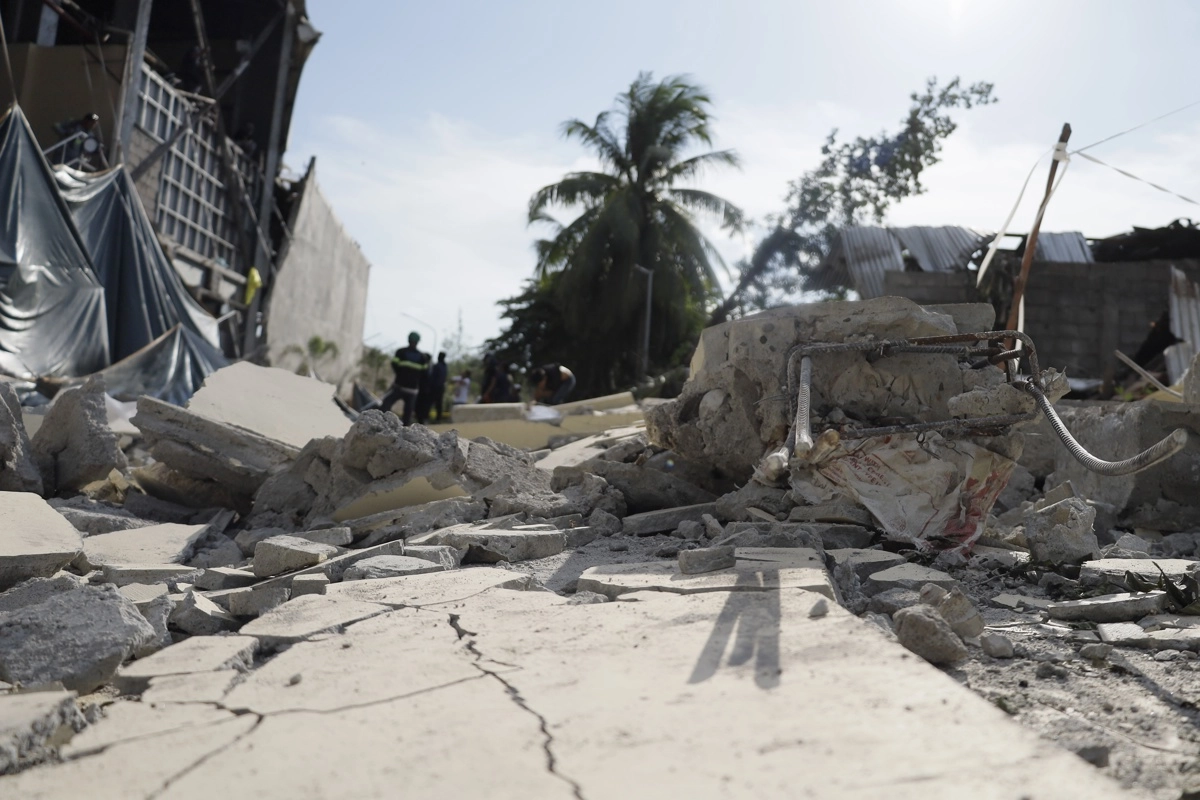

The Philippine authorities confirmed this Tuesday the death of 38 people due to the 7.8 magnitude earthquake that hit the southern island of Mindanao the day before, while the search for the missing and damage assessment continues, with 4 million children without access to school.
According to data from the National Disaster Risk Reduction and Management Council (NDRRMC), four people remain unaccounted for and more than 470 were injured by the earthquake, which directly affected some 145,000 citizens or nearly 33,000 families.
The authorities counted 40,674 displaced people and 2,505 damaged homes, of which 460 were completely destroyed in Mindanao, the second largest island in the archipelago, home to more than 20 million people and where numerous areas remain without electricity supply or access to drinking water.
Government buildings, homes, roads and bridges, among other infrastructure, were damaged by the powerful tremor, which was followed by some 1,055 aftershocks in the following 24 hours, with magnitudes between 1.3 and 6.7, according to official data.
The earthquake was detected at 07:37 local time on Monday (23:37 GMT on Sunday) about 24 kilometers southwest of the island of Burias - southern Mindanao - and at a depth of around 55 kilometers, according to the United States Geological Survey (USGS), which measures seismic activity around the world.
Four million children without school
The earthquake shook Mindanao on the same day that millions of children returned to school to start the school year, leaving classrooms reduced to rubble and without certainty about when some four million will be able to return, according to official data.
The strong tremor caused partial or total damage to a thousand schools in the affected areas, many of them fully operational at the time the earthquake occurred.
A school-age minor is among the deceased, official data indicates, while dozens of children have had to receive medical assistance and many others are part of the total of 31,701 people who are now sleeping in temporary shelters, notes NDRRMC.
The disaster, authorities and humanitarian organizations warn, has especially hit the little ones, whom the United Nations Children's Agency (UNICEF) has asked to put at the center of the response.
“In the coming days and weeks, children and families will have many needs, but the most urgent ones include drinking water, safe shelter and psychosocial support, as many children will continue to be traumatized,” Save The Children Philippines Humanitarian Affairs Manager Faisah Ali stressed to EFE.
“Displacement and the disruption of education increase the risk of violence, exploitation and other long-term harm,” the NGO's executive director, Pebbles Sanchez-Ogang, said in a statement.
The city of General Santos, in a “state of calamity”
The Philippine city General Santos, the most affected by the earthquake, is in a “state of calamity,” the local NGO Kidlikasan told EFE this Tuesday.
“In General Santos, at least 12 people died due to the collapse of buildings and falling debris,” the organization indicated, noting that the number of victims is not definitive because “many communities” have been “isolated” by the collapse of roads and bridges, which makes the evaluation and counting of victims difficult.
The city, with about 530,000 inhabitants, was one of the most damaged by the earthquake, which left several buildings reduced to rubble and forced the creation of temporary shelters for affected families.
In addition to General Santos, “the most affected areas include the municipalities of Maasim, Malapatan and Glan,” where a large landslide buried homes, causing several of the deaths reported in the province, the organization detailed.
The Philippine archipelago sits on the so-called Pacific Ring of Fire, an area of great seismic and volcanic activity in which about 7,000 earthquakes are recorded every year, most of them moderate. EFE