

Scientists discover incredible megacity of 111,000 spiders underground
In a cave between Greece and Albania, thousands of spiders have spun a colossal web, forming an unusual colony that survives without sunlight
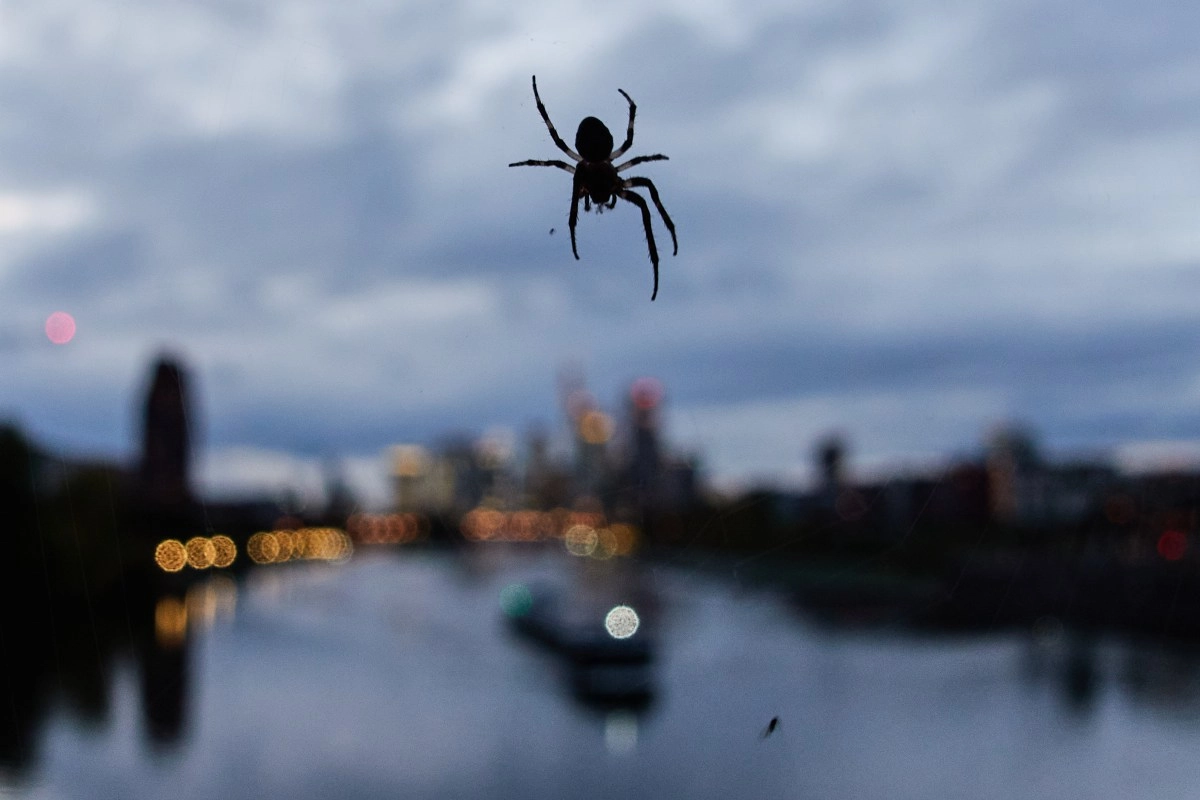

Somewhere on the border between Greece and Albania, a warm, sulfur-laden cave hides a scene that would test the nerves of any arachnophobe: a silk web covering more than 100 square meters and sheltering some 111,000 spiders.
The so-called Sulfur Cave is much more than a refuge for this enormous colony. It is a unique ecosystem, where life thrives in conditions that would seem designed to prevent it: absolute darkness, air thick with sulfur, and a toxic subterranean environment where, despite everything, life finds a way.
Discovery of the giant spiderweb
The discovery took place in 2022, when a group of speleologists from the Czech Speleological Society were exploring the area and came across this unusual community of arachnids. Surprised by what they saw, they immediately contacted a team of biologists.
Since then, researcher Istvan Urak, from Sapientia Transylvania University in Hungary, has led several expeditions to study the phenomenon in detail.
Urak described his first impression as a mixture of gratitude and respect: “You have to experience it to truly know what it feels like,” he told Live Science.
According to the researchers, who published their findings in the journal Subterranean Biology, the spiderweb covers more than one hundred square meters; an expanse so large that, as IFL Science quipped, it would be “wide enough to trap a whale.”
The structure begins about 50 meters from the cave entrance and unfolds along a narrow, low-ceilinged section, plunged in complete darkness.
111,000 spiders living together in a single structure
The most surprising thing is not just the size of the web, but who inhabits it and how they manage to coexist. Researchers estimate that some 69,000 Tegenaria domestica—the classic house funnel spider—and more than 42,000 Prinerigone vagans, a species that normally weaves flat webs, live in the cave.
Outside the cave,Both species are common and usually live solitary lives; they had never before been documented sharing the same structure or living colonially, an extremely rare behavior for them. Scientists suspect that this unusual coexistence is due to the cave's particular environment. The larger T. domestica appear to be the main architects of the network, while the smaller P. vagans act as opportunistic tenants. In a world of perpetual darkness, the absence of light—and therefore vision—could have favored this peaceful coexistence: perhaps they simply cannot see each other. A sulfur-based subterranean ecosystem. But the mystery doesn't end there. What feeds this vast community of spiders are not insects from outside, but species that are born and complete their life cycle inside the cave itself. Thanks to isotopic analyses—to track their diet—and genetic analyses—to compare their populations—researchers discovered that the entire food chain is based on chemoautotrophy: instead of depending on sunlight, the ecosystem obtains its energy from chemical reactions generated by bacteria that metabolize sulfur compounds, abundant in the cave environment. These bacteria form viscous biofilms that coat the walls and serve as food for the larvae of chironomid midges—harmless and non-biting—which, in turn, become the spiders' main food source. The spiders of Sulfur Cave not only behave differently: they also exhibit genetic differences and a less diverse gut microbiota than their surface-dwelling relatives. The lack of population exchange and prolonged isolation in this extreme environment appear to have favored these variations. According to researchers, the finding illustrates the “genetic plasticity” that some species can develop in such unique conditions. In an environment where the air is thick with sulfurous fumes and sunlight never penetrates, life has found a way not only to survive, but to flourish. What might seem like a scene from a nightmare is, for scientists, further proof that nature still holds surprises in its darkest corners. And in this case, that surprise has eight legs… or, rather, 111,000 times eight.They appear to be the main architects of the network, while the smaller P. vagans act as opportunistic tenants.
In a world of perpetual darkness, the absence of light—and therefore of vision—could have favored this peaceful coexistence: perhaps they simply don't see each other.
A sulfur-based subterranean ecosystem
But the mystery doesn't end there. What feeds this vast community of spiders are not insects from outside, but species that are born and complete their life cycle inside the cave itself. Thanks to isotopic analyses—to track their diet—and genetic analyses—to compare their populations—researchers discovered that the entire food chain is based on chemoautotrophy: instead of depending on sunlight, the ecosystem obtains its energy from chemical reactions generated by bacteria that metabolize sulfur compounds, abundant in the cave environment. These bacteria form viscous biofilms that coat the walls and serve as food for the larvae of chironomid midges—harmless and non-biting—which, in turn, become the spiders' main food source. The spiders of Sulfur Cave not only behave differently: they also exhibit genetic differences and a less diverse gut microbiota than their surface-dwelling relatives. The lack of population exchange and prolonged isolation in this extreme environment appear to have favored these variations. According to researchers, the finding illustrates the “genetic plasticity” that some species can develop in such unique conditions. In an environment where the air is thick with sulfurous fumes and sunlight never penetrates, life has found a way not only to survive, but to flourish. What might seem like a scene from a nightmare is, for scientists, further proof that nature still holds surprises in its darkest corners. And in this case, that surprise has eight legs… or, rather, 111,000 times eight.They appear to be the main architects of the network, while the smaller P. vagans act as opportunistic tenants.
In a world of perpetual darkness, the absence of light—and therefore of vision—could have favored this peaceful coexistence: perhaps they simply don't see each other.
A sulfur-based subterranean ecosystem
But the mystery doesn't end there. What feeds this vast community of spiders are not insects from outside, but species that are born and complete their life cycle inside the cave itself. Thanks to isotopic analyses—to track their diet—and genetic analyses—to compare their populations—researchers discovered that the entire food chain is based on chemoautotrophy: instead of depending on sunlight, the ecosystem obtains its energy from chemical reactions generated by bacteria that metabolize sulfur compounds, abundant in the cave environment. These bacteria form viscous biofilms that coat the walls and serve as food for the larvae of chironomid midges—harmless and non-biting—which, in turn, become the spiders' main food source. The spiders of Sulfur Cave not only behave differently: they also exhibit genetic differences and a less diverse gut microbiota than their surface-dwelling relatives. The lack of population exchange and prolonged isolation in this extreme environment appear to have favored these variations. According to researchers, the finding illustrates the “genetic plasticity” that some species can develop in such unique conditions. In an environment where the air is thick with sulfurous fumes and sunlight never penetrates, life has found a way not only to survive, but to flourish. What might seem like a scene from a nightmare is, for scientists, further proof that nature still holds surprises in its darkest corners. And in this case, that surprise has eight legs… or, rather, 111,000 times eight.Thanks to isotopic analysis—to track their diet—and genetic analysis—to compare their populations—researchers discovered that the entire food chain is based on chemoautotrophy: instead of relying on sunlight, the ecosystem obtains its energy from chemical reactions generated by bacteria that metabolize sulfur compounds, abundant in the cave environment. These bacteria form viscous biofilms that coat the walls and serve as food for the larvae of chironomid midges—harmless and non-biting—which, in turn, become the spiders' main food source. The spiders of Sulfur Cave not only behave differently: they also exhibit genetic differences and a less diverse gut microbiota than their surface-dwelling relatives. The lack of population exchange and prolonged isolation in this extreme environment appear to have favored these variations. According to researchers, the finding illustrates the “genetic plasticity” that some species can develop in such unique conditions. In an environment where the air is thick with sulfurous fumes and sunlight never penetrates, life has found a way not only to survive, but to flourish. What might seem like a scene from a nightmare is, for scientists, further proof that nature still holds surprises in its darkest corners. And in this case, that surprise has eight legs… or, rather, 111,000 times eight.Thanks to isotopic analysis—to track their diet—and genetic analysis—to compare their populations—researchers discovered that the entire food chain is based on chemoautotrophy: instead of relying on sunlight, the ecosystem obtains its energy from chemical reactions generated by bacteria that metabolize sulfur compounds, abundant in the cave environment. These bacteria form viscous biofilms that coat the walls and serve as food for the larvae of chironomid midges—harmless and non-biting—which, in turn, become the spiders' main food source. The spiders of Sulfur Cave not only behave differently: they also exhibit genetic differences and a less diverse gut microbiota than their surface-dwelling relatives. The lack of population exchange and prolonged isolation in this extreme environment appear to have favored these variations. According to researchers, the finding illustrates the “genetic plasticity” that some species can develop in such unique conditions. In an environment where the air is thick with sulfurous fumes and sunlight never penetrates, life has found a way not only to survive, but to flourish. What might seem like a scene from a nightmare is, for scientists, further proof that nature still holds surprises in its darkest corners. And in this case, that surprise has eight legs… or, rather, 111,000 times eight.For scientists, this is further proof that nature still holds surprises in its darkest corners. And in this case, that surprise has eight legs… or, rather, 111,000 times eight.For scientists, this is further proof that nature still holds surprises in its darkest corners. And in this case, that surprise has eight legs… or, rather, 111,000 times eight.