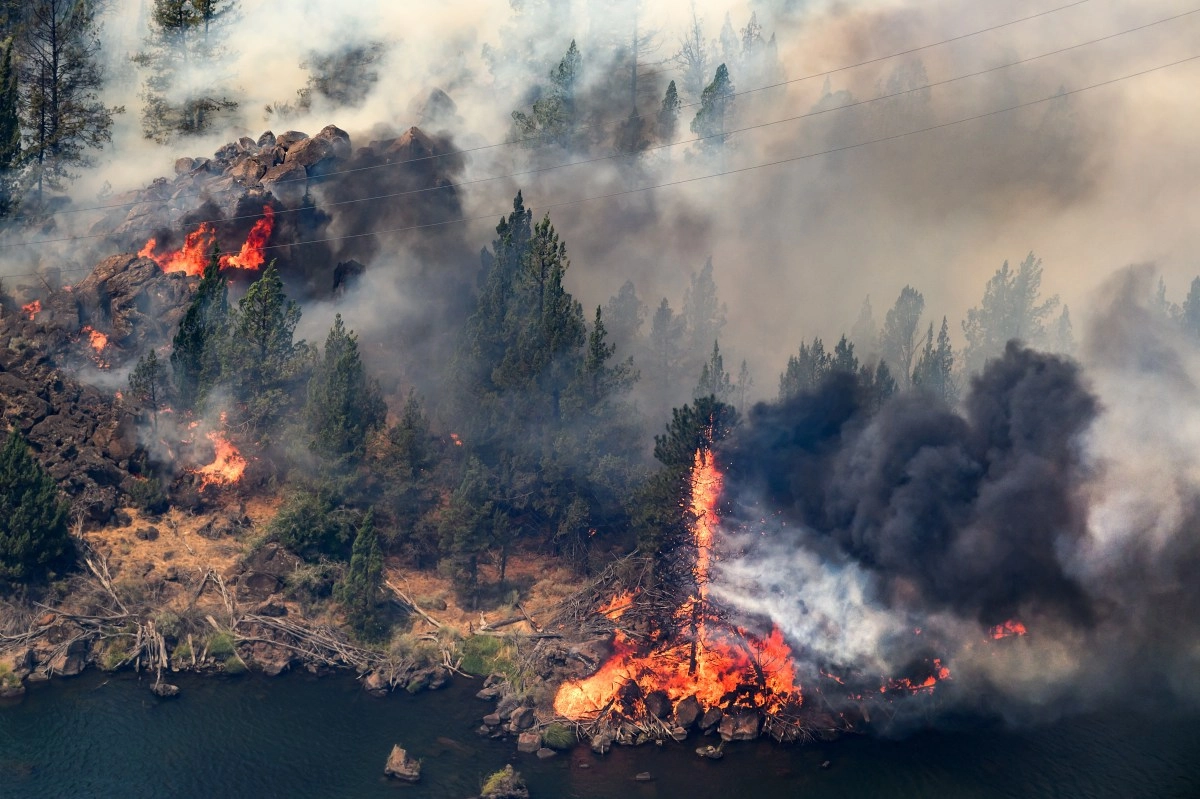

A house does not need to catch fire to suffer significant damage. Smoke can enter through windows, doors, ventilation systems and small openings, leaving persistent odors, stains, particles on furniture and contaminants that are difficult to remove.
Most homeowners and renters policies typically cover damage caused by fire, smoke, soot, and ash, both to the structure and to the insured belongings. However, coverage is not automatic: each company must determine if there is verifiable damage and how much it will cost to clean, repair or replace what was affected.
What smoke damage can insurance cover?
When smoke from a nearby fire enters a home, a policy could pay the expenses necessary to return the property to the condition it was in before the incident.
Depending on the contract and the magnitude of the damage, coverage may include:
The California Department of Insurance maintains that fire policies can cover the reasonable costs of remedying damage caused by flame, heat, smoke, soot, ash, and other debris. The company should not automatically deny a smoke claim without first investigating the existence and extent of the damage.
The owner will have to pay the deductible provided in his policy. Therefore, before initiating a claim for minor damage, it is a good idea to compare the estimated cost of the cleanup with the deductible amount.
You can see: What you should have at home if there is a fire nearby: the basic kit to evacuate in time
Can insurance pay for a hotel or temporary housing?
When a home becomes uninhabitable due to a covered peril, homeowners and renters policies may include coverage for additional living expenses, known as ALE (Additional Living Expenses).
This coverage can help pay for extraordinary expenses caused by displacement, such as temporary lodging, extra meals, storage, moving, furniture rentals, and extra transportation costs to work or school. It does not pay all the family's daily expenses, but rather the difference between the normal cost of living and the additional expense caused by the accident.
In California, a home could be considered uninhabitable even if it was not directly hit by the flames. The presence of toxic smoke and ash contamination, lack of water or electricity, and other hazardous conditions may warrant temporary coverage, as long as they are related to the fire and can be demonstrated.
Conditions change by state and policy. Some coverages are also activated when an authority orders an evacuation due to damage to nearby properties, although there are usually time and monetary limits.
The smell of smoke does not guarantee that the insurer will pay
Having an odor inside your home can be a sign of contamination, but it is not always enough to prove a covered loss. The company may request evidence that the smoke caused physical damage, left debris, or made the home unsafe.
The California Department of Insurance indicated that when the claim requires professional proof, the insurer must conduct an appropriate investigation. If tests are necessary to determine the presence or extent of damage, the agency expects the company to contract and pay for those services, rather than burdening the insured with the full cost of the investigation.
For this reason, it is not advisable to immediately accept a telephone explanation that attributes the problem to “a simple smell.” The insured can request an inspection, request that the decision be in writing and ask what specific part of the policy supports a possible denial.
You can see: I watched a wildfire destroy my town in California and now I build fireproof bunkers
What the home policy does not usually cover
Although smoke damage is generally included, there may be situations that are left out or cause a dispute.
The insurer may limit payment when the cost of the damage is less than the deductible or when it cannot be proven that the smoke came from the fire. You can also do so if you verify that the problem existed before the accident or if the loss corresponds to normal wear and tear or lack of maintenance.
In addition, it will surely check whether repairs were made or items were discarded before documenting them, and may reject if an expense is claimed that exceeds the policy limits.
Homeowners insurance also typically does not cover a car damaged by fire, smoke, or ash. For this, you normally need an auto policy with comprehensive coverage.
What to do before cleaning the house
The priority should always be safety. No one should return to an affected area until authorities say it is safe to do so. Once access is allowed, it is advisable:
The National Association of Insurance Commissioners recommends documenting conversations with the company, retaining receipts and preparing a detailed list of affected property to support the claim.
You can see: Neither hurricanes nor fires: this is the climate risk that costs homeowners the most money
California prepares new rules for smoke damage
The difficulty in demonstrating and repairing contamination caused by fires led California to move forward with AB 1795, called the Smoke Damage Recovery Act.
The proposal seeks to establish uniform standards for inspecting, analyzing and remediating homes contaminated by smoke, soot, ash and other substances. It also aims to reduce differences between insurers when determining which tests and work should be paid for.
The bill was amended on July 2, 2026, and is in the California Senate Appropriations Committee, with a hearing scheduled for August 3. For now, this is an initiative in process and not a current law.
Where to claim if the insurer rejects smoke damage
The first step is to ask the company for a written explanation that identifies the clause used to deny or reduce the claim. The owner can also provide additional photographs, inspection reports and estimates or request a new evaluation.
When the response does not appear consistent with the policy, a complaint can be filed with the state insurance department.
In California, consumers can contact the Department of Insurance at 1-800-927-4357. The agency responds to queries, receives complaints and can intervene when a company does not adequately investigate a claim.
In Texas, the Department of Insurance's help line is 800-252-3439. In other states, the National Association of Insurance Commissioners offers a directory to locate the appropriate authority.
Before assuming that smoke is not covered, it is a good idea to review the policy and file a claim. Even if the flames have never touched the home, the debris and contaminants can cause a real loss that the insurer must investigate.