

The Latin paradox of District 32
One would think that if immigration is not a central issue of his platform, his support among the Latino leadership would be weak.

One in five voting-age citizens of California's 32nd Congressional District is Latino, a total of 110,131. 60% are white, 13% Asian, 5% African American and the rest of various races or combinations. The district covers parts of western Los Angeles County and Ventura County.
In the elections that end on June 2, voters who live there will choose who will represent them in the Lower House in the next two years. Generally speaking, it is a relatively prosperous area, with an average income of $108,176 a year. Almost 40% more than the national average of $77,719.
The district is not homogeneous. It is divided almost in halves. And if we delve into the details, the district is divided into the slopes, coast and hills on one side and the San Fernando Valley on the other. In fact, the average does not reflect well the reality of either half. This is the most up-to-date chart showing how the district is divided, by community or city, with its ZIP code, median annual income and percentage Latino.
The population pattern in District 32 is unmistakable. The more income a community has, the lower the percentage of Latinos who live there. And vice versa.
By the way, in other districts of the Valley the Latino population is even more significant, such as 92% in the city of San Fernando or Van Nuys, where I live, with 57%. Other communities fluctuate between both numbers.
On the slopes, the coast and the hills are the expensive houses and the rich citizens. In the Valley, the lower value houses and Latino families. And the income of these families is much lower.
With disparity in income, property, zip code, come specific problems.
Whoever wants to win the elections must speak to both groups. You must know your needs, and if you are in a position of responsibility, satisfy them.
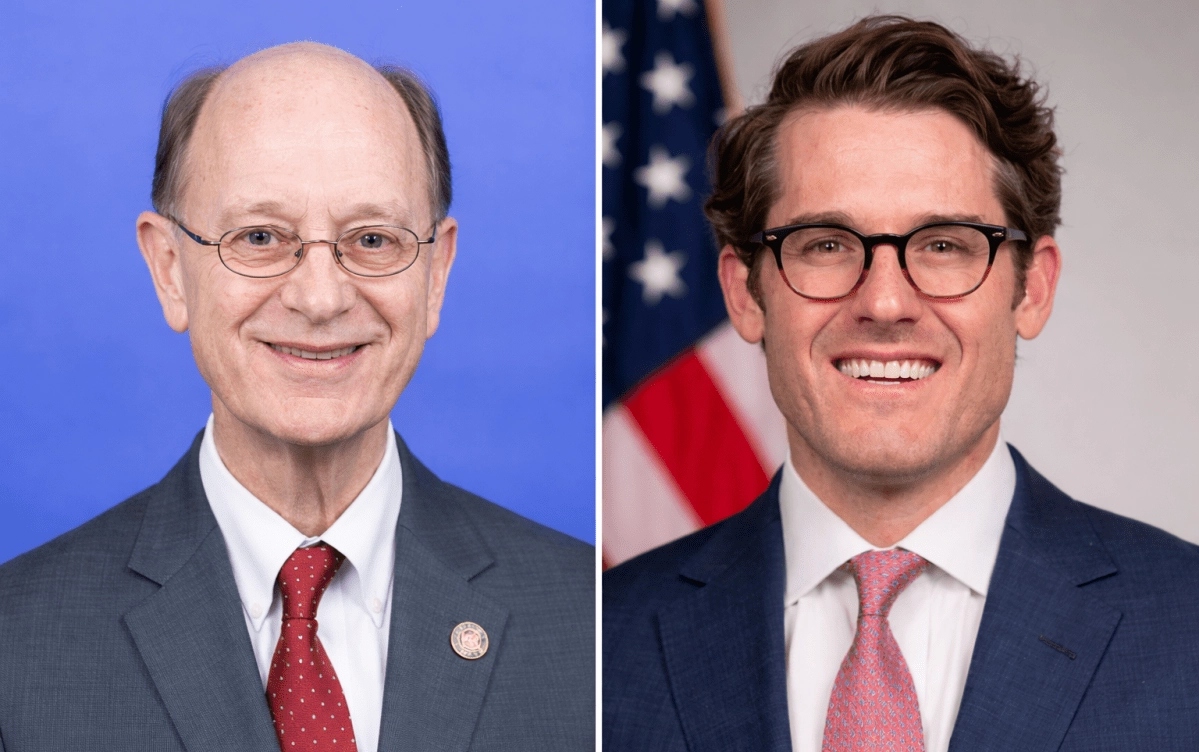
The incumbent congressman from District 32 is Brad Sherman, who is about to celebrate his 30th year in Congress; 15 wins. He is 71 years old. The challenger is Jake Levine, with no electoral experience, but with extensive experience in leadership positions. He is 41 years old.
The confrontation between Jake Levine and Brad Sherman is part of a broader process, in which the young Democratic guard tries to displace the veterans, who have been in their positions for decades, claiming that the Trump era requires a more vigorous opposition from a newer generation.
This is happening in six congressional races in the state, according to a Politico analysis.
But what concerns us now is the place that the Latino community occupies in the candidates' strategy.
After 16 months of the second Trump administration, of raids by hooded, armed, violent, unjust agents, who go around looking for whoever appears to be Latino, it is clear that the immigration issue is crucial for all members of this community. Including those who are citizens.
So the issue should feature prominently in the candidates' platform.
But on Congressman Sherman's website, immigration is not there. It doesn't appear, it doesn't appear.
Here we come to the Latin paradox of District 32. Something is not right.
These are the issues, Sherman's positions, according to his own list. It's a long list: Economics Taxes and Trade; Energy independence; foreign policy; Protecting our environment; United States-Greece Relationship; Social Security and Medicare Protection; Taxes; Trade; Transport; United States-Israel Relationship; Education; United States-Armenia Relationship, United States-India Relationship; For a world at peace; Consumer protection; Working for American workers; Protecting animals; Assemblies; Women's rights; Prevention of armed violence; Supporting our LGBTQ community; Fight against anti-Semitism; Supporting veterans.
Good list, but immigration was missing! Because?
No one is saying Sherman doesn't support the community. During his years in Congress he has voted numerous times for the interests of Latinos, along with the rest of the Democrats.
But he is not a leader. That's what that omission means.
On Levine's site, however, immigration does figure among his priorities. Here are their positions, in order: “Advance legislation that expedites pathways to citizenship; abolish ICE; Redirect funding from immigration enforcement to oversight (by) the justice system; and Organize the community against ICE/CBP's unconstitutional conduct in Los Angeles.”
Of course, the idea of “abolishing ICE” is not practical or even a good idea. The good thing would be to change the parameters of behavior, the use of those troops. Demilitarize units. Remove the mask of anonymity. But we are not for open borders. Sherman criticizes ICE, but does not call for its abolition. But the term expresses justified anger at the cruelty and impunity with which immigration agents have behaved in the Trump era, claiming authority that they do not have. The ideas are clear: to defend the community, and with everything.
The paradox does not end there. In fact, it's just beginning.
One would think that if immigration is not a central issue of his platform, if immigration does not even exist on the list, his support among the Latino leadership would be scarce.
But it is not like that. He is supported by congressmen Luz Rivas, Norma Torres, Linda Sánchez, Nanette Barragán, Jimmy Gomez, Gil Cisneros Jr., Lou Correa, Salud Carbajal, Raul Ruiz, Robert Garcia, Juan Vargas, Pete Aguilar. Assembly members Rick Chavez Zbur, Celeste Rodriguez. Supervisors Hilda Solís (Los Angeles County) and Vianey Lopez (Ventura); Angeleno councilors Imelda Padilla and Monica Rodriguez. All Latinos.
And Jake Levine? Dolores Huerta, which is important because of the well-deserved prestige that this nonagenarian leader of farm workers has.
Besides? IDEPSCA – the Popular Education Institute of Southern California and CLEAN, the Car Wash Workers Center.
It is respectable: they are real, grassroots organizations. Like other progressive and environmental organizations that have endorsed it. But I did not find documentation that Latino elected officials are openly supporting him.
Is there a disagreement between Latino leadership and the interests of the community?
How to explain it? I think with the concept of permanence. Sherman has nearly three decades behind him in a position of influence. Aside from his accomplishments, whatever they may be, his support is based on relationships, longevity and voting record, not political messages. All of this is part of the powerful federal Democratic machine.
Another powerful argument that “veterans” put forward is precisely their seniority. Yes, with their defense of gerontology they justify that after so many years and due to the inertia of the rules of Congress, these representatives are in leadership positions in the committees, ready to influence.
Yes, they are ready, they have the power, but they do not exercise it.
Let's look at Sherman's committees. After 30 years, he is a member of two, that of Foreign Affairs, and that of Financial Services. In the first, he is the top Democrat on the Middle East and North Africa Subcommittee. In the second, he appears on three Subcommittees, and in one of them he is the main Democrat, the Capital Markets Committee. Are those memberships enough to prefer you over someone new, any other new candidate? It can be argued that no.
Finally, it is noted that, in the rush, the Spanish pages of Levine's site were not supervised by the human eye, proof of which we find in this sentence: “In Congress, I will promote legislation that expedites the path to citizenship, abolish the ice…”
Yes, the translation program read “ice” as “ice”. But it is the acronym for Migra. More careful.