

The Mediterranean, one of the most dangerous migratory routes in the world with 3,500 children dead
Maritime rescue organizations sound the alarm: many children and young people are crossing the Mediterranean
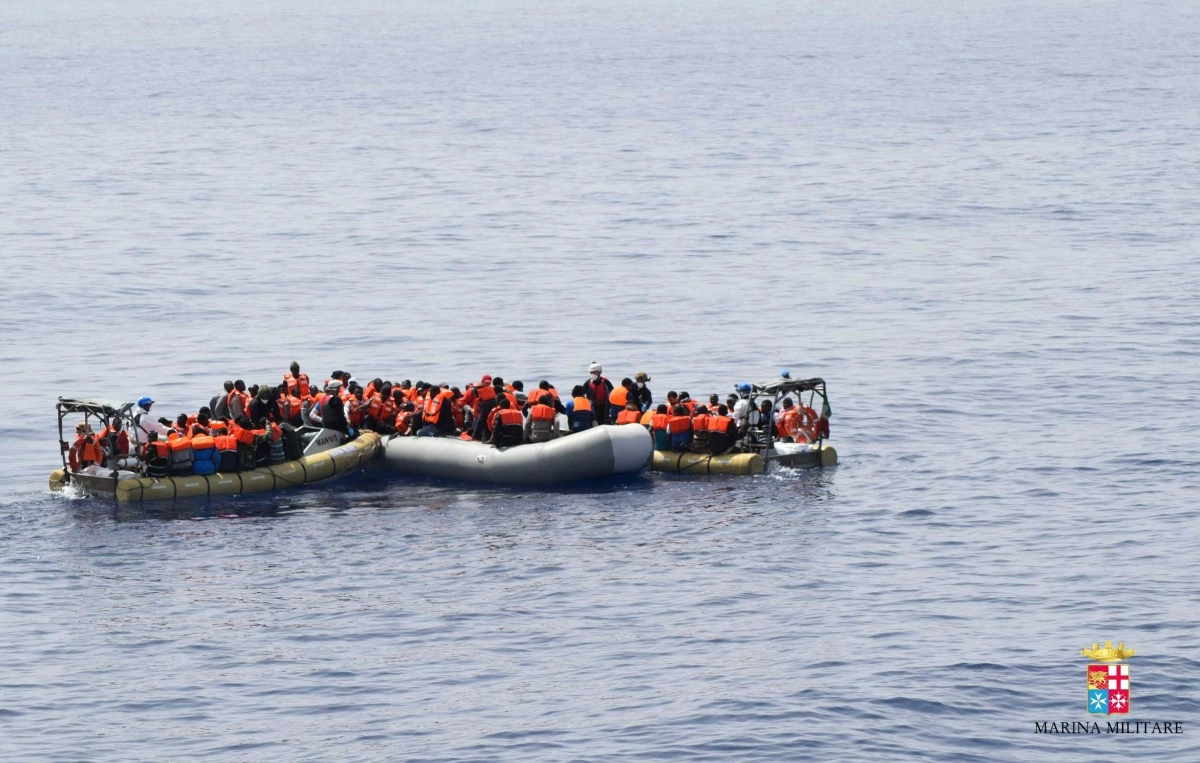

The Berlin-based civil maritime rescue NGO SOS Humanity has been saving refugees for ten years: “More and more children and young people are leaving Libya or Tunisia alone in completely overcrowded and often unusable boats.” About a fifth of those rescued are minors.
Esther (who asked that her last name be withheld), a qualified psychologist and mental health volunteer on Humanity 1 between November and December 2024, reported at a press conference that she had participated in the rescue of six boats carrying 347 people, including 43 minors.
“They often spent days and nights at sea without food or water, dehydrated, seasick, and frequently suffered burns from contact with salt water and fuel. Unfortunately, many also suffer from scabies or other skin diseases and wounds because they were held in the camps in Libya for long periods. Everyone is emotionally exhausted,” she said.
Minors in grave danger in Libyan camps
The situation in the Libyan camps is catastrophic for young people. Those who try to flee across the Mediterranean are also unsuccessful, and the Libyan coast guard returns them to the camps. For years, the North African state, which was supposed to take over border protection and drastically reduce the number of refugees following a multi-billion-dollar agreement with the European Union, has been harshly criticized for serious human rights violations. "Young people told me about serious forms of sexual violence, torture, child labor, loss of loved ones, and even cases of trafficking in women. Some even showed me their signs of torture: scars, but also photos and videos from the Libyan camps, where you can see them being tied up and tortured," Esther says. "3,500 minors dead or missing in the Mediterranean." And the minors who do manage to leave the camps face even greater danger during the crossing. According to UNICEF estimates from April 2025, around 3,500 children have died or gone missing in the last ten years trying to reach Italy via the central Mediterranean route—that's one child dead or missing every day. Therefore,SOS Humanity demands the immediate end of European Union cooperation with Libya and Tunisia.
According to Till Rummenhohl, Executive Director of SOS Humanity, "Recently, we had a boat full of 120 underage passengers. Teenagers, traveling alone, jumped into the water, gripped by fear of the Libyan coast guard."
Lanna Idriss, Executive Director of SOS Children's Villages Worldwide, also points out that the Trump administration has shut down the development aid agency USAID, which could have dramatic consequences.
The Lancet journal estimated that cuts to USAID could lead to more than 14 million additional deaths in the next five years, including five million children under the age of five. Germany also cuts its development aid by almost €1 billion. “This is catapulting us into a vicious cycle, which will cause more children to choose this path,” Idriss said. Vera Magali Keller, a lawyer and coordinator at a law firm in Berlin specializing in supporting humanitarian organizations, including those involved in maritime rescue, reminded DW of the importance of the UN Convention on the Rights of the Child: "In several European countries, there are special residence provisions, the right to protection and family reunification. In Italy, for example, this generally applies until adulthood. As a general rule, children and young people must be married separately from adults and receive special protection. Deprivation of liberty should be avoided whenever possible." German government suspends support for civilian maritime rescue SOS Humanity announced it will deploy another rescue ship to the Mediterranean in 2026 to search for refugee boats and monitor human rights violations off the Tunisian coast. To do so, it relies on donations, as the CDU/CSU and SPD federal government has suspended its annual financial support for civilian sea rescue. This is one of the reasons why Keller is pessimistic about the future: "Given the current political and legal developments, I don't see good prospects. I fear that the criminalization and repression of civilian sea rescue and solidarity with fleeing people will intensify under the current coalition. Furthermore, the already disastrous standards of protection and reception for refugees in Europe will deteriorate further." SOS Humanity demands an immediate end to EU cooperation with Libya and Tunisia.
According to Till Rummenhohl, executive director of SOS Humanity, "Recently, we had a boat full of 120 underage passengers. Teenagers, traveling alone, jumped into the water, gripped by fear of the Libyan coast guard."
Lanna Idriss, executive director of SOS Children's Villages worldwide, also points out that the Trump administration has shut down the development aid agency USAID, which could have dramatic consequences.
The Lancet journal estimated that cuts to USAID could lead to more than 14 million additional deaths over the next five years, including five million children under five. Germany also cuts its development aid by almost €1 billion. “This is launching us into a vicious cycle, which will lead to more children choosing this path,” Idriss said.
Vera Magali Keller, a lawyer and coordinator at a Berlin-based law firm specializing in supporting humanitarian organizations, including those involved in maritime rescue, reminded DW of the importance of the UN Convention on the Rights of the Child: “In several European countries, there are special rights residence, the right to protection and family reunification. In Italy, for example, this generally applies until adulthood. As a general rule, children and young people must be married separately from adults and receive special protection. Deprivation of liberty should be avoided whenever possible.”
German government suspends support for civilian maritime rescue
SOS Humanity announced it will deploy another rescue ship to the Mediterranean in 2026 to search for refugee boats and monitor human rights violations off the Tunisian coast. To do so, it relies on donations, as the CDU/CSU and SPD federal government has suspended its annual financial support for civilian sea rescue. This is one of the reasons why Keller is pessimistic about the future: "Given the current political and legal developments, I don't see good prospects. I fear that the criminalization and repression of civilian sea rescue and solidarity with fleeing people will intensify under the current coalition. Furthermore, the already disastrous standards of protection and reception for refugees in Europe will deteriorate further." SOS Humanity demands an immediate end to EU cooperation with Libya and Tunisia.
According to Till Rummenhohl, executive director of SOS Humanity, “Recently, we had a boat full of 120 underage passengers. Teenagers, traveling alone, jumped into the water, gripped by fear of the Libyan coast guard.”
Lanna Idriss, executive director of SOS Children's Villages worldwide, also points out that the Trump administration has shut down the development aid agency USAID, which could have dramatic consequences.
The Lancet journal estimated that cuts to USAID could lead to more than 14 million additional deaths over the next five years, including five million children under five. Germany also cuts its development aid by almost €1 billion. “This is launching us into a vicious cycle, which will lead to more children choosing this path,” Idriss said.
Vera Magali Keller, a lawyer and coordinator at a Berlin-based law firm specializing in supporting humanitarian organizations, including those involved in maritime rescue,DW reminded of the importance of the UN Convention on the Rights of the Child: "In several European countries, there are special residence rights, the right to protection and family reunification. In Italy, for example, this generally applies until adulthood. As a general rule, children and young people must be married separately from adults and receive special protection. Deprivation of liberty should be avoided whenever possible."
German government suspends support for civilian maritime rescue
SOS Humanity announced it will deploy another rescue ship to the Mediterranean in 2026 to search for refugee boats and monitor human rights violations off the Tunisian coast. To do so, it relies on donations, as the CDU/CSU and SPD federal government has suspended its annual financial support for civilian sea rescue. This is one of the reasons why Keller is pessimistic about the future: "Given the current political and legal developments, I don't see good prospects. I fear that the criminalization and repression of civilian sea rescue and solidarity with fleeing people will intensify under the current coalition. Furthermore, the already disastrous standards of protection and reception for refugees in Europe will deteriorate further." Executive director of SOS Children's Villages worldwide, also points out that the Trump administration has shut down the development aid agency USAID, which could have dramatic consequences.
The Lancet journal estimated that cuts to USAID could lead to more than 14 million additional deaths over the next five years, including five million children under the age of five. Germany also cuts its development aid by almost €1 billion. “This is launching us into a vicious cycle, which will lead to more children choosing this path,” Idriss said.
Vera Magali Keller, a lawyer and coordinator at a Berlin-based law firm specializing in supporting humanitarian organizations, including those involved in maritime rescue, reminded DW of the importance of the UN Convention on the Rights of the Child: “In several European countries, there are special rights residence, the right to protection and family reunification. In Italy, for example, this generally applies until adulthood. As a general rule, children and young people must be married separately from adults and receive special protection. Deprivation of liberty should be avoided whenever possible.”
German government suspends support for civilian maritime rescue
SOS Humanity announced it will deploy another rescue ship to the Mediterranean in 2026 to search for refugee boats and monitor human rights violations off the Tunisian coast. To do so, it relies on donations, as the CDU/CSU and SPD federal government has suspended its annual financial support for civilian sea rescue. This is one of the reasons why Keller is pessimistic about the future:"Given the current political and legal developments, I don't see good prospects. I fear that the criminalization and repression of civilian sea rescue and solidarity with fleeing people will intensify under the current coalition. Furthermore, the already disastrous standards of protection and reception for refugees in Europe will deteriorate further." Executive director of SOS Children's Villages worldwide, also points out that the Trump administration has shut down the development aid agency USAID, which could have dramatic consequences.
The Lancet journal estimated that cuts to USAID could lead to more than 14 million additional deaths over the next five years, including five million children under the age of five. Germany also cuts its development aid by almost €1 billion. “This is launching us into a vicious cycle, which will lead to more children choosing this path,” Idriss said.
Vera Magali Keller, a lawyer and coordinator at a Berlin-based law firm specializing in supporting humanitarian organizations, including those involved in maritime rescue, reminded DW of the importance of the UN Convention on the Rights of the Child: “In several European countries, there are special rights residence, the right to protection and family reunification. In Italy, for example, this generally applies until adulthood. As a general rule, children and young people must be married separately from adults and receive special protection. Deprivation of liberty should be avoided whenever possible.”
German government suspends support for civilian maritime rescue
SOS Humanity announced it will deploy another rescue ship to the Mediterranean in 2026 to search for refugee boats and monitor human rights violations off the Tunisian coast. To do so, it relies on donations, as the CDU/CSU and SPD federal government has suspended its annual financial support for civilian sea rescue. This is one of the reasons why Keller is pessimistic about the future: "Given the current political and legal developments, I don't see good prospects. I fear that the criminalization and repression of civilian sea rescue and solidarity with fleeing people will intensify under the current coalition. Furthermore, the already disastrous standards of protection and reception for refugees in Europe will deteriorate further."He reminded DW of the importance of the UN Convention on the Rights of the Child: "In several European countries, there are special residence permits, the right to protection and family reunification. In Italy, for example, this generally applies until adulthood, children and young people must be married separately from adults and receive special protection."
German government suspends support for civilian maritime rescue
SOS Humanity announced that it will deploy another rescue ship to the Mediterranean in 2026 to search for refugee boats and monitor human rights violations off the Tunisian coast. To do so, it relies on donations, as the CDU/CSU and SPD federal government has suspended its annual financial support for civilian sea rescue. This is one of the reasons why Keller is pessimistic about the future: “Given the current political and legal developments, I don't see good prospects. I fear that the criminalization and repression of civilian sea rescue and solidarity with fleeing people will intensify under the current coalition. Furthermore, the already disastrous standards of protection and reception for refugees in Europe will deteriorate further.”He reminded DW of the importance of the UN Convention on the Rights of the Child: "In several European countries, there are special residence permits, the right to protection and family reunification. In Italy, for example, this generally applies until adulthood. As a general rule, children and young people must be married separately from adults and receive special protection. Deprivation of liberty should be avoided whenever possible. is pessimistic about the future: “Given the current political and legal developments, I don't see good prospects. I fear that the criminalization and repression of civilian sea rescue and solidarity with fleeing people will intensify under the current coalition. Furthermore, the already disastrous standards of protection and reception for refugees in Europe will deteriorate further.”there are special residence permits, the right to protection and family reunification. In Italy, for example, this generally applies until adulthood. As a general rule, children and young people must be married separately from adults and receive special protection. Deprivation of liberty should be avoided whenever possible. is pessimistic about the future: “Given the current political and legal developments, I don't see good prospects. I fear that the criminalization and repression of civilian sea rescue and solidarity with fleeing people will intensify under the current coalition. Furthermore, the already disastrous standards of protection and reception for refugees in Europe will deteriorate further.”there are special residence permits, the right to protection and family reunification. In Italy, for example, this generally applies until adulthood. As a general rule, children and young people must be married separately from adults and receive special protection. Deprivation of liberty should be avoided whenever possible. is pessimistic about the future: “Given the current political and legal developments, I don't see good prospects. I fear that the criminalization and repression of civilian sea rescue and solidarity with fleeing people will intensify under the current coalition. Furthermore, the already disastrous standards of protection and reception for refugees in Europe will deteriorate further.”