

The thousands of foreigners who have died fighting for Russia in the war with Ukraine
More than 3,500 foreigners - from more than 40 countries, including Cuba and Ecuador - have died fighting for Russia in its war against Ukraine.
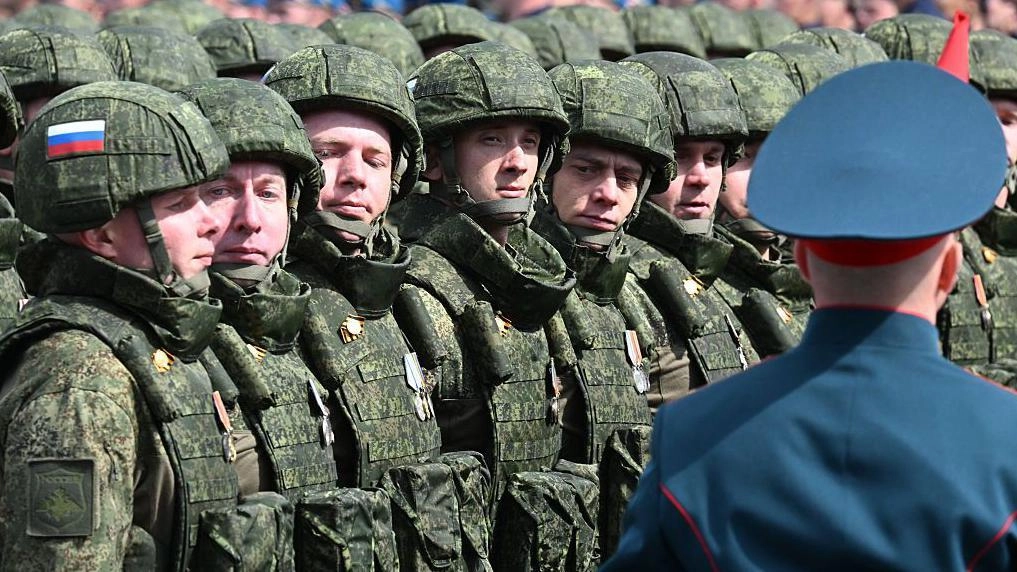

At least 3,586 foreigners from more than 40 countries have died fighting for Russia since the start of its large-scale invasion of Ukraine, according to a BBC investigation.
These include prisoners recruited from Russian jails, migrants who allege they were coerced or deceived, volunteers attracted by high salaries, and regular North Korean troops who were sent under an agreement between Moscow and Pyongyang.
The BBC Russian Service and independent media outlet Mediazona keep track of verified Russian casualties, using open source information such as official announcements, messages and photos of graves on social media and war commemorations.
One of those on the list is Edson Kamwesigye from Uganda. According to his family, he believed he was going to Russia to work as a security guard.
The 45-year-old Ugandan had worked as a guard in Iraq and Afghanistan in the 2000s, but had never participated in real combat, his wife, Carolina Mukuza, told reporters.
After his overseas security job dried up, he returned to Uganda, where he drove a taxi and tried farming. The money was barely enough to support his wife and two children.
In December 2025, he told his family that he had found another security job, this time in Russia. But on January 16 of this year, he called his wife with different news.
“He asked me to pray for him because he was receiving military training and would soon be sent to the front,” he told the German newspaper Taz.
A week later, Kamwesigye died in Kupiansk, in northeastern Ukraine, as verified by the BBC Russian service.
His wife continues to try to bring his body home. Local media reported that Ugandan authorities refused to coordinate his return. At least two other Ugandans have died fighting for Russia through June 2026, media in Uganda reported.
Kamwesigye is one of 1,285 foreign fighters in the Russian military whose deaths have been verified by the BBC. These include citizens of Cuba, USA, China, Vietnam, Poland, India, Nepal, Serbia and many others.
Another 2,304 North Korean soldiers were identified by the BBC's Korean service through satellite images and official photographs of a military commemoration in Pyongyang. Ukrainian troops fell fighting in the Russian Kursk region, after Kyiv launched an incursion there in August 2024.
The total number of foreigners who have fought on the Russian side, including those who have survived, is estimated to be several times higher.
NATO believes that approximately 24,000 foreign mercenaries from 44 countries are fighting within the Russian ranks, a senior alliance official told the BBC during the member countries' summit in Ankara in July. The majority, according to the official, are from African states.
"Probably hundreds of Africans have signed contracts. Some did so voluntarily, while others were forced," he said.
Our list does not include residents of the Ukrainian regions of Crimea, Donetsk, Luhansk, Kherson, Zaporizhzhia who fight on the Russian side and whom we recorded separately, so their casualties are not reflected in this summary.
But it does include 25 Ukrainian citizens from other parts of Ukraine who died at the front as part of the Russian ranks. Most of them were recruited for war in penal colonies.
Recruitment in prisons and abroad
When Russia's full-scale invasion of Ukraine in February 2022 did not conclude as quickly as had been expected, the Kremlin quickly found itself short of combat personnel.
In mid-2022, prisoners, including foreigners, were offered the option of being released in exchange for fighting. Its recruitment was initially handled by the paramilitary group Wagner, and later replaced by the Ministry of Defence.
The strategy mainly affected citizens of the former Soviet republics, especially those in Central Asia. For example, more than half of the citizens of Uzbekistan and Tajikistan who died in the war were individuals who went to the front from Russian prisons.
In 2024, the Russian authorities significantly increased payments for joining the army.
Payments vary by region, but a recruit who signs a contract with Moscow is currently promised $30,000 up front as a signing bonus and then a salary of about $3,500 a month. Combat bonuses can increase above US$72,300.
The average monthly salary in Russia is about US$760.
Around this time, active recruitment also began among residents of more distant countries, such as Cuba, Nepal, India, Sri Lanka, and Yemen. Some knew they were joining the army. Others said they had traveled to Russia hoping to study or work in construction or security, only to be sent to training and then to the front.
Since mid-2025, human rights organizations and lawyers have denounced renewed pressure on migrant workers in former Soviet republics living in Russia. Some allegedly had offers of help against deportation orders, entry restrictions or for citizenship applications in exchange for signing contracts. Others say they were threatened.
There have also been efforts to recruit in the poorest countries in Africa, according to the Reuters agency and the International Federation for Human Rights.
North Korea stands out because its soldiers - as opposed to foreign recruits - were openly sent by its government under a defense agreement with Russia.
Despite the geographic reach of the recruitment drive, foreigners remain a small part of total Russian casualties. Even including North Koreans, they represent less than 2% of the 233,033 deaths confirmed by the BBC.
They cannot replace the main source of Russian troops: their own citizens. But, as casualties continue and fewer Russians appear willing to sign contracts, Moscow will most likely continue to look abroad.
The Russian government has not updated its death figures since September 2022 and generally never comments on the BBC Russian service's findings.
Ukraine's “foreign legion”
Ukraine also recruits foreign personnel, through a national system created after Russia launched its large-scale invasion in February 2022.
President Volodymyr Zelensky established the International Legion of Ukraine a few days later and called for volunteers abroad. Foreigners now serve in the legion and other Ukrainian military units. Under martial law, they can only voluntarily leave after six months of continuous service under normal circumstances.
In June this year, Zelensky announced that Ukraine would increase military salaries and seek to recruit more fighters abroad, at a time when the army faces a personnel shortage after four years of war with Russia.
Ukraine does not publish a consolidated total of casualties of foreign nationals. In August 2025, an official responsible for coordinating the service of foreign citizens told the Ukrainian publication Hromadske that more than 8,000 foreign volunteers enlisted in the ground forces.
He estimated the figure across all branches of Ukraine's armed forces could be at least 16,000, and said citizens of 72 countries were serving.
The foreign contingent has changed. The first volunteers included many people from Western countries and former Soviet republics, some with military experience.
Ukraine later developed Spanish-language recruiting and command structures, and hundreds of Colombian veterans have enlisted. Some claim that they have come to defend Ukraine. For others, money is an important motivation: salaries to go to the front can be several times higher than military pay in Colombia.
Foreigners serving in Ukraine receive the same pay as Ukrainian troops: about $2,690 for a full month of combat. Additionally, US$1,570 is paid for every 30 days accumulated on the front.
But on both sides, foreign troops constitute a small supplement to armies that are overwhelmingly composed of Russians and Ukrainians.
Additional reporting by Elizaveta Fokht
Graphics by Yaroslava Kiryukhina
Download the new BBC World Service app. Choose BBC News Mundo and receive news alerts, documentaries and analysis, all in one place. Important: The new app is not available in the United Kingdom or the United States.