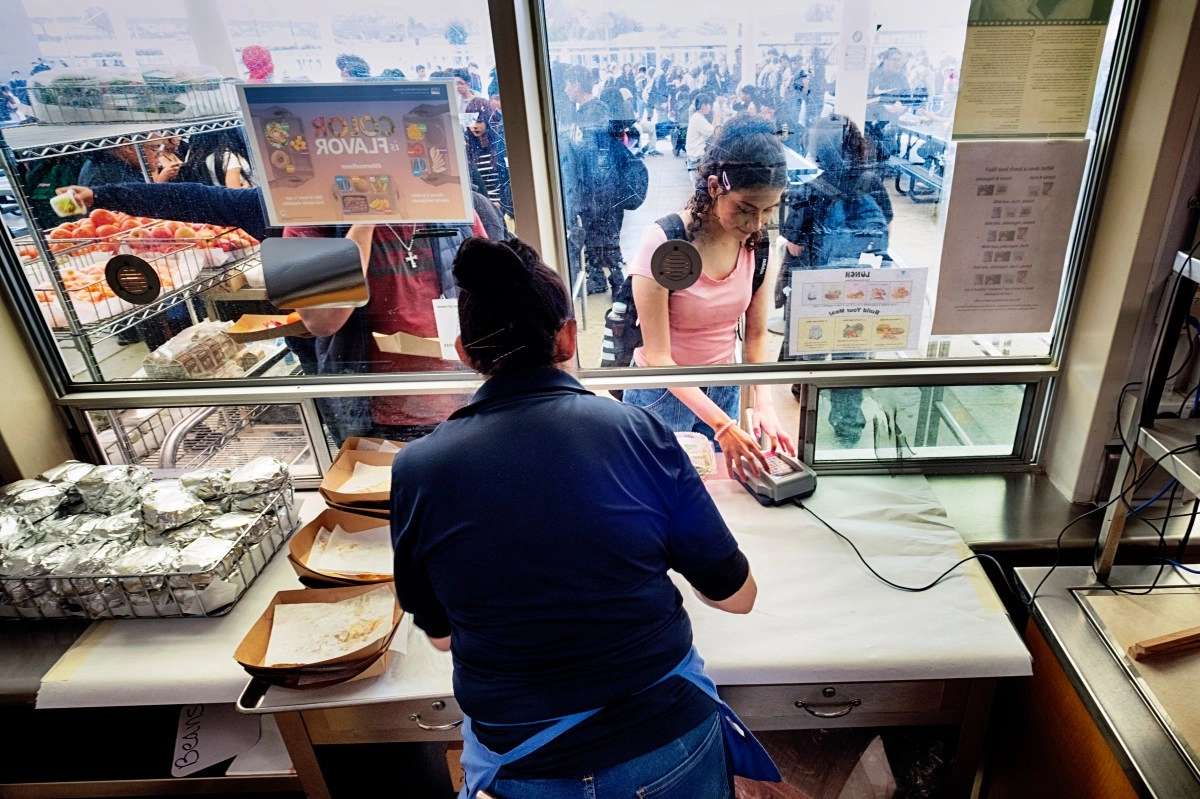

A total of 271,000 students in the Los Angeles Unified School District will be affected by the negative impact of the federal government's partial shutdown of the Supplemental Nutrition Assistance Program, known as SNAP or food stamps, while in Los Angeles County, approximately 1.5 million people will be affected. The cuts to SNAP are the most damaging in the history of the government program, which has existed in the United States since the 1930s. “This is a worrying situation,” said Alberto Carvalho, superintendent of LAUSD. “They are going to end nutrition benefits for poor families and children.” More than 80% of the 500,000 students in the second-largest school district in the United States live in poverty. “No child in our community should go hungry,” the superintendent stated. The current distribution of daily meals has reached 55,000 students, and the district has the capacity to increase that number to more than 400,000 beneficiaries. These are measures that LAUSD has adopted in collaboration with community, private, and labor sector organizations. Due to the government shutdown, the United States Department of Agriculture (USDA) reported that 42 million Americans—including 10 million Latinos—will not receive benefits from the Supplemental Nutrition Assistance Program (SNAP) starting November 1. This means that one in eight Americans will have difficulty feeding their families. The end of SNAP benefits would also damage the already struggling economy of 5.5 million Californians. The interruption of federal aid will leave many families without federal food assistance, prompting Los Angeles school officials to repeat the humanitarian aid deployed during the pandemic. “It’s cruel and inhumane,” said Scott Schmerelson, president of the School Board, in a statement to La Opinion. “No child should go to bed hungry. There will always be enough food for everyone.”because there is enough money in the district to address the emergency.”
Schemerelson acknowledged that the damage the federal government is causing to its own people “is cruel and inhumane.”
Republicans and Democrats have been unable to end the government shutdown because there has been no political will to engage in dialogue.
“Everyone has to act: Republicans, Democrats, and Independents. Everyone has to come together, discuss, and end all of this.”
Every day it gets worse, but that's going to change.”
Student Resources
Under California's Universal Meal Policy, all students are entitled to a free breakfast and lunch every day.
In addition, dinners are available for all LAUSD students ages 1-18 after school. They operate Monday through Friday at most district schools.
Park Food Program
Los Angeles County Parks is expanding the capacity of its park food programs. Los Angeles County Parks offers the following food security service programs for youth, teens, and seniors.
They offer healthy snacks for children under 17 at 48 parks Monday through Friday between 3:00 and 4:00 p.m.
They also have the free hot dinner program at Our SPOT Youth Centers for teens in 16 parks for ages 12 to 18.
And the free senior food program at 9 parks (Monday-Friday) for ages 55 and over.
For more information visit: http://bit.ly/lacparksfoodprograms
“Serious and Devastating Threats”
Dr. Barbara Ferrer, Executive Director of Los Angeles County Public Health, praised the collective leadership in advocating for the creation of environments where families feel supported and safe, and for fighting for the health and well-being of communities that “this federal government cannot destroy.”
The official warned that “we face serious and devastating threats from this administration against our entire health and social services systems.”
These threats, she stated, go far beyond the government shutdown, because they attack the very foundations of communities and the social safety net, “establishing violence with federal approval in our neighborhoods and drastically cutting budgets for hospitals and community clinics, making it harder to access affordable public and private health insurance and weakening our nation's public health infrastructure.”
He emphasized that if these actions continue,Its impacts will be felt most strongly by families who already have fewer resources and greater needs.
Ferrer said the delay in CalFresh benefits due to the federal government shutdown is devastating for the more than 1.5 million children and adults who rely on these benefits to buy food each month.
She emphasized that one in ten families in Los Angeles is experiencing food insecurity and that the loss of benefits for Los Angeles County recipients amounts to approximately $320 million per month until the government shutdown ends.
And, if it extends beyond December 31, funding will be lost for childcare, WIC, CalWorks, Section 8, housing subsidies, health, and public housing.
To make matters worse, housing maintenance funds will also be affected.
For example, funding will be lost for essential public health disease research and tuberculosis control.
“We have begun actively planning for the very real possibility that other essential benefits could go unfunded if the shutdown extends beyond the end of the year,” he emphasized. And, as part of the county’s contingency plan to mitigate those impacts and try to address the increased demand generated by the administrative shutdown, the contract that the County Public Health Department signed with the Los Angeles Regional Food Bank was modified to provide an additional $10 million immediately for the purchase and distribution of food at its 940 centers, as well as to establish additional temporary centers in the hardest-hit communities where the need is greatest.
Law to Incentivize Food Donations
At the federal level, Congresswoman Nanette Barragan (CA-44) reintroduced the Feed the Community Act (HR 5840) this week, which creates tax deductions for businesses that donate food storage equipment and vehicles to nonprofit organizations whose mission is to combat hunger in their communities, while the Trump administration is letting SNAP benefits expire this week.
Faced with the growing demand that food banks, community pantries, and community nutrition providers are experiencing, they need equipment to store more food and vehicles to transport it to communities in need.
Since the current tax code only allows food inventory to be donated as charitable donations,This new category of tax deductions will incentivize a greater flow of equipment and vehicle donations to food assistance organizations so they can store and transport food and feed Americans across the country. This bill builds on Congresswoman Barragan's recent efforts to protect access to nutritious food, outlined in a letter she co-signed with Agriculture Secretary Brooke Rollins requesting that contingency funds be used to maintain Supplemental Nutrition Assistance Program (SNAP) benefits during the government shutdown. Tens of millions of Americans are impacted by food insecurity and food waste, which disproportionately harms seniors, low-income households, and communities of color. “Nearly one million Angelenos would go hungry if it weren't for the vital work of food banks,” Congresswoman Barragan stated. “As the cost of living continues to rise, more and more Americans fear they won’t be able to put food on the table for their families. No American should have to worry about where they’ll get their next meal. My bill helps ensure that Americans have enough to eat and that community nutrition organizations have the resources they need to serve our communities.” “Across the United States, logistics companies are supporting food redistribution by donating storage space and transportation to food banks and other community organizations,” said Sara Stickler, president and CEO of the Global Cold Chain Alliance. “The Community Food Act would recognize this contribution and encourage greater participation in these important partnerships.” Michael Flood, president and CEO of the Los Angeles Regional Food Bank, said the Community Food Act addresses a critical need for nonprofits by offering tax deductions to companies that donate essential food storage equipment and vehicles. “These donated resources would strengthen the capacity of nonprofit organizations fighting hunger across the country,” he said. “With the growing demand for food assistance and rising infrastructure costs, support for our shared mission is vital to continuing to serve individuals and families suffering from food insecurity.” He added that incentivizing donations,Nanette Barragan Diaz's law promotes a community-based approach to combating food insecurity and will increase the capacity of non-profit organizations to ensure that nutritious food reaches those who need it.