

Trump assures that Iran will allow 20 oil ships to pass through the Strait of Hormuz
The strait has remained virtually closed since the United States and Israel launched coordinated attacks against Iran on February 28
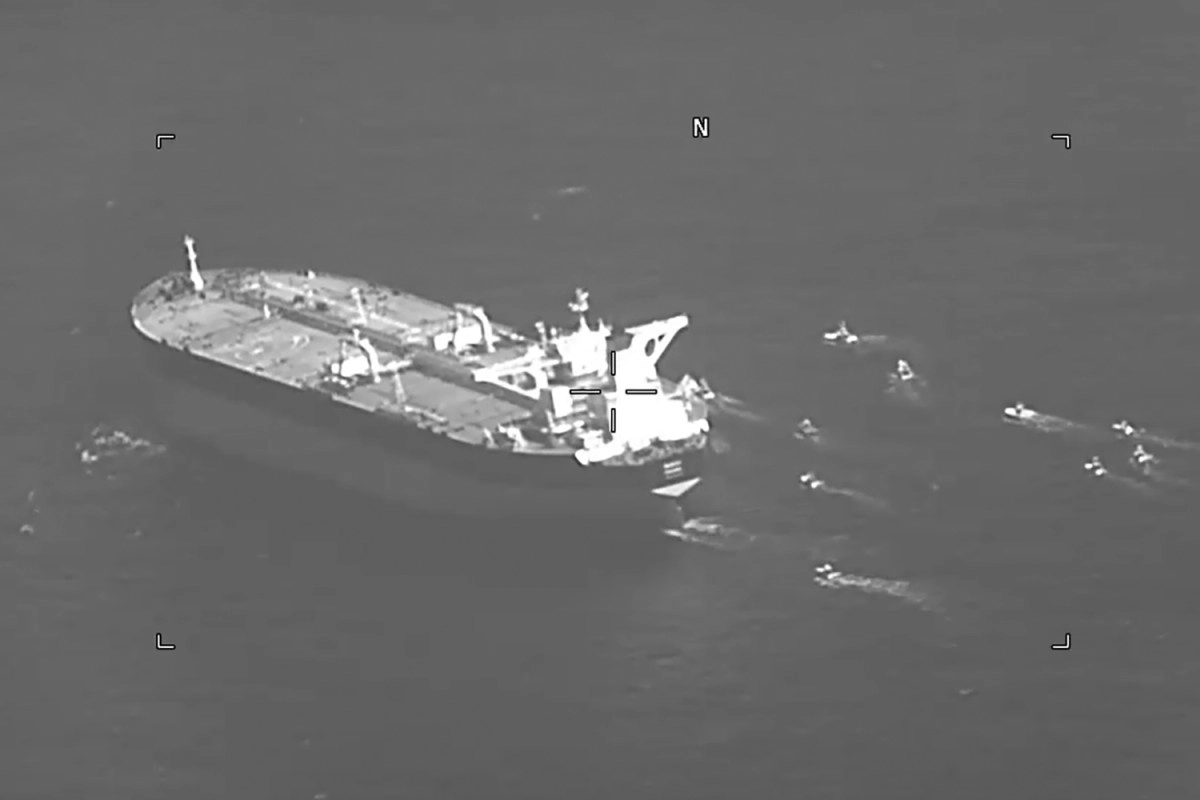

US President Donald Trump stated that Iran will allow 20 oil ships to pass through the strategic Strait of Hormuz, in what he described as a gesture of “respect” towards Washington amid rising tensions in the Middle East Middle East.
During remarks to reporters aboard Air Force One, the president indicated that the passage of the ships would begin Monday morning. “I can’t define it exactly, but I think, as a sign of respect, they gave us 20 oil tankers,” said Trump, who insisted that negotiations with Tehran are progressing favorably.
The announcement comes amid heightened military tensions. The United States has increased its presence in the region with approximately 50,000 troops deployed, while the Pentagon is evaluating scenarios that include a possible ground incursion into Iranian territory, according to reports leaked to US media.
Military tensions and doubts about negotiations grow
Trump’s statements contrast with the position of Iranian authorities. The Speaker of Iran’s Parliament, Mohammad Bagher Qalibaf, accused Washington of maintaining a double standard by publicly speaking of negotiations while, he said, preparing a possible attack. “Iran is waiting,” Qalibaf stated, referring to the US military deployment in the region. The US Central Command recently reported the deployment of the amphibious assault ship USS Tripoli, accompanied by some 3,500 additional troops, as well as combat aircraft and tactical units. Meanwhile, Trump confirmed that he extended the ultimatum to Iran to unblock the Strait of Hormuz until April 6. The president has warned that, if this condition is not met, the United States could attack key Iranian infrastructure, including power plants. Despite his optimism about a possible agreement, the US president acknowledged that there are no guarantees. “I think we will reach an agreement very soon,” he said.But it is possible that we will not,” he noted.
Parallel Agreements and the Global Energy Crisis
While Washington and Tehran exchange messages, other international actors have begun negotiating limited access to the strait. The Pakistani government announced an agreement with Iran to allow the passage of 20 Pakistani-flagged vessels, at a rate of two per day.
Pakistani Foreign Minister Ishaq Dar called the move a “haunter of peace” and a significant step toward mitigating the global energy crisis.
The Strait of Hormuz, through which a fifth of the world’s oil passes, has remained virtually blocked since the end of February, when the conflict erupted following coordinated attacks by the United States and Israel against Iran. Since then, maritime traffic has been reduced by approximately 90%, with thousands of vessels stranded.
The restriction has driven crude oil prices above $100 a barrel, generating inflationary pressures globally. Furthermore, it has been reported that some vessels have paid millions of dollars to obtain passage under the supervision of Iranian forces. In this context, the Director-General of the World Trade Organization, Ngozi Okonjo-Iweala, warned that international trade is facing one of its worst crises in decades. As diplomatic efforts continue, the situation in the Strait of Hormuz remains a critical point for global energy and geopolitical stability.In this context, the Director-General of the World Trade Organization, Ngozi Okonjo-Iweala, warned that international trade is facing one of its worst crises in decades. As diplomatic efforts continue, the situation in the Strait of Hormuz remains a critical point for global energy and geopolitical stability.In this context, the Director-General of the World Trade Organization, Ngozi Okonjo-Iweala, warned that international trade is facing one of its worst crises in decades. As diplomatic efforts continue, the situation in the Strait of Hormuz remains a critical point for global energy and geopolitical stability.