

What countries gain and lose in the Iran war
Although it is the civilians of the region who pay the highest price, the Iran war has altered the balance of power far beyond the Gulf
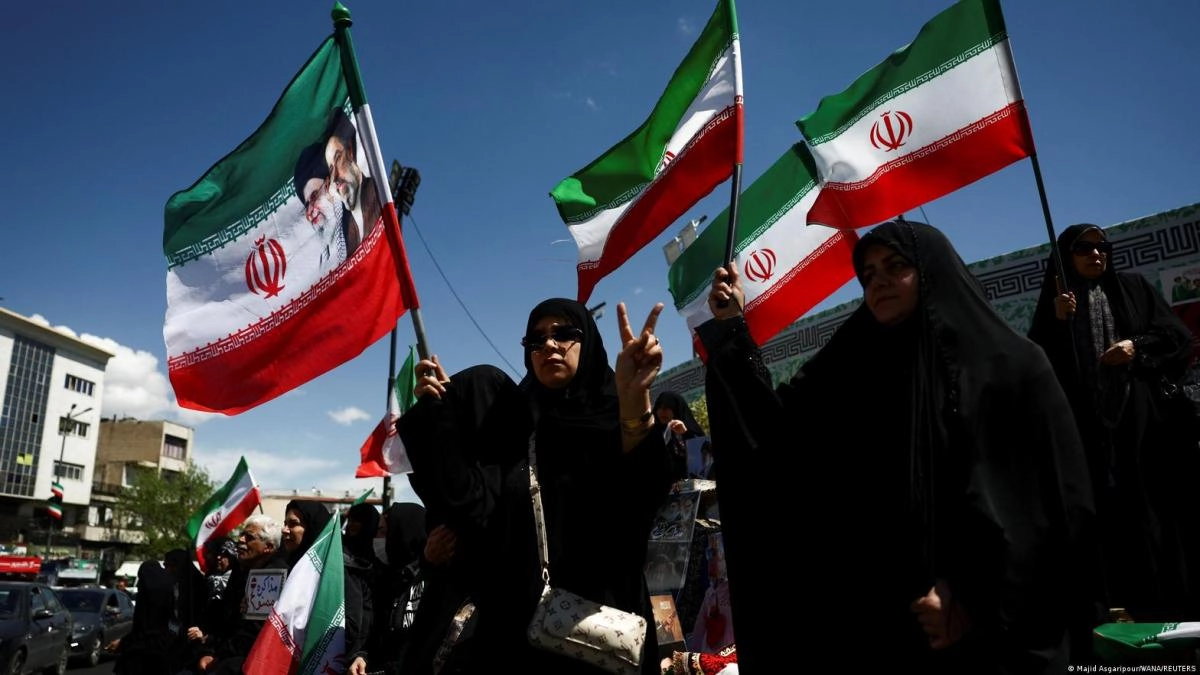

Since February 28, the United States and Israel have carried out intense airstrikes in Iran. According to the US-based human rights organization HRANA, more than 3,600 people have lost their lives in that country. This figure includes the Supreme Leader, Ayatollah Ali Khamenei, and many other high-ranking political and military figures, as well as 165 people from a girls' school, most of them minors. Despite the loss of leadership, the core of the Iranian political system remains intact. "There is no movement toward regime change," US political analyst and president of the Eurasia Group, Ian Bremmer, told DW. In response, the Iranian regime took a high-risk step: it effectively blocked the Strait of Hormuz to maritime traffic, allowing its use only to a few countries. The measure caused a surge in global oil prices and increased pressure on the US and its allies. The strategy paid off. Tehran achieved a ceasefire without admitting defeat. The government can present the truce as proof that it withstood the United States and all its military might. Trump has accepted Iran's 10-point plan as the basis for negotiations. The Iranian regime has survived and bought itself time to try to shape the next phase under more favorable conditions.
United States: Military Achievements, Political Limitations
Trump has called the outcome a “total and complete victory,” but many analysts disagree. “They have achieved some objectives,” Ian Bremmer told DW. “If you look at the damage done to Iran’s military capabilities, its conventional ballistic capabilities and its naval capabilities, much of it has been severely diminished.” And parts of its nuclear program have also been seriously damaged.
But the United States has also suffered losses. Iranian attacks have damaged or destroyed billions of dollars’ worth of radar systems and aircraft. The US reputation as a protector of its Gulf allies has been severely damaged,after Iran attacked its neighbors.
Furthermore, relations with Europe and NATO have been strained by the fact that Washington started the war without consulting its allies.
Israel: Tactical advantages, long-term risks
Israel has weakened Iran's military capabilities. It has demonstrated that it can launch attacks far beyond its borders and continues to enjoy strong US support.
At the same time, the war has exposed some vulnerabilities. Iranian missiles subjected Israel's air defenses to constant pressure, and some managed to penetrate them, killing more than 30 people.
Fawaz Gerges, from the London School of Economics, tells DW that Israel could emerge "much weaker" from the war. He argues that the diplomatic damage is likely to be considerable, especially in its neighborhood: Gulf countries are now less likely to strengthen ties with Israel.
China benefits in the long term
The United States has shifted many military resources to the Middle East to protect maritime traffic near the Strait of Hormuz. This leaves fewer resources for the Indo-Pacific region, where Washington and Beijing compete for influence.
“China benefits not only because the United States is less focused on the Asian military environment, but also because its own allies view the United States as much less reliable,” Bremmer explains. “And that means that, by comparison, China is seen as a relatively stable actor.”
Russia profits from the crisis
The war has benefited Russia in several ways. Rising energy prices boosted Moscow’s revenues at a time when its budget was under pressure due to the war in Ukraine. The sanctions were temporarily eased as countries sought alternative sources of oil supply. Although prices have fallen since the ceasefire, Russia benefits from the fact that global attention has been diverted from the war in Ukraine. Furthermore, “the US has moved much of its military capacity to the Gulf. That means the weapons systems the Ukrainians need simply won’t be available,” explains Bremmer. Gulf countries: their image as safe havens in doubt. Iranian attacks affected Saudi Arabia, the UAE, and other Gulf countries. Billions of dollars’ worth of energy facilities were damaged, and their sense of security was shattered. However, some countries did benefit. Saudi Arabia avoided the Strait of Hormuz and maintained much of its oil flow through its East-West pipeline to the Red Sea.earning high incomes from its exports.
The United Arab Emirates (UAE) relies heavily on foreign workers and investors. “Ninety percent of the UAE’s more than 10 million inhabitants are expatriates,” Bremmer notes. Security fears have damaged its image as a safe haven, a key pillar of its economic model.
Europe, one of the losers
Rising energy prices have affected households and industry, as in many other parts of the world. Disruptions to shipping have impacted trade, and inflationary pressures have increased.
Traditional alliances have cracked. European governments refused to support US military operations. Some also denied access to airspace for offensive missions. President Trump responded by again threatening to withdraw the US from NATO, a scenario many Europeans fear.
Diplomatic Boost for Pakistan
Pakistan has played a central role in negotiating the ceasefire and is now preparing to host further talks.
For Prime Minister Shehbaz Sharif, this is a major diplomatic success. Pakistan maintains ties with both Washington and Tehran, and for weeks it discreetly relayed messages between the two. The outcome has strengthened Pakistan's role as a mediating power in the region.