

How the war between Iran and Israel has affected oil prices
Tensions between Iran and Israel are causing oil prices to rise and fall, with the risk of further increases if the conflict escalates.
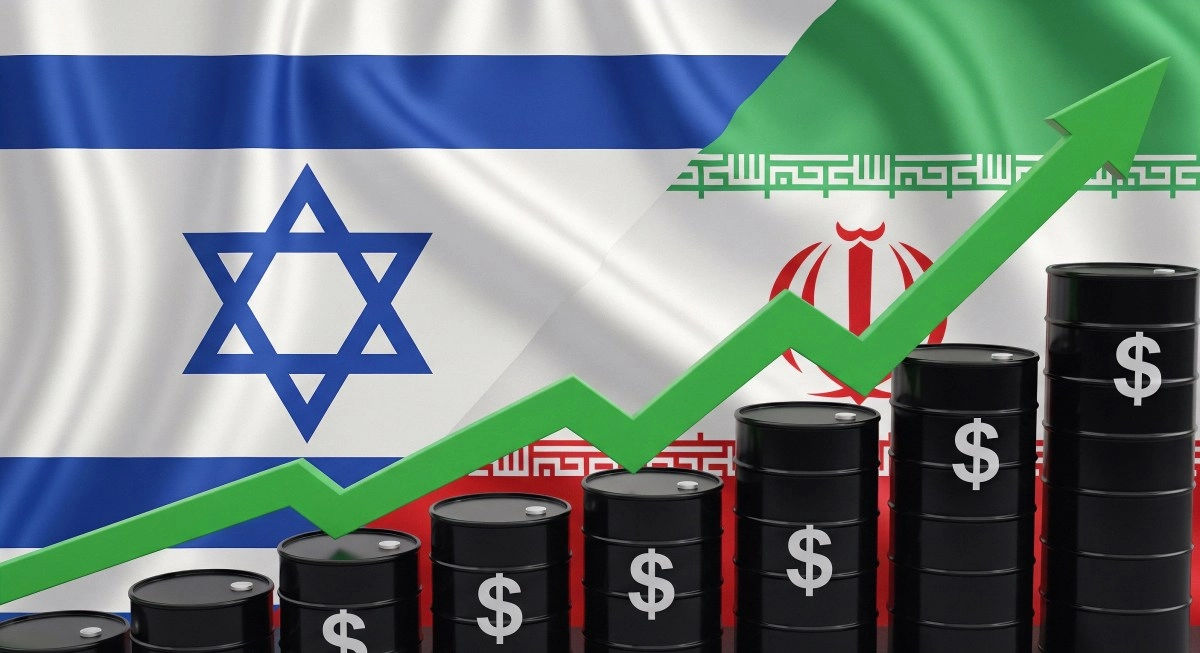

The conflict between Iran and Israel has generated significant volatility in oil prices, raising concerns among consumers, investors, and governments. Since the escalation of hostilities, the energy market has reacted with sharp price movements, reflecting fears of a possible disruption to global supply.
At the beginning of the week, the price of West Texas Intermediate (WTI) crude, the U.S. benchmark, rose 4% in overnight trading.
However, that momentum didn't last. On Monday afternoon, the price of a barrel fell more than 7%, as perceptions grew that Iran would not block the Strait of Hormuz, a key maritime passage for oil transport.
Although Iran's parliament approved cutting access to the strait, the final decision rests with the country's National Security Council. Despite President Donald Trump's announcement of a ceasefire between Iran and Israel, the agreement collapsed a few hours later.
Iran controls the northern side of the Strait of Hormuz, through which approximately 20% of the world's daily oil supply transits. The possibility of a disruption is creating tensions because the strait, just 21 miles at its narrowest point, is essential to global energy flow.
“In practice, Iran’s efforts to ‘close’ the strait could include attacks on vessels, detentions, obstructions to navigation, and even, in extreme cases, sea mines,” David Oxley, chief economist at Capital Economics, told CBS News.
However, he noted that as long as there is no protracted war and stocks remain low, initial price spikes are likely to quickly dissipate.
Brent crude oil, the international benchmark, fell just 0.1% Monday to $76.98 a barrel. WTI closed at $71.06. Despite the decline, both prices remain above their pre-conflict level of around $68 a barrel.
Experts warn that the real risk to the market would come if Israel decides to attack Iran's oil infrastructure. According to analysts at Eurasia Group, this could affect the export of millions of barrels per day and cause Brent to exceed $80 per barrel. Another possible trigger would be an offensive by Iranian-allied groups against oil facilities in Iraq.
Although the United States imports only 7% of its oil through the Strait of Hormuz, any disruption there would impact the global market. The most affected economies would be China, India, Japan, and South Korea, major consumers that depend on this route.
According to Oxford Economics, a significant disruption in the Strait could raise the price of oil to as much as $130 per barrel and subtract up to 0.8 percentage points from global GDP.
Such a scenario would have consequences similar to those of 2008, when oil surpassed $130 and gasoline in the U.S. reached a record adjusted price of more than $6 per gallon.
As for American consumers, prices at the pump are expected to rise between 10 and 15 cents per gallon this week.
Most, if not all, of the recent and expected increase is due to the situation in the Middle East, said Patrick De Haan, an analyst at GasBuddy.
Despite the increase, the current average price of gasoline in the U.S. is $3.22 dollars per gallon, down from $3.45 a year ago, according to AAA figures.
A further increase would not only affect the price of oil, but also the global cost of living, from gasoline to basic consumer products refined from crude oil.