

Rejected: Mercedes-Benz will withdraw 4-cylinder hybrids
They will stop using their four-cylinder hybrid engines in key models, after receiving harsh criticism from customers who consider them unexciting
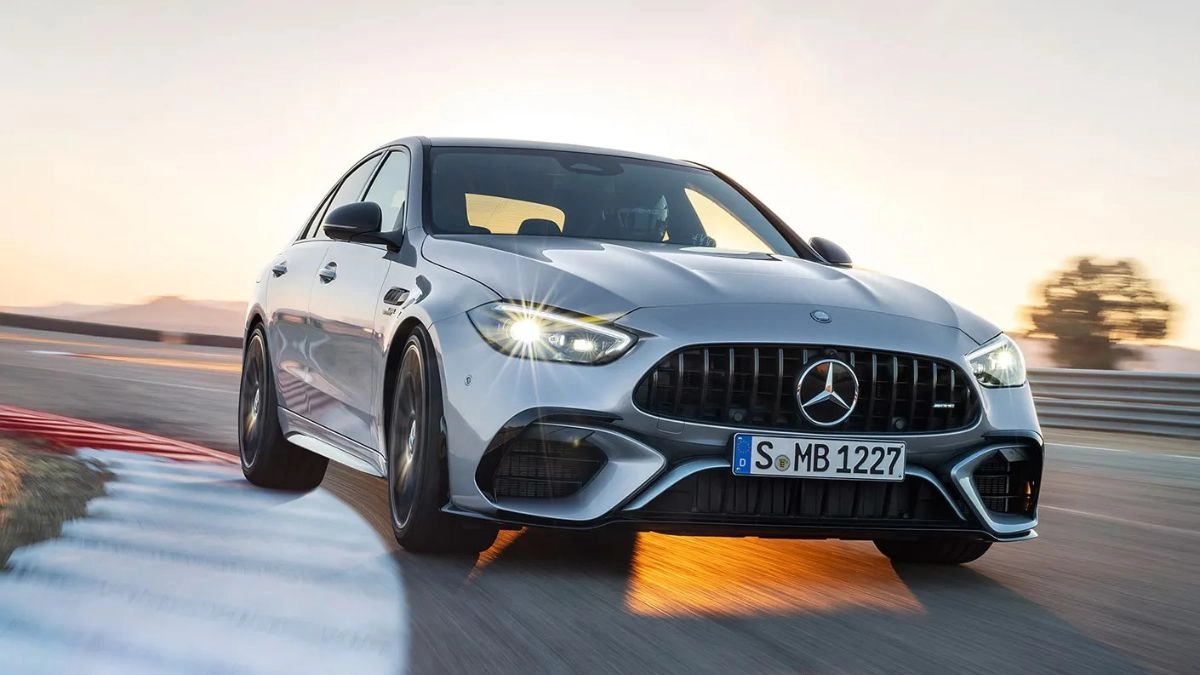

Mercedes-Benz is in the process of strategic correction after receiving an avalanche of criticism from its most demanding customers. The reason: its new generation of four-cylinder hybrid engines, incorporated in models such as the C63 and the GLC63, has been described as disappointing in terms of driving experience.
Although on paper the system offers more than 600 horsepower and remarkable fuel efficiency, many drivers described it as lacking excitement and boring.
The most criticized point was the loss of sensations behind the wheel. The engine sound, the instant response and the visceral force transmitted by the old V8 engines were conspicuous by their absence. And in the Mercedes universe, that's a cardinal sin.
A technical achievement without a soul for drivers
The plug-in hybrid system with a 2.0-liter turbocharged four-cylinder engine, known as the M139, was one of the company's most advanced developments.
It combined efficiency with performance and was integrated with modern electrical solutions. However, the experience behind the wheel was not convincing.
The company thought that the compromise between sustainability and power would be enough, but it underestimated what it means to drive a vehicle from the star: sound, emotion, and presence.
The brand later acknowledged that, despite the advances in efficiency, there was a sacrifice in the personality of its cars. And it's precisely that loss that has forced Mercedes-Benz to take a step back and reconsider its propulsion strategy.
Goodbye 4-cylinder engine: the big ones are back
Mercedes-Benz confirmed that it will begin phasing out the four-cylinder plug-in hybrid system in models such as the C63, GLC63 and possibly the SL43.
This retreat does not mean abandoning electrification, but rather rethinking it.The new plans point to the development and adoption of larger engines, such as L6 and V8 engines, which will be compatible with hybrid solutions.
They will modify the plug-in hybrid system back to L6 and V8 engines, but will maintain the technology for greater fuel efficiency as the current system has, but with greater sporty performance due to its larger engines.
In addition, Mercedes-Benz will advance the launch of its next generation of V8 engines with 48-volt electric assistance.
This technology seeks to balance environmental demands with the emotional demands of drivers: lower emissions, yes, but with the power and character that historically defined the brand.
Sound, an element more powerful than it seemed
One of the factors that most influenced the fall of the four-cylinder hybrid engine was its sound. Or rather, its lack. The acoustic experience was harshly criticized by customers.
In high-end vehicles, engine sound isn't just an accessory; it's part of the car's emotional language. And for the most enthusiastic, there's nothing more disappointing than pressing the accelerator and receiving a synthetic hum instead of the roar of a V8.
Mercedes-Benz, aware of this detail, has decided to never again ignore that sensory dimension. Looking to the future, its hybrid systems will incorporate technologies that preserve the emotional impact of the engine, while still meeting efficiency standards.
While the four-cylinder engine will be eliminated from the most representative models, it is not ruled out that it will remain in entry-level versions or in vehicles where cost and efficiency factors outweigh sportiness.
Mercedes-Benz makes it clear: they are listening to the market and will respond with products that excite without ceasing to look to the future.