

More Americans are using their emergency savings to cover transportation expenses
Using emergency savings to cover basic day-to-day needs is not a good financial decision.
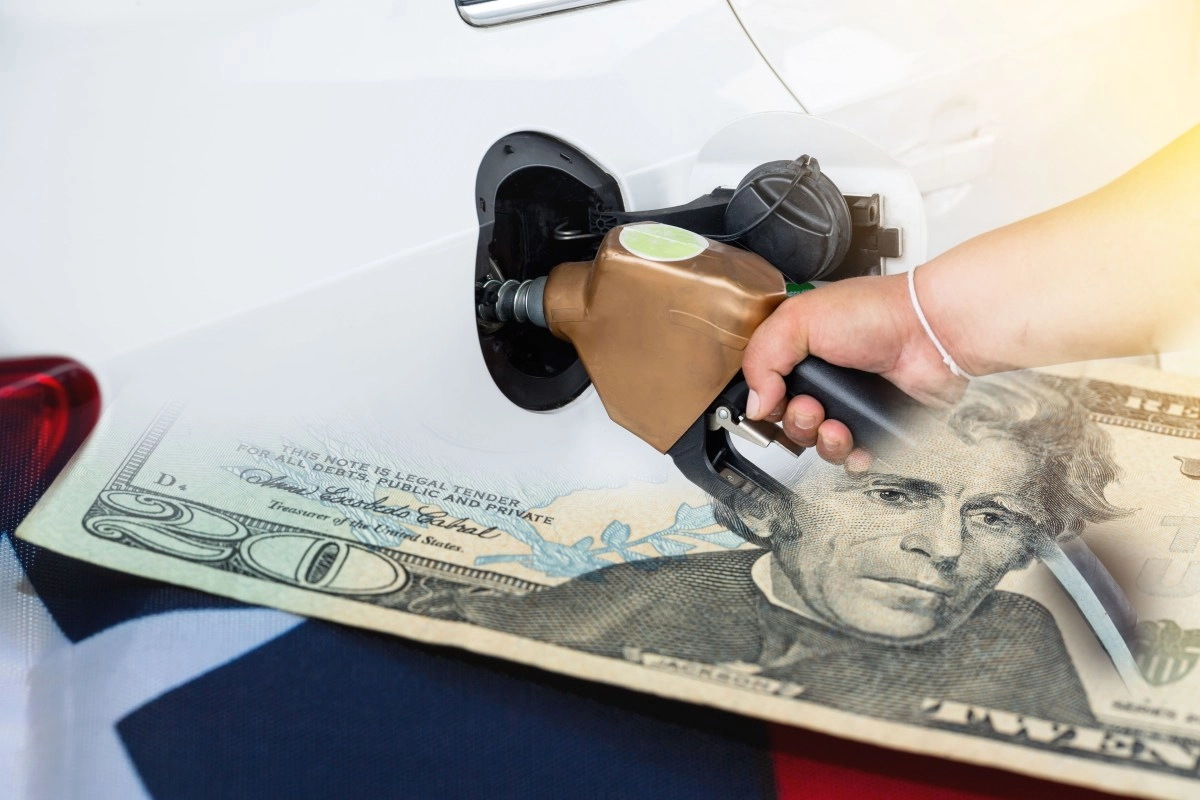

The dizzying increase in gasoline nationwide in recent weeks is not only generating strong distrust among consumers regarding the country's economy, but is also already beginning to affect their budgets and emergency savings, which are being used to cover transportation expenses.
The average price of gasoline in the United States this week is $4.55 per gallon, according to the American Automobile Association (AAA); However, there are states where the cost of fuel already reaches $6, putting pressure on the pockets of Americans with lower incomes and even preventing the movement and mobility of drivers, who look for alternatives to save at the pumps.
However, using emergency savings to cover basic daily needs, such as gasoline, is not a good financial decision since, for example, those who travel long distances to work must fill the tank up to three times a week, and that represents between $50 and $100 more per month.
Many homes are in precarious situations
According to data from SecureSave, an emergency savings account (ESA) platform for employees, it highlights that 12% of withdrawals from the accounts are being used to cover transportation expenses; The figures suggest a 35% increase compared to last year.
For Devin Miller, co-founder and CEO of SecureSave, these small acts are what are tripping up many people when it comes to their savings and “it's not necessarily job loss or serious health problems, but often very everyday things,” he told USA Today.
Miller assures that many American households are currently in precarious economic situations, with savings rates near historic lows.
War is only one of the causes
For his part, Karim Marshall, director of climate and energy policy at the Consumer Federation of America, a nonpartisan advocacy group, highlights that the situation is undoubtedly directly due to the war with Iran, "but the war is only one of several causes. In the end, the consumer is the one who pays the consequences," he points out.
Since the war with Iran began, which caused oil prices to skyrocket due to the closure of the Strait of Hormuz, gasoline prices have increased drastically at a time when American consumers were not prepared for it, since they had already been avoiding higher prices for food, goods and services due to high inflation and higher tariff rates.
Although President Donald Trump recently stated that his objective will be to suspend the federal gasoline tax for a time, analysts believe that this is not the definitive solution to the fuel issue.
In this sense, Rob Thummel, senior portfolio manager at Tortoise Capital, suggests that the most effective way to improve the affordability problem is to reach an agreement with Iran and open the Strait of Hormuz. “If global oil markets regain confidence that oil and refined products can circulate freely, crude oil prices could decline, which would likely reduce U.S. gasoline and diesel prices by a significantly greater amount than the 18.4-cent federal gasoline tax,” he said.