

What to do to prevent artificial intelligence from taking your job
Artificial intelligence already affects various jobs in the US. These tips could help you stay current in the workforce
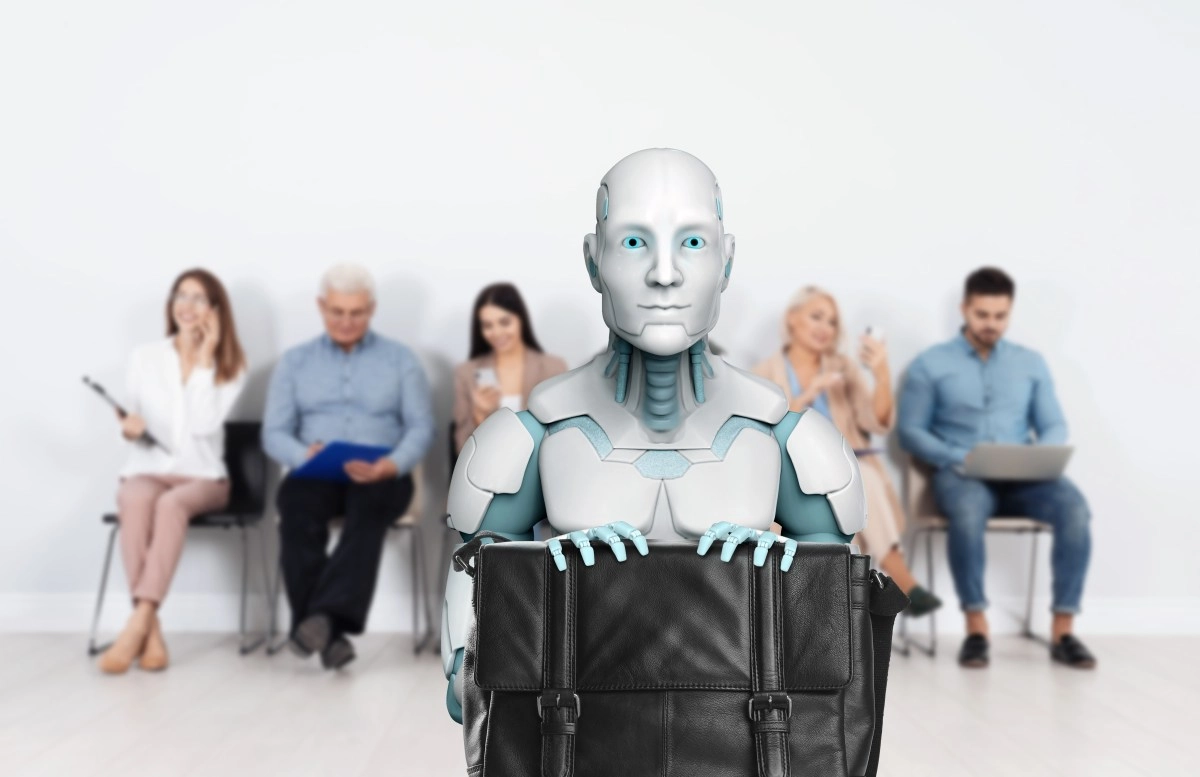

Artificial intelligence (AI) is no longer an idea in science fiction movies and has become an emerging reality. As time goes by, more and more companies are investing in this technology rather than hiring and maintaining human talent. While it still doesn't replace workers, it's up to each of us to make sure it doesn't. As? Today we share with you some of the advice from experts that they recommend carrying out to prevent you from being part of the recent job layoffs in the United States.
A recent report from Goldman Sachs notes that artificial intelligence has already reduced monthly job growth in the United States by about 16,000 positions over the past year. The most exposed jobs are those that depend on repetitive tasks in front of a computer, especially in administrative areas, finance, programming or data analysis.
“The most valuable jobs, such as software engineer, finance professional, accountant or lawyer, are precisely the most vulnerable to automation by AI,” David Shrier, professor of Artificial Intelligence and Innovation at Imperial College London, explained to CNN.
It is precisely the characteristics of your professional work described that would be the first guide that will help you identify your next actions regarding this technology.
First: check what you really do at work.
Before panicking, experts recommend doing something simple: analyze the tasks you do every day. It's not just about your position, but the specific activities you do during your day.
For example, if your job involves filling out reports, reviewing data, or moving information from one system to another, those tasks are more at risk of being automated. On the other hand, if your job requires talking to people, solving unexpected problems, or making human decisions, you still have a significant advantage.
“Jobs are a collection of tasks that we switch between many times a day,” explained Oded Nov, a professor of technology management at New York University.
The specialist recommends identifying which functions are repetitive and which depend on human skills that are difficult to copy.
Human skills remain key
Although AI can write text, analyze data or generate images in seconds, it still has difficulty understanding emotions, interpreting social environments or building real trust with other people. Therefore, skills such as leadership, communication, empathy and creativity continue to be very valuable.
Let's think about someone who works selling cars, insurance or houses. Maybe AI can help compare prices or generate contracts, but many customers still prefer to talk to a person before making an important decision.
“AI is not good at creativity, but it is surprisingly adept at developing ideas from creative cues,” Shrier said. “Human intervention is still necessary to conceive the original idea.”
Experts also believe that physical jobs such as nursing, construction, electricity, plumbing or hospitality services will take longer to be replaced. The reason is simple: robotics still cannot match the human ability to move and react in real situations.
Learn to use AI to your advantage
Another important recommendation is to stop seeing artificial intelligence only as a threat. In many cases, those who learn to use these tools could have more job opportunities.
Currently there are platforms capable of helping you write emails, organize tasks, create presentations or even program applications without writing code. Learning to use them can make a person more efficient and valuable within a company.
Some experts even suggest experimenting with “AI agents,” programs that perform automatic tasks on their own. Today, many people are learning to create simple tools using only natural language instructions.
“There has never been a better time to be an entrepreneur,” Shrier said. “If you can conceive an idea, you can make it a reality.”
AI will change jobs, but it won't eliminate people
Although artificial intelligence is transforming the labor market, specialists believe that human beings will continue to be necessary. What will likely change will be the type of tasks each employee performs.
“The most routine tasks will be delegated to AI, while the most interesting and rewarding ones will be performed by humans,” Nov said.
Rather than competing against artificial intelligence, the key seems to be learning to work alongside it. Those who develop human skills and understand how to take advantage of technology will have a better chance of staying relevant in a job market that changes increasingly rapidly.