

Colombia discovers the first fentanyl laboratory operating in that country
Authorities seized around 16 kilograms of fentanyl that were allegedly destined for Mexico and the United States.
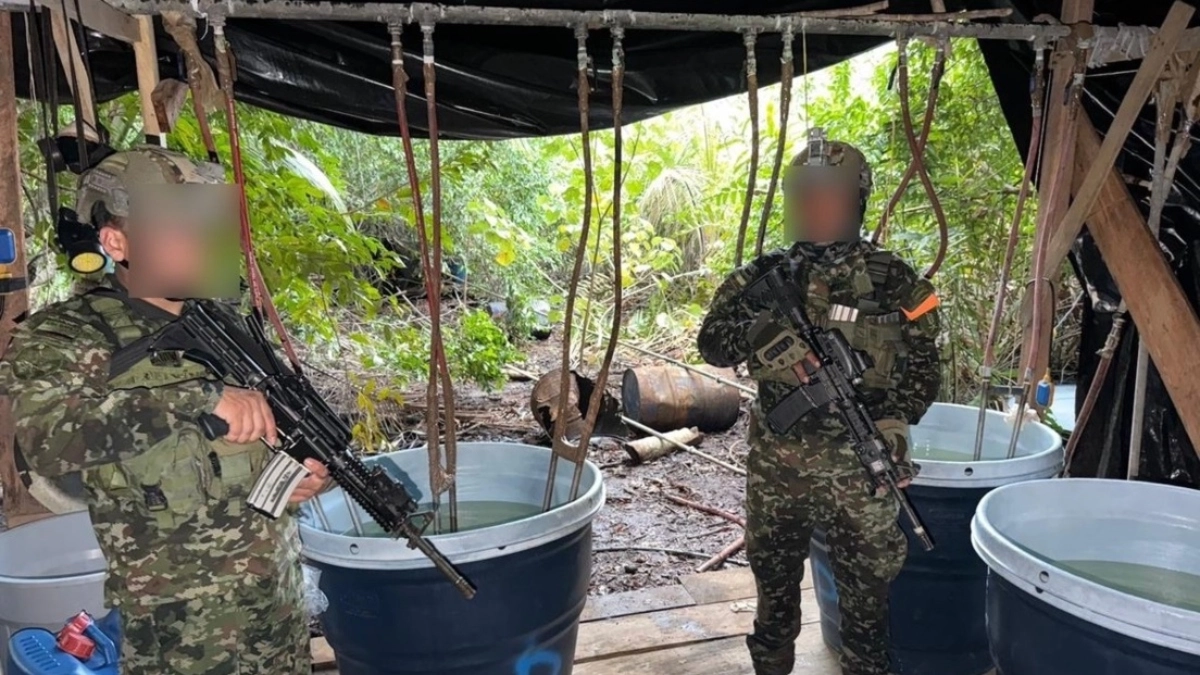

Colombian authorities confirmed the discovery of the first clandestine fentanyl laboratories in their territory, a fact that marks a change in the dynamics of regional drug trafficking.
This has raised alarms about the possible expansion of criminal networks linked to Mexican organizations such as the Sinaloa Cartel and the Jalisco New Generation Cartel (CJNG).
According to official information disseminated by Colombian media, during a joint operation, five people were detained for the purpose of extradition to the United States, accused of being part of a transnational network dedicated to the trafficking of synthetic drugs.
Investigations indicate that the organization maintained alliances with Colombian armed groups and Mexican cartels for the production and distribution of narcotics.
The Anti-Narcotics Director of the Colombian Police, William Castaño, explained that the criminal structure sent cocaine and synthetic drugs to Central America and later to the United States.
In addition, authorities seized around 16 kilograms of fentanyl that were allegedly destined for Mexico and the United States.
The president of Colombia, Gustavo Petro, confirmed that the investigations derived from this case made it possible to identify the first shipment of fentanyl detected from Colombia to US territory.
The president warned about the risk of the country becoming a platform for the export of this synthetic drug, associated with the overdose crisis affecting the United States.
The investigations also revealed the existence of clandestine laboratories in the departments of Cauca and Valle del Cauca, where fentanyl was allegedly produced for the international market.
According to authorities, the network had the capacity to move several tons of drugs per month through drug trafficking corridors strengthened by their links with Mexican criminal organizations.