

Former FBI director urges judge to dismiss indictment for alleged threat to Trump on Instagram
Lawyers maintain that the photo that James Comey published in which seashells were seen forming the numbers "86 47" does not constitute a threat against Trump
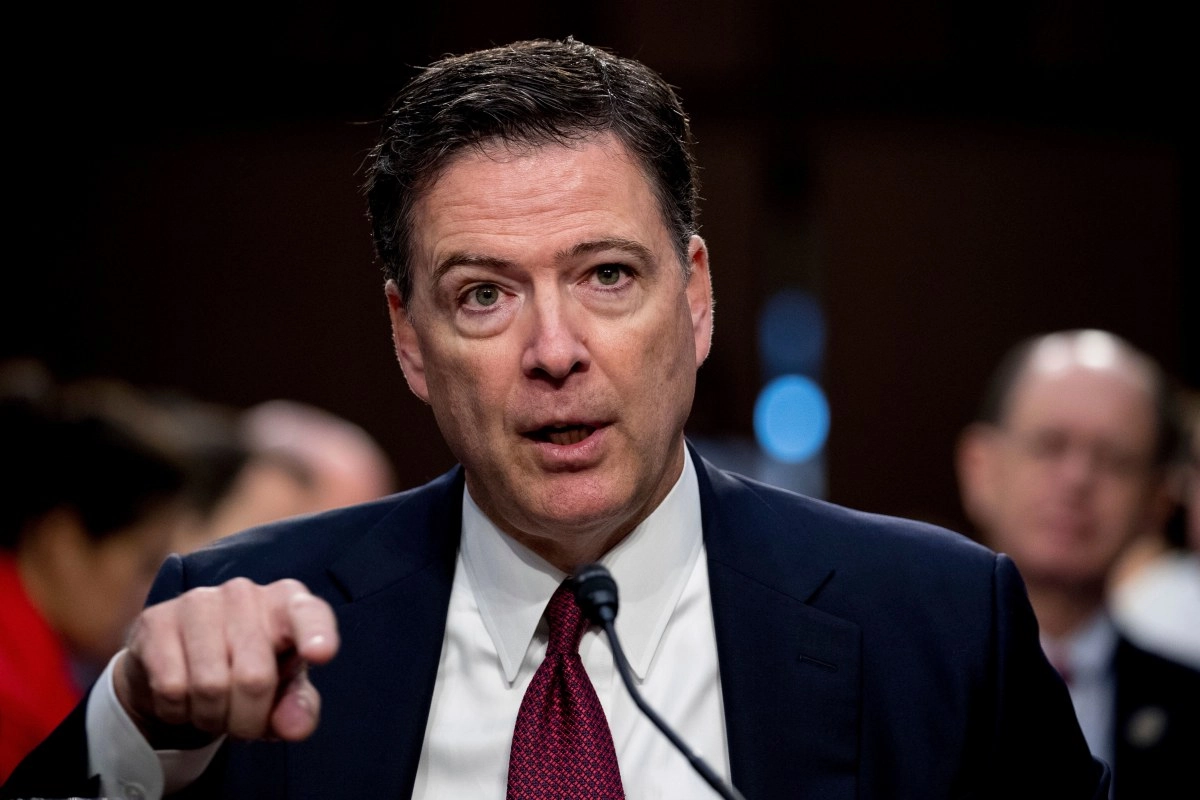

Former director of the Federal Bureau of Investigation (FBI), James Comey, asked a federal judge this Monday to dismiss the criminal accusation against him for a post on Instagram that, according to the Department of Justice (DOJ), represented a threat against President Donald Trump.
The former official's defense maintains that the case constitutes an attack on freedom of expression protected by the First Amendment of the United States Constitution and that the message in question cannot be interpreted as a real threat, in addition to the fact that "other people who have used that same phrase have not been charged."
The controversy originated from a photograph published by Comey in May 2025, in which seashells appeared arranged on the sand forming the numbers "86 47", accompanied by the message: "Curious formation of shells during my walk on the beach." Although the image was deleted shortly after, the publication provoked criticism among supporters of the president, who interpreted the numerical combination as a call for violence against Trump, the 45th and 47th president of the United States. In addition to the fact that the number 86, in supposed American slang, can mean “eliminate” or “get rid of” someone, according to the Merriam-Webster dictionary.
The former FBI director faces two charges for alleged death threats stemming from that publication. However, his lawyers say the federal government is trying to criminalize a political message protected by the Constitution.
Defense argues that publication is protected by the First Amendment
In the brief presented to the court, Comey's lawyers maintain that the indictment presented by a federal grand jury “attacks and restricts” freedom of political expression and warns that allowing the prosecution would open the door for future governments to use the criminal system against political opponents.
“Forcing Mr. Comey to appear in court for a statement against the President — even if he is ultimately acquitted — would itself constitute an unconstitutional punishment of free speech,” the legal team argued. The defense also rejects that the expression “86” necessarily has a violent connotation.
According to lawyers, the term is usually used in American colloquial language to mean “get rid of” or “expel,” and only in exceptional circumstances can it be associated with violence.
Even if some interpreted the message as an aggressive reference, the defense maintains that a reasonable observer would understand it as a form of political hyperbole, a form of expression that has been repeatedly protected by US jurisprudence.
Prosecutor's Office maintains that there was a credible threat
Federal prosecutors maintain a different position and assure that a reasonable person could interpret the publication as “a serious expression of intent to harm President Trump.” That interpretation served as the basis for presenting the criminal accusation.
Comey deleted the photograph shortly after publishing it and explained then that he was unaware that the numerical sequence could be associated with a call to violence. “I oppose violence of any kind,” he declared at the time. The former FBI director is scheduled to appear again before a federal judge at the end of September and has pleaded not guilty to the charges.
In addition to the motion based on the First Amendment, his defense anticipated that he will present other resources to request the dismissal of the case, including the argument that the prosecution responds to a selective and vindictive application of the law.
The judicial dispute occurs in the context of a relationship marked by years of confrontation between Trump and Comey, who was fired by the president in 2017 while leading the FBI investigation into alleged Russian interference in the 2016 elections.
The former official also faced another process promoted by the Department of Justice related to his testimony before Congress, although that case was dismissed after a judge concluded that the acting prosecutor who promoted the accusation had been improperly appointed. That decision remains under appeal by the federal government.