

De La Hoya, Khan, and Ali's Grandson Speak Out on the New Boxing Law in the United States Senate
Oscar De La Hoya Rejects Amendments to the Boxing Revitalization Act Being Pushed by the United States Senate
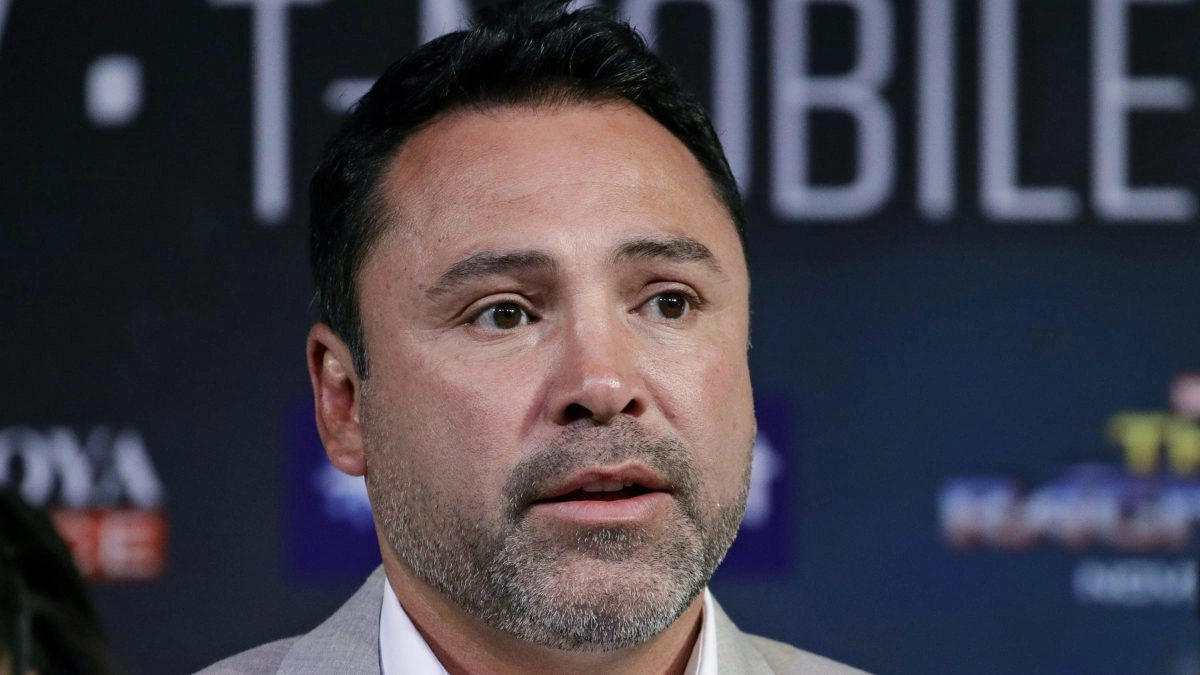

Boxing Hall of Famer Oscar De La Hoya and Nico Ali Walsh, grandson of the legendary Muhammad Ali and a contender for the world middleweight title, led the discussions for and against the amendments to the Muhammad Ali American Boxing Revitalization Act.
In a meeting held during a Senate Committee on Commerce, Science and Transportation hearing in Washington, DC, where US Senator Ted Cruz acted as mediator on Wednesday, key figures in American boxing engaged in a heated debate regarding the benefits of amending this law.
Also directly involved in the hearing were Timothy Shipman, president of the Association of Boxing Commissions and executive director of the Florida Athletic Commission, and Nick Khan, executive of TKO Group/Zuffa Boxing.
The hearing was titled “Back to Your Corners: Have Federal Boxing Laws Reached the End of the Road or Are They Left Behind?” where De la Hoya, Nico Walsh Ali, and the other aforementioned figures participated directly in the discussion. The presence of Nick Khan, an executive of TKO Group/Zuffa Boxing who is leading the bipartisan legislative improvements supported by TKO regarding federal boxing regulations, was also highlighted. Four months ago, the US House of Representatives' Education and Workforce Committee passed, by a vote of 30 to 4, a bill to amend legislation and create a new, centralized, alternative professional boxing system under the name of Unified Boxing Organizations (UNO). Then, on March 24, the House of Representatives passed the bill by voice vote, bringing it one step closer to being signed into law by President Donald Trump. The new bill retains the Muhammad Ali Boxing Reform Act, which was codified in 2000. and improves the Professional Boxing Safety Act of 1996 by adding supplemental provisions.
But just when it seemed that the proposed changes would be a piece of cake, the legislation has met with mixed reactions from key players in combat sports. Some have expressed support due to the new opportunities it presents with its improvements, while others have opposed it out of fear of market control,one-sided negotiations, and decreased fighter compensation.
De La Hoya Opposes Improvements
Hall of Famer Oscar De La Hoya was the first to speak at the podium, expressing his opposition to the changes and improvements to the legislation: “I care deeply about boxing and, more importantly, the boxers who step into the ring and risk their lives for our entertainment.
I am here because I firmly believe that the proposed changes are taking us in the wrong. direction,” De La Hoya said. “This fundamental change in the proposed amendment allows a promoter to create an entity that functions as both promoting and governing body, a so-called UBO (Union Registered Official).”
This mirrors the current MMA model and creates a closed system that controls rankings, titles, and access to opportunities. Under this structure, as long as the UBO adheres to its own internal rules, it would not violate the Muhammad Ali Boxing Reform Act. Meanwhile, traditional promoters like myself would still be required to comply with full financial disclosure and reporting requirements.
In other words, one system operates with transparency and accountability, while the UBO does not. This represents a fundamental shift in the distribution of power that, if reversed, would prioritize corporate profits over boxers.
We need to be clear about who benefits from this. These changes directly coincide with what Zuffa Boxing and its management at TKO Group Holdings have already stated they intend to implement in boxing: a model similar to the UFC. And we already know how that model works, and it doesn't benefit the boxers.
Khan refuted De la Hoya
In response to De la Hoya's presentation, Khan took the floor, refuting De La Hoya's statements with arguments about the benefits that will be introduced, including: a minimum salary of $200 per round for boxers; mandatory injury insurance of $50,000 per fight at no cost to the boxer, which begins as soon as training camp starts; a six-year limit on promotional contracts, which makes it comparable to rookie contracts in the NFL and Major League Baseball; and standardized medical protocols for all boxers focused on annual brain and heart tests. “The Muhammad Ali Boxing Revitalization Act is based on a simple premise: to give boxers the freedom to choose a better system,” Khan said. "The law, as it currently stands, would remain in place. The system, as it currently stands, would remain in place. This is an 'or' choice. Create the framework for grassroots organizations to do what major sports do: promote competition, develop talent, and enforce consistent standards under one roof." For boxers, this bill provides concrete protections that are long overdue.”
Ali Walsh's Turn
Ali Walsh added that the Ali Act is based on the principle that those who control boxers shouldn't also control the entire market they depend on, adding that competition among multiple promoters for boxers creates bargaining power and fair market value.
“That separation exists to prevent conflicts of interest and exploitation,” said Ali Walsh. “The new Muhammad Ali Boxing Revitalization Act would undermine that principle. By allowing a single entity to operate in promoting, managing, and organizing struggles, it eliminates independence. When that happens, you fight who they tell you to fight, or you don't fight at all. At that point, true freedom of choice disappears, and with it, negotiation. hearings where we genuinely seek expert opinion, and I would classify this hearing in the latter category,” Cruz said. “This bill passed by an overwhelming majority in the House of Representatives, and it's unusual for a bill to receive such broad bipartisan support, from both the far left and the far right. “Everyone came together because I think there's a widespread perception that there's a problem, and a problem that Congress could address in a beneficial way.” “I hope the version of the bill that the Senate debates will be different from the one that passed the House. My goal is to achieve a win-win situation: a win for the sport, for the wrestlers, for the fans, and for everyone involved. If we achieve that, it will have been a good day's work.”