

Doctors tried a digital twin To correct a patient's irregular heart rhythm
The results of a clinical trial suggest that the use of these virtual models could increase the success rate in the treatment of arrhythmias
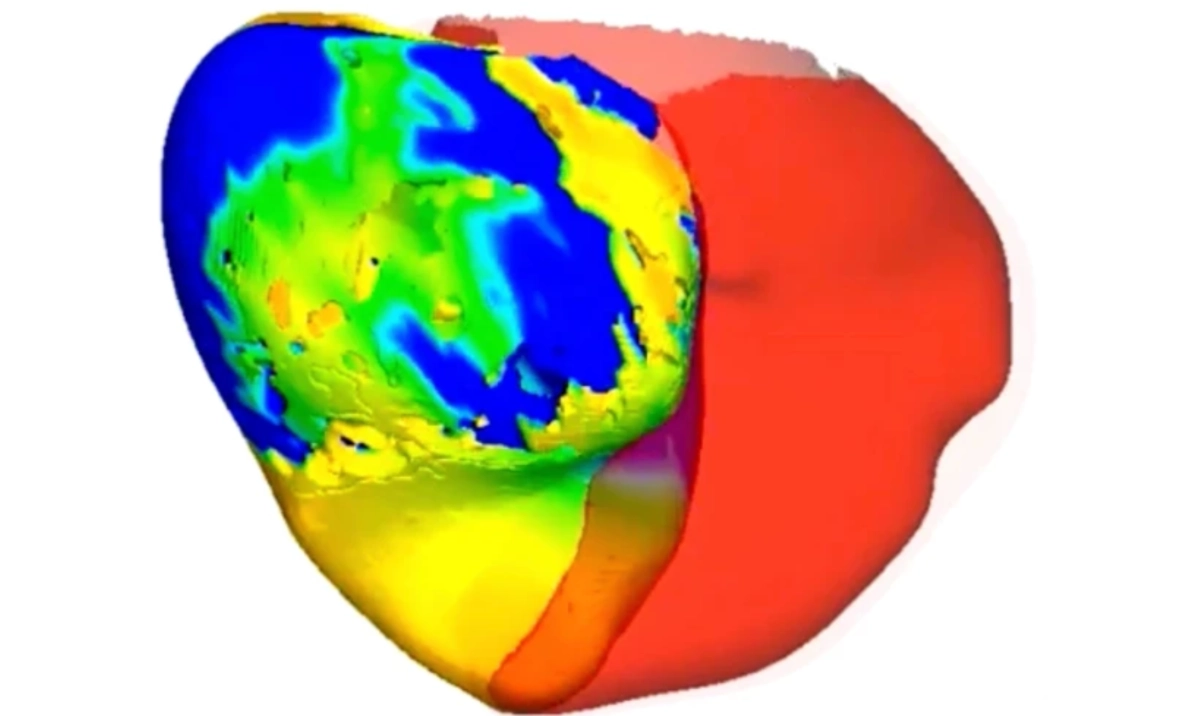

Scientists at Johns Hopkins University have developed digital twins of diseased hearts, which allow them to simulate and treat complex cardiovascular conditions, such as ventricular tachycardia, a notoriously difficult-to-treat arrhythmia that is a leading cause of sudden cardiac arrest and is responsible for some 300,000 deaths a year in the United States. This advance is presented as a promising method for personalizing treatments and improving clinical outcomes, reports the Associated Press (AP). The results of a recent clinical trial, published in the New England Journal of Medicine, suggest that the use of these virtual models could increase the success rate in treating arrhythmias. The Food and Drug Administration (FDA) authorized the use of digital twin technology to guide the treatment of just 10 patients, eight of whom showed no arrhythmias more than a year after the procedure, exceeding the overall success rate of 60%. Digital twin technology allows physicians to identify specific areas of the heart that require treatment, optimizing the ablation process. This precision not only improves the effectiveness of the procedure, but also reduces the amount of tissue that needs to be treated, resulting in shorter and safer procedures.
Future Studies and Applications
Dr. Jeffrey Goldberger, a cardiologist at the University of Miami who was not involved in the study, according to AP, experimented with more rudimentary versions 15 years ago and praised the new findings. “This is what we had anticipated,” he said.
This shows that doctors have long used 3D models, both physical and computer-generated, to simulate diseases and practice techniques.
Biomedical engineer Natalia Trayanova, of Johns Hopkins University, explains that true digital twins predict how a real organ will react to different treatments.Her lab is a pioneer in creating interactive, full-color models, developed using advanced magnetic resonance imaging and other data from each patient. “We treat the twin before treating the patient,” Trayanova stated. Johns Hopkins researchers plan to conduct larger clinical trials in collaboration with other institutions to evaluate the effectiveness of digital twins in treating different types of arrhythmias, as well as their potential application in other diseases such as cancer. Digital Twins vs. Other simulation methods
Digital twins differ from other medical simulation methods because they combine mathematical models, real-time clinical data, and AI techniques to create customized virtual replicas of the patient (organ, system, or process), whereas other simulations tend to be more generic or static.
A medical digital twin is a virtual replica of a patient, organ, or clinical process, built with imaging data, electronic health records, genomics, and connected devices, which allows for the simulation of clinical scenarios and the prediction of treatment outcomes.
Unlike a mere simulation, the digital twin is continuously updated with real data, allowing the model to be adjusted according to the patient's evolution and clinical hypotheses to be tested without risk to the individual.