

Mix of politics and religion in the tribute to Charlie Kirk shows the future of the MAGA movement
The massive event combined a memorial service, a Christian revival, and a conservative political rally.
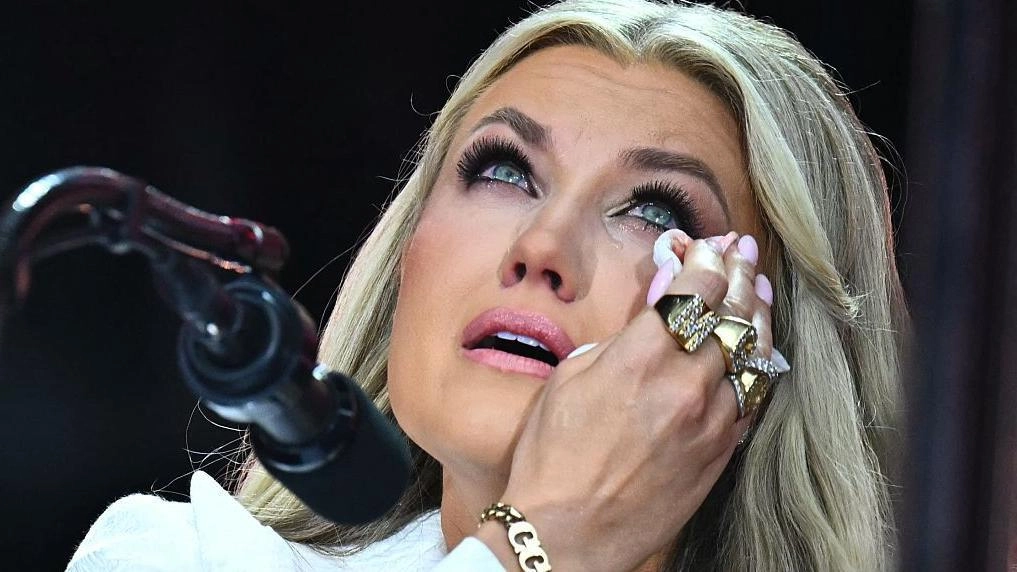

Sunday's event honoring conservative activist Charlie Kirk at an Arizona stadium was a vibrant mix of a memorial service, a Christian revival, and a conservative political rally.
It also painted a picture of a Republican Party at a crossroads, weighing the choice between forgiveness and revenge, reconciliation, and conflict.
Leading figures in President Donald Trump's Make America Great Again (MAGA) coalition gathered for an hour-long celebration honoring Kirk, including music and numerous speeches.
The event provided a glimpse into the possible direction of Trump's MAGA movement more than a decade after its emergence and impact on American politics.
Erika Kirk, a possible future star
Despite a stream of speeches from prominent politicians Sunday night, the defining moment came when Erika Kirk, Charlie's widow, took the stage.
The 36-year-old former pageant contestant, podcaster, and entrepreneur used the opportunity to preach unity and even forgiveness for her husband's killer.
“The answer to hate is not hate,” she said, her voice trailing off. "The answer, as we know from the Gospel, is love, and always love. Love for our enemies and love for those who persecute us."
It was a stirring speech from a woman who has quickly had to find balance under the most difficult circumstances. Last week, Turning Point USA named her director of the conservative youth organization her late husband founded, a group brimming with energy and determination in the wake of Kirk's murder.
Sunday night proved that Erika Kirk has the strength and character to be an effective public face for Turning Point USA.
In time, she could become a formidable candidate for public office in her native Arizona, a key political battleground state. Her words also offered a contrast to the bombast and confrontation that have characterized much of modern American politics.
Trump's Call to Arms
If Erika Kirk offered a glimpse of a possible kinder, more respectful future for the conservative movement,Donald Trump, who spoke immediately afterwards, was quick to remind us that today's Republican Party may have very different priorities.
“I hate my opponents, and I don't want the best for them,” Trump said with a chuckle. “Now Erika can talk to me and the whole group, and maybe they can convince me that she's not right, but I can't stand my opponent.”
Trump's remarks come just a day after a post on Truth Social in which the president demanded that his Justice Department pursue his political foes, including California Sen. Adam Schiff, former FBI Director James Comey, and New York Attorney General Letitia James.
The president also announced that he had fired a federal prosecutor who recently testified there wasn't enough evidence to charge James with a crime, replacing him with one of his former defense attorneys.
Trump's remarks at the memorial service were striking for the occasion, but he wasn't the only speaker using the moment to promise action against “enemies.”
“We are the storm,” said Stephen Miller, a senior White House adviser. “Our enemies cannot understand our strength, our determination, our resolve, our passion.”
He went on to say that conservatives will fight for Western culture and traditions and that their opponents have only malice and envy.
“They have no idea of ??the dragon they have awakened,” he said.
Hints of a religious revival
While the event had its discordant notes, the overall theme seemed one of a religious revival, reminiscent of Billy Graham's crusades in the 1930s and 1940s or the “great awakenings” of the 19th century.
The memorial service celebrated Charlie Kirk's Christianity and promised a new enthusiasm among young Americans for traditional values ??with evangelical fervor.
Tens of thousands of supporters filled the stadium, and millions more watched online. These numbers will undoubtedly be encouraging to conservative leaders who want Christianity to play a more central role in American public life and politics, an idea Kirk himself has expressed repeatedly.
“The body politic of America was so Christian and so Protestant that our form and structure of government was built for the people who believed in Christ our Lord,” Kirk said in 2024. “You can't have liberty if you don't have a Christian population.”
While Christianity has declined in the United States in recent years, it remains. the majority faith. However, most polls show younger Americans are less religious than their elders, indicating that further changes could be coming.
Kirk's death could spur a religious awakening among America's youth. If not, Sunday night's evangelical rhetoric could exclude as much as unite,further exacerbating the country's cultural and political divisions.
Presidential ambitions on display
It's barely nine months into Trump's second term, but Sunday night could also have been the kickoff of the contest for the 2028 Republican presidential nomination.
Three potential contenders—Vice President JD Vance, Secretary of State Marco Rubio, and Health and Human Services Secretary Robert F. Kennedy Jr.—made prominent appearances.
All three spoke to the significance of their relationship with Kirk and their faith, offering more traditional eulogies that stood in stark contrast to Trump's speech. Yet they retained a forward-looking political tone.
“For Charlie, we will rebuild these United States of America to greatness,” Vance said. “For Charlie, we will never cower, we will never flinch, and we will never falter, not even when faced with a gun.” Kennedy described how Kirk “changed the trajectory of history” and the risks that came with challenging “entrenched interests.” Rubio praised Kirk for inspiring Americans to “live productive lives, get married, raise families, and love their country.” Trump, of course, was a featured speaker at the rally, but the US president was not the dominant force as he often is at political events.
On Sunday, conservatives began to get to know those who could become key figures in the national landscape once Trump leaves the scene.
An unexpected reconciliation with Musk
Speaking of key figures, Sunday night saw the return of one of the most prominent figures in the early days of Trump's second term.
Tech billionaire Elon Musk, who was a close confidant of Trump before their dramatic public disagreement in June, visited the president's box at the Phoenix event and had what appeared to be a friendly chat.
“I thought he was nice,” Trump told reporters afterward. “He came over and we talked.”
Musk, who led Trump's Department of Government Efficiency earlier this year, oversaw widespread federal layoffs and attempted budget cuts.
However, he broke with the president over a congressional spending bill and subsequently vowed to start his own political party.
The apparent reconciliation between Trump and Musk was certainly not the most significant development at the memorial service, but it could be one of the most unexpected, and who knows where it might lead?