
The North Korean government is increasingly implementing the death penalty, even for those caught watching and sharing foreign films and television series, according to a United Nations report.
The dictatorship, which remains largely isolated from the world, also subjects its population to more forced labor, while further restricting their freedoms, the report adds.
The Office of the United Nations High Commissioner for Human Rights concluded that, over the past decade, the North Korean state has tightened its control over “all aspects of citizens’ lives.”
“No other population is subject to such restrictions in the world today,” it concluded, adding that surveillance has become “more pervasive,” thanks in part to technological advances.
The United Nations High Commissioner for Human Rights, Volker Turk, said that if this continues, North Koreans “will be subjected to greater suffering, brutal repression, and the fear they have long endured.”
The report, based on more than 300 interviews with people who escaped North Korea over the past 10 years, concluded that the death penalty is being used more frequently.
At least six new laws have been enacted since 2015 that allow for the imposition of the death penalty.
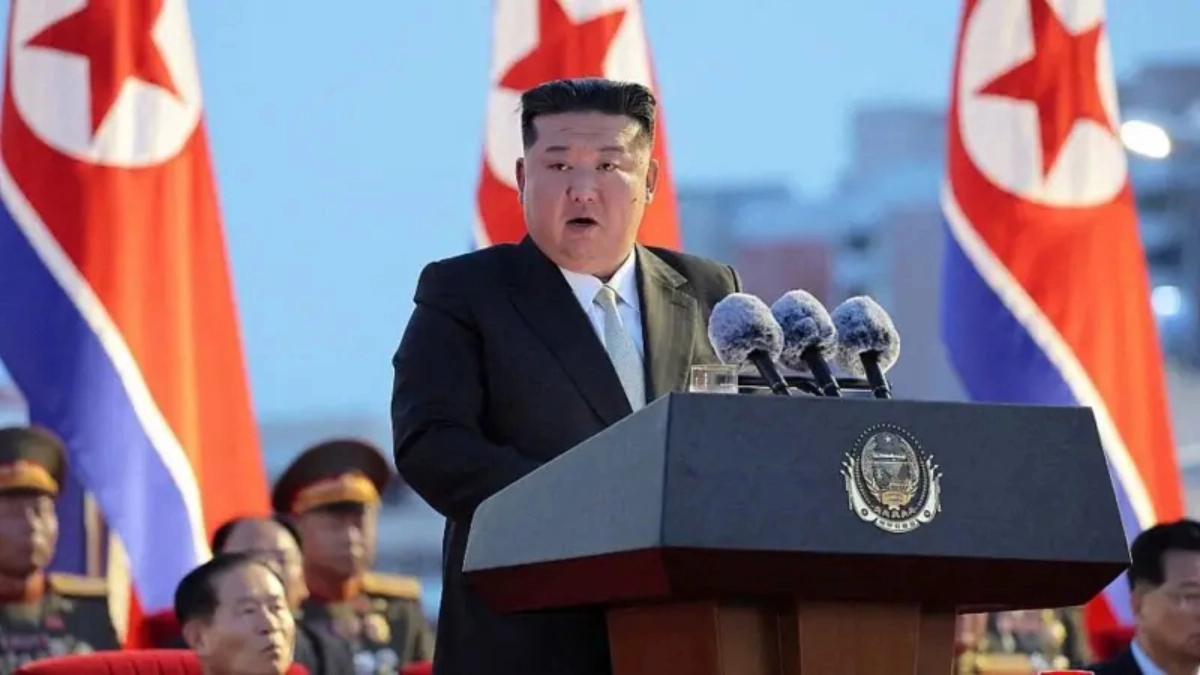
One crime now punishable by death is viewing and sharing foreign media content, such as films and TV series, as Kim Jong-un seeks to further restrict people's access to information.
The fugitives told UN investigators that, starting in 2020, there had been more executions for distributing foreign content.
They described how these executions are carried out by public shootings to instill fear in people and deter them from breaking the law.
“More fear”
Kang Gyuri, who escaped in 2023,told the BBC that three of his friends were executed after being caught with South Korean content.
Kang attended the trial of a 23-year-old friend who was sentenced to death.
“He was tried alongside drug traffickers. Now these crimes are treated the same,” he said, adding that since 2020 people have felt more fear.
These experiences contradict the expectations that the North Korean people had.
The fugitives interviewed said that when the current leader, Kim Jong-un, came to power in 2011, they expected their lives to improve.
The new leader had promised that people would no longer have to “tighten their belts” – meaning they would have enough to eat.
He also promised to boost the economy while also protecting the country by developing its nuclear weapons.
However, the report revealed that since Kim rejected diplomacy with the West and The United States in 2019, focusing on its weapons program, people's daily lives and human rights had been “degraded.”
Almost all of those interviewed said they did not have enough to eat and that eating three times a day was a “luxury.”
During the COVID-19 pandemic, many escapees said there were severe food shortages and people across the country died of hunger.
At the same time, the government clamped down on informal markets where families traded, making it difficult for them to earn a living.
It also made it nearly impossible to escape the country, as it tightened controls on the border with China and ordered North Korean troops to shoot those trying to cross.
“In the early days of Kim Jong Un, we had some hope, but it didn't last long,” said one young woman who escaped in 2018 at age 17.
“The government gradually It prevented people from earning an independent living, and just living became a daily torment,” the young woman told researchers.
Forced Labor
The UN report states that “over the past 10 years, the government has exercised almost total control over people, preventing them from making their own decisions,” whether economic, social, or political. The report adds that improvements in surveillance technology have helped make this possible.
One escapee told researchers that these repressive government measures were aimed at “blocking people’s eyes and ears.”
“It’s a form of control meant to eliminate even the smallest expressions of dissatisfaction or grievance,” she said, speaking anonymously.
The report also revealed that the government is using more forced labor than it did a decade ago.
People from poor families are recruited into “shock brigades” to perform physically demanding tasks, such as construction or mining projects.
The workers hope this will improve their social status, but the work is dangerous and deaths are frequent.
However, instead of improving worker safety, the government glorifies the deaths, calling them a sacrifice to Kim Jong-un.
In recent years, the government has even recruited thousands of orphans and street children, the report said.
This latest investigation follows a 2014 UN commission of inquiry report, which concluded, for the first time, that the North Korean government was committing crimes against humanity.
Some of the most serious human rights violations were taking place in the infamous prison camps politicians in the country, where people can be imprisoned for life and “disappeared.”
This 2025 report concludes that at least four of these camps are still operating, while detainees in regular prisons continue to suffer torture and abuse.
Many escapees said they witnessed prisoners dying from mistreatment, overwork, and malnutrition, although the UN heard of “some limited improvements” at the facilities, including “a slight decrease in violence by guards.”
The UN is calling for the situation to be referred to the International Criminal Court in The Hague.
However, for this to happen, it would have to be referred to the UN Security Council. And since 2019, two of its permanent members, China and Russia, have repeatedly blocked attempts to impose new sanctions on North Korea.
Last week, Kim Jong-un joined Chinese leader Xi Jinping and Russian President Vladimir Putin at a military parade in Beijing, signaling their tacit acceptance of North Korea’s nuclear weapons program and the treatment of its citizens.
In addition to urging the international community to act, the UN is calling on the North Korean government to close its political prison camps, end the use of the death penalty, and teach its citizens about human rights.
“Our reporting shows a clear and strong desire for change, especially among young North Koreans,” Turk said.