

How Trump's controversy over sanctioning US star Folarin Balogun influenced the crushing defeat against Belgium
The match was surrounded by controversy surrounding a red card that was withdrawn by FIFA.

It all started with the usual spectacle of the US matches in this World Cup: a boisterous and patriotic fan base, fireworks, flares and even military planes passing over the stadiums.
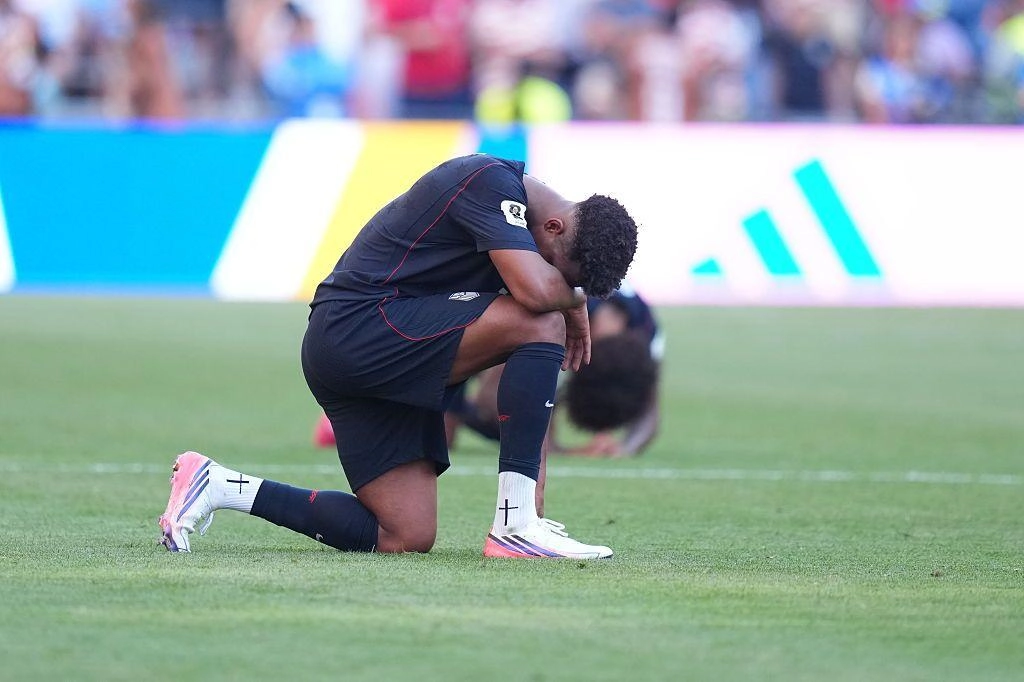
But the American dream of winning the tournament for the first time in history collapsed in bizarre fashion this Monday with a crushing defeat by Belgium in the round of 16.
The US lost 4-1, its worst defeat in 36 years, while the party atmosphere that reigned in the previous matches faded and was transformed into a temple of silence, even long before the end of the match at Seattle Stadium.
This departure comes at the end of a tumultuous couple of days, in which the headlines were dominated by the controversial decision by football's governing body, FIFA, to suspend the red card to American striker Folarin Balogun that he had received in the previous match against Bosnia Herzegovina.
Even the president of the United States, Donald Trump, acknowledged having asked the president of FIFA, Gianni Infantino, to allow Balogun to play the match against the Belgians.
The USA's trajectory to this stage seemed to have captured the country's attention, but all that optimism seemed to be affected by the Balogun case, something that did not go unnoticed by the Belgians before the game.
“It's great to have the world on our side against the USA,” Belgian player Timothy Castagne said before the match.
For his part, Balogun said he was not surprised by the controversy surrounding the decision.
“There's not much more I can say about it,” he said.
But the question that remains is whether this saga of controversy, which involves Trump himself, had an impact on the team's performance.
How did the Balogun saga impact the US team?
Beyond the score, there was something different about the US performance.
The Argentine Mauricio Pochettino had installed in the players a mentality of being a team that could fight for the title despite not being the favorite, and his way of playing, especially offensive, made the fans believe that they could beat the odds and win the cup.
“We are going to win the World Cup,” one fan said before Monday's game and he was not the only one among the thousands of fans who attended Seattle Stadium who thought so.
Many of them were also happy with FIFA's decision to lift Balogun's sanction, after receiving a straight red card in the previous match against Bosnia-Herzegovina.
FIFA made the surprising decision to suspend the automatic match ban for 12 months, prompting widespread criticism, including from UEFA, Belgium and England coach Thomas Tuchel.
Balogun, who had scored three goals in the World Cup, started against Belgium but struggled to influence the game.
When asked after the match if he had been affected by having been the center of much of the attention during the build-up, United States coach Mauricio Pochettino responded:
"It didn't affect our performance. It's not an excuse. It just wasn't our day. But, on a personal level, what's the point of insulting or receiving a lot of offensive messages?" said the Argentine coach.
And he defended the fact that the American federation sought to reverse the sanction on a player.
"My role was to coach the team. If Balogun is available because FIFA allows the player to participate, there is no problem," he explained.
"I feel disappointed with too many people. They put politics and manipulation first, they talk about ethics and integrity. If we talk about the history of this sport, I feel personally disappointed," he added. .
Belgium coach Rudi Garcia revealed that Balogun approached him immediately after the match.
“It's not his fault, he's not responsible, and that's precisely what I told him,” he said.
The defense ended up being decisive
However, the attack was not the main problem for the US against Belgium.
The resounding defeat was largely due to poor defense.
Charles De Ketelaere, who plays with Atalanta in Italy, was not marked inside the area and was able to open the scoring. Shortly after, once the US had tied the match, he overcame two defenders to head in his team's second goal.
But the most disastrous score was the third.
De Ketelaere pressed and stole the ball from goalkeeper Matt Freese, who had come out of his area to try to clear the play, and Hans Vanaken finished with the inside of his foot into the back of the net from outside the area.
That goal gave Belgium a 3-1 lead and undermined the confidence of the American fans, who began to leave the stadium during the last ten minutes of the game.
Subsequently, Romelu Lukaku's goal in added time sent many more to the exit doors.
An American fan later commented:
"There was no will to go for the ball. There was nothing. There was no intensity, football was not alive today," he said.
Another added: "The United States made unforced errors everywhere. They didn't play their best game, but Belgium played exactly how they needed to win. By silencing the crowd like they did, they put themselves in a perfect position to take the win."
Pochettino admitted his team simply wasn't up to the task from the opening whistle.
“Everyone saw from the beginning that we didn't connect with the game,” he said.
"We were never really in the game. Even when we scored the goal, they scored another one on the next play. It was very hard from the beginning," he explained.
What will this defeat mean for the World Cup legacy in the United States?
After a somewhat subdued preparation for the World Cup, there is little doubt that the Americans threw themselves into the tournament once it began.
Fan zones and bars across the United States have frequently been packed, and national team jerseys can be seen everywhere.
The progress to the playoffs and the attacking style of play undoubtedly contributed to increasing that interest.
Now the question is what happens next, after the United States followed fellow hosts Canada and Mexico in being eliminated in the round of 16.
American midfielder Tyler Adams said: “This cannot be a direct reflection of what we were trying to achieve.”
He added, "There are good days and bad days, and this was a bad day. We didn't get as far as we would have liked. But if we've inspired some kids along the way, then we've done something right."
Some of the fans who spoke to the BBC immediately after the defeat also felt that, once the disappointment over their team's performance has been overcome, the last few weeks will be seen as positive.
However, they believe there is still a long way to go for the US to truly be considered an established soccer power.
“It has been an extraordinary event that we have organized and we are very excited about the future of football in our country,” said a fan.
“Everyone has been talking about the World Cup in this country,” he added.
The other big unknown is Pochettino's future.
The Argentine contract expires at the end of the World Cup, and after the game he did not offer any more clues about what the future holds.
“Now is the time to rest a little, reflect, have conversations and see what the decision of the federation and ours is,” he said.
"I am very happy that we have built a very good relationship, but now is not the time. In the next few weeks we will be able to start talking, if the federation wants to do so."