

The footballers stop, the workers continue, what do the hydration breaks at the World Cup tell us?
If the heat justifies a pause in the World Cup, it also justifies protecting the Latinos who work under that same sun

In Miami, during the match between Uruguay and Saudi Arabia, the referees stopped the game on two occasions so that the players could drink water. A new FIFA rule requires these hydration breaks to be taken in all 104 World Cup matches, even under closed roofs and in generally cooler cities like Seattle.
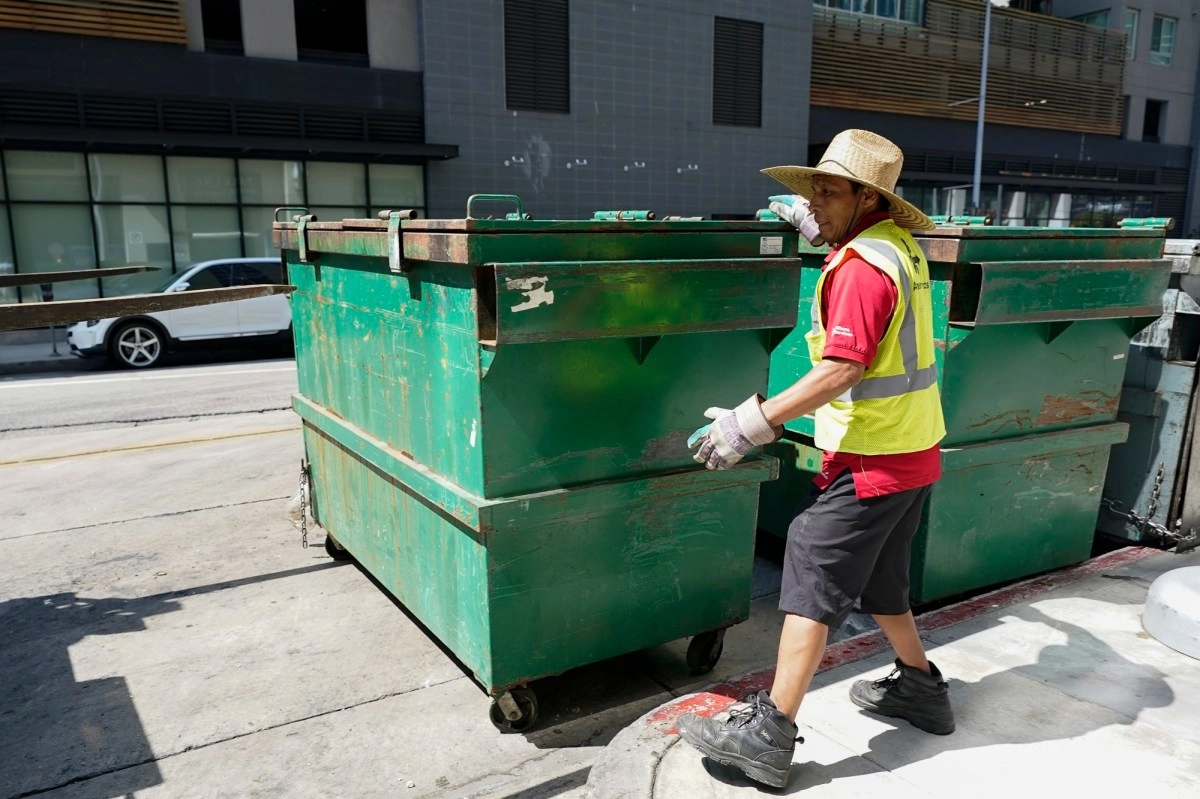
Not so far from the stadium, agricultural and construction workers were still under that same sun, without a mandatory water break, without guaranteed shade and, in some cases, without legal protection.
It's okay that these pauses exist. The players need and deserve them. That some television networks are turning it into advertising blocks does not change the argument in favor: the heat is real, the risk is real, and FIFA decided that it is worth stopping the game to protect the athletes.
But there is a question that we cannot ignore: if the heat represents enough of a risk to stop a football game, why doesn't that same heat deserve any protection for workers who spend eight, ten, twelve hours under that same sun?
That contradiction is not accidental. It is a political decision.
In Florida, HB 433, passed in 2024 under Republican Governor Ron DeSantis, prohibits local governments from implementing any heat protection measures for outdoor workers: water, shade, first aid. Everything prohibited. Florida thus became the second state, after Texas, where Republican Governor Greg Abbott signed a similar law in 2023, to actively eliminate these protections. 40% of outdoor workers in Florida are Latino. Algunos han muerto por el calor. In several cases, their deaths were not even reported to authorities.
For Latinos, this discussion is not theoretical or rhetorical, nor simply another debate on social networks during the summer. Los latinos somos una parte desproporcionada de la fuerza laboral que trabaja al aire libre: en agricultura, jardinería, construcción, servicios y otros sectores esenciales.
Meanwhile, FIFA applies its new rules in all stadiums, without exception. For example, Climate Central identifies the Miami stadium as one of the venues with the highest risk of extreme heat throughout the World Cup. More than 30 matches, including the final, will be played in dangerously hot and humid conditions. Los árbitros están instruidos para actuar. The protocols exist. The players have protection.
We have reached a point where debating whether hydration breaks are necessary in football seems reasonable, while guaranteeing water and shade to a farm worker in July is considered regulatory excess. That says a lot about who we consider worthy of protection in this country.
Climate change is not a future phenomenon. It's the reason why FIFA had to rewrite its own rules. It is the reason why Qatar moved the World Cup to winter four years ago. It is the reason why this summer, in the stadiums of Miami, Houston and Kansas City, the referees will stop the game at the 22nd minute of each half. Extreme heat is already here, it is already more frequent, it is already more dangerous.
According to data from the Centers for Disease Control and Prevention (CDC) and public health surveillance systems, approximately 70,000 people in the United States visit emergency rooms each year for heat-related problems.
In 2022, the Biden administration launched the first federal program of proactive workplace heat inspections, and in July 2024 proposed the first federal heat protection rule in the country's history — a rule that would have covered 36 million workers and required drinking water, rest breaks, and emergency protocols. The secretary of the Department of Health and Human Services (HHS) at the time, Xavier Becerra, led public communication of the effort. Trump came to power and on the first day he froze the rule. By April 2026, the proactive inspections program expired without renewal.
Today, the United States remains one of the few developed countries without a federal heat protection standard — and this summer, with temperatures breaking records, Latino workers remain unprotected.
Esta no es una discusión abstracta sobre política climática. It's a very specific question about who counts.
Workers in agriculture, construction and other industries that operate outdoors deserve what FIFA already guarantees to every player in this World Cup: water, rest and the right not to risk their lives by working in the sun.
If we can stop a football game to protect the players, we can pass a federal rule that protects workers.
The World Cup ends in July. The heat isn't going anywhere.
(*) Antonieta Cádiz Vargas is the executive director of Climate Power En Acción, a project of the Climate Power organization focused on mobilizing Latinos around climate action and a fairer, cleaner and healthier economy. Previously she worked as a national correspondent for La Opinión and was an editor for Univision, El País and El Mercurio.
The texts published in this section are the sole responsibility of the authors, so La Opinión does not assume responsibility for them.