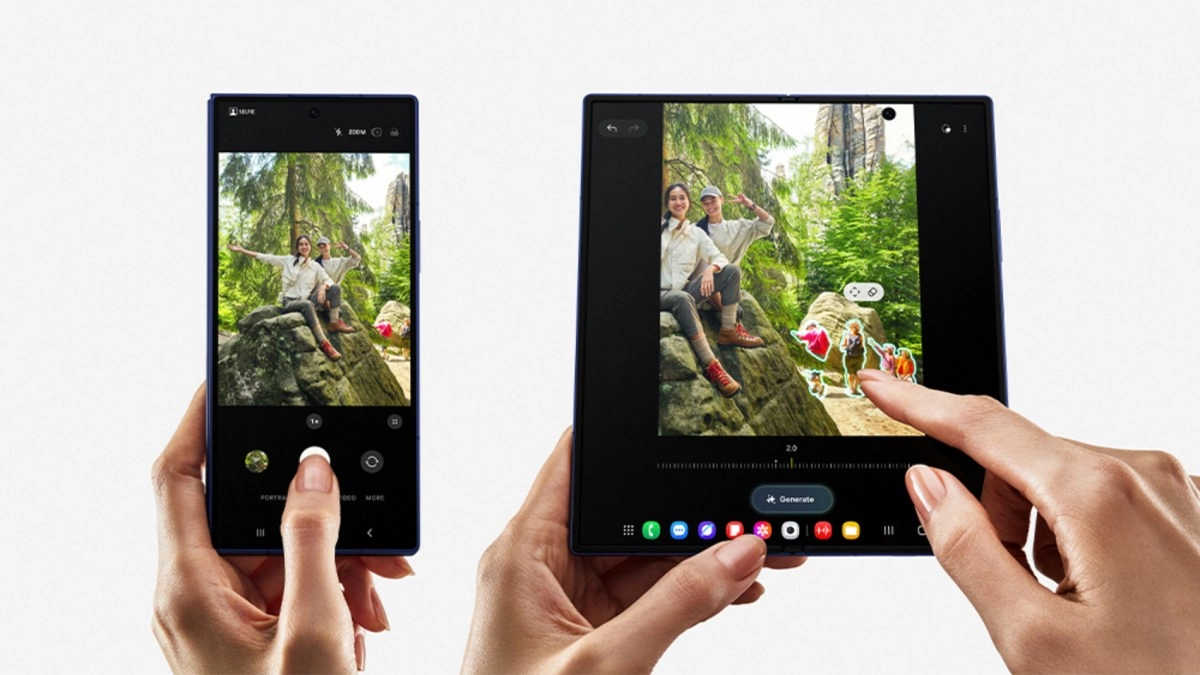

Samsung's product manager, Blake Geiser, acknowledged that making a foldable is not an easy path and directly explained why the Galaxy Z Fold 7 does not include support for the S Pen. In his talk, he explained that to achieve such a thin and light design, they had to remove the layer in charge of detecting the stylus. This digitizer layer, essential for S Pen compatibility, was sacrificed to strengthen the screen, achieve a larger battery, and reduce the thickness to just 8.9 mm folded and 4.2 mm unfolded.
According to Geiser, while previous generations—like the Fold 4—did support the S Pen, users “wanted something really sleek, with an updated look, a larger screen, and battery life that would last for days.” So, they sacrificed the stylus layer in favor of these much-requested improvements.
Engineering technology to achieve the “Ultra” design
This isn't a random cut. Samsung set out to make the Fold 7 the thinnest, softest-touch foldable on the market. That meant completely redesigning the teardrop bezel and implementing a multi-layer architecture on the display, with titanium at the bottom and carbon fiber right in the center of the hinge to reinforce the crease area.
Furthermore, Geiser explained that they've widened the crease radius by converting the “U” design to a more rounded shape, making the fold less noticeable and feeling smoother when sliding your finger over it.
So if that wasn't enough, achieving that level of thinness involved “reengineering the PCB, battery, and display” to miniaturize them without sacrificing performance. It sounds like the engineers sweated a lot to fit that “Ultra” design into a foldable device.
A fair sacrifice or a shame for creatives?
Now, was it a good idea to eliminate the S Pen? Samsung explains that it's a difficult but necessary compromise: to make the phone slimmer, lighter, and with more battery life, they had to sacrifice the stylus layer.
This move could be a blow to those who used the Fold as a digital notebook or sketchbook. While Samsung maintains that most users didn't take advantage of the S Pen, it's undeniable that for certain segments (architects, designers, creatives), this feature was key. However, Geiser emphasizes that they listened to the general public, who demanded portability, elegance, and battery life over stylus support. Furthermore, competing models manage to be just as thin and still offer stylus support, which leads one to wonder if Samsung did things right.