

Apollo: the new laser weapon capable of eliminating hundreds of drones in seconds
Apollo can operate without needing to be connected to a power grid, allowing it to operate in any type of location
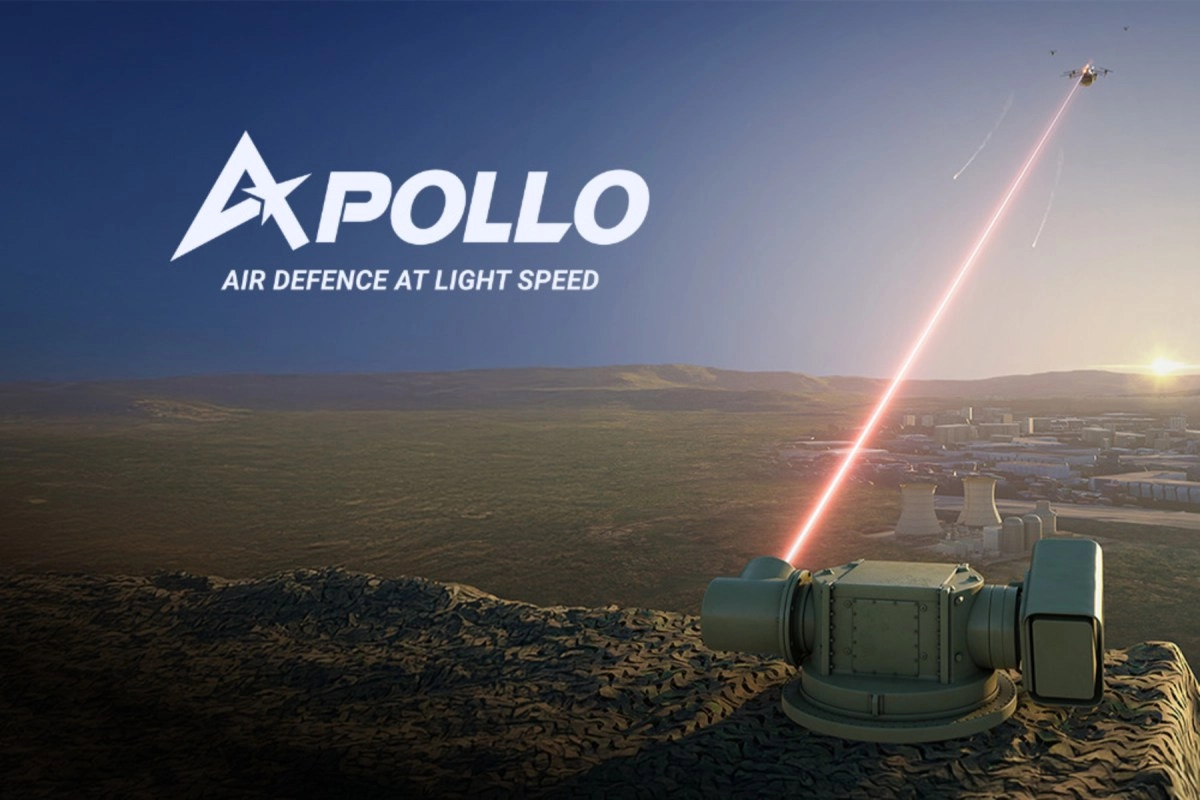

The Australian company Electro Optic Systems (EOS) has just presented a true technological gem for modern defense: the Apollo High Energy Laser Weapon (HELW). This laser system is capable of shooting down up to 200 medium-sized drones without needing to be connected to the power grid, thanks to its internal battery that gives it autonomy to operate in critical situations. This capability makes it an innovative solution to address the growing threat of swarms of hostile drones used by terrorist groups, military actors, and unauthorized operators.
Because drones are small, inexpensive, and difficult to detect, they have become a growing problem in modern conflicts, capable of overwhelming conventional defenses in terms of number and speed. This is where the Apollo stands out for its efficiency: it uses a laser of between 100 kW and 150 kW of power to neutralize flying targets at long distances with surprising precision, becoming an economical alternative in terms of "munitions," as it only consumes electrical energy.
How does it manage to shoot down Apollo drones?
The Apollo works based on a powerful laser that fires a concentrated beam of energy at the speed of light. This beam can destroy drones of different sizes, categorized from Group 1 (20 pounds or 9 kg) to Group 3 (almost 600 kg). The system's precision allows it to engage multiple drones in rapid succession, hitting up to 20 drones per minute thanks to its homing time of just 700 milliseconds between targets.
The weapon features two transmitter units that protrude from their standard 6-meter container, making it easy to transport and deploy quickly. Additionally, the Apollo can eliminate targets at a maximum distance of nearly 3 kilometers (1.86 miles). If the target is too far away to be completely destroyed, the system can even disable the drone's optical sensors from a distance of up to 15 kilometers, blocking its ability to operate or be piloted accurately.
Another key advantage is that it can cover a 360-degree area,So it can detect and attack drones that attempt to approach from any direction. Its system can operate as a standalone weapon or be integrated into a broader defense system to protect bases or areas vulnerable to air attack.
Advantages and future of laser systems like Apollo
What truly sets Apollo apart from traditional anti-drone systems is its energy autonomy. Although it can operate connected to the power grid and fire indefinitely, its internal battery allows it to sustain operation without external sources until it shoots down 200 drones. This is crucial in conflict scenarios where power lines may be compromised.
EOS CEO Andreas Schwer has emphasized that this weapon is designed to meet the urgent international need for defense against drone swarm attacks, adapting to the global market and eliminating restrictions such as ITAR regulations (which limit the export of American military technology). This makes Apollo an open platform for allied nations to independently adapt, localize, and maintain.
In short, Apollo represents a technological leap forward in air defense against increasingly sophisticated and accessible threats to non-state actors. With lightning speed, low operating cost, energy independence, and modularity, systems like these will become increasingly common in global military strategies.
Its arrival marks a before and after in drone protection and, of course, paves the way for future developments in high-energy laser weapons that can expand their range and destructive capacity without sacrificing mobility or autonomy.