

Walmart announces remodeling at more than 600 stores and officially eliminates self-checkout lanes
Since the installation of self-checkouts, retail chains have reported an increase in thefts in their stores
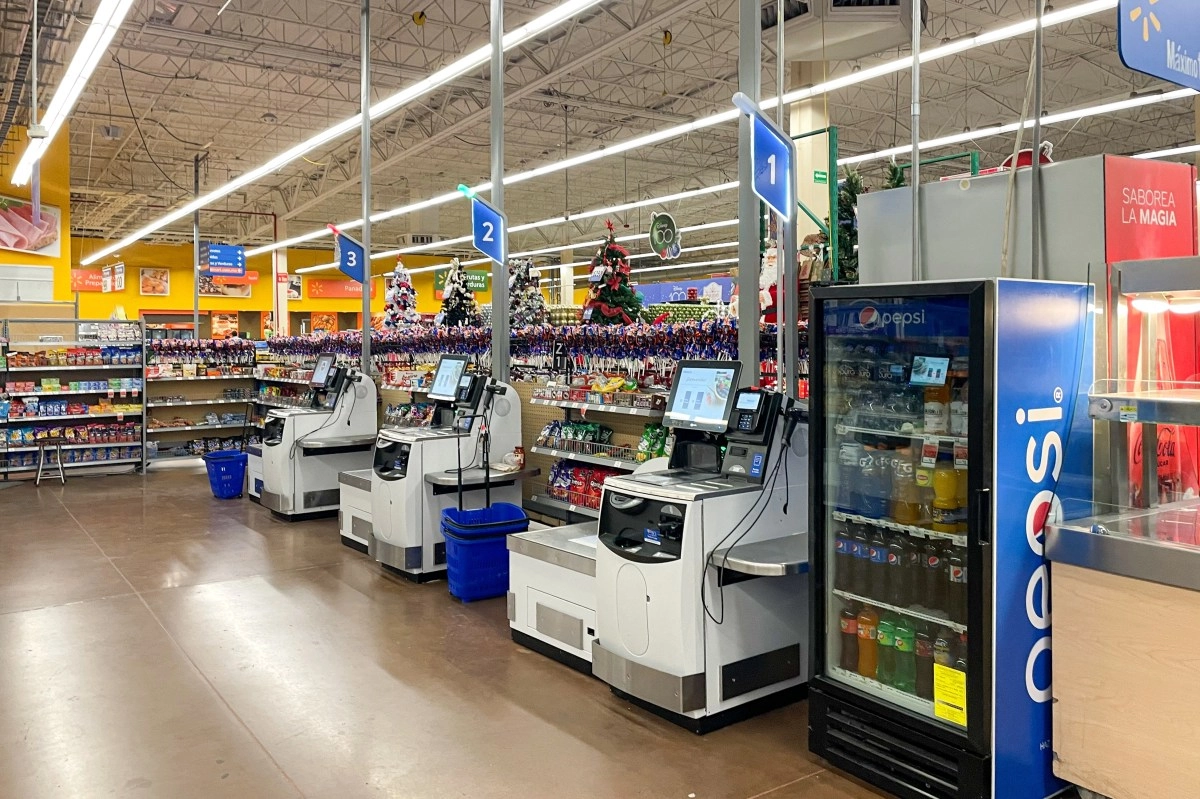

Recently, through a statement, the retail chain Walmart announced some changes in its services and the remodeling of at least 600 stores for this year.
According to a retailer spokesperson, a decision has been made to officially eliminate self-checkouts. in the feedback from employees and customers, local buying patterns and business needs in each community,” he said.
Although the implementation of this payment system was in principle designed to improve the customer experience with a more specialized service, in recent years both Wal mart like other retail chains have been rethinking the use of these machines within their stores, noting repeated opportunities that increases the chance of theft.
Until now, Walmart will have some self-checkout machines in certain establishments, but its purpose will be to permanently eliminate them, as it has already been implementing in south Philadelphia, which has returned to traditional employee checkouts.
On the other hand, this year the chain also plans to modernize some 650 Supercenters and Markets throughout the country; with this it intends to update the distribution, implement new and extensive technology r the services, with the objective of streamlining and facilitating the purchase and delivery of the products to customers, in addition to offering free services through Walmart for the delivery of medicines.
In this regard, Annie Walker, senior vice president of Walmart's Eastern Business Unit, commented that “by modernizing our stores, we are making shopping faster, easier, and more convenient, while we train "We rely on our teams to better serve customers and create local opportunities. We are proud of our legacy here and we hope to help families save money, time, and live better every day," he highlighted.
Currently, the retail chain has more than 10,900 stores and e-commerce websites in at least 19 countries, serving more than 280 million customers every week.